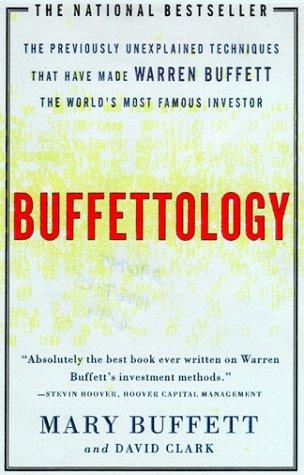
Buffettology by Mary Buffett is a 1997 economics book about value investing, business analysis, long-term holding. Consumer monopolies — businesses with durable competitive advantages, pricing power, and low capital requirements — are Buffett's preferred category. He identifies them not by industry but by economic characteristics.
Summary
Buffettology is Mary Buffett and David Clark's attempt to systematize Warren Buffett's investment approach by working backward from decisions he made over several decades. Mary Buffett was married to Warren Buffett's son Peter for twelve years and had access to conversations and documents that most outside observers lack. The book's premise is that Buffett's decision-making, while often described as intuitive, follows a consistent and learnable logic that can be made explicit.
The central framework is what Buffett calls a consumer monopoly — a business with a durable competitive advantage that allows it to raise prices without losing customers, requires relatively little capital to maintain, and generates returns on equity that compound reliably over time. Buffett's most celebrated investments (Coca-Cola, See's Candies, American Express) share this structure: strong brands, repeat purchase behavior, pricing power, and low capital intensity. The book works through how to identify these businesses, how to estimate their value, and critically, how to calculate the expected return before buying.
The valuation chapters are the book's most technical and most useful. Buffett's favored tool is the "equity bond" concept: a business with predictable earnings is effectively a bond whose coupon grows over time. The purchase price determines the effective yield, and the long-term return to the investor depends on buying at a price low enough that the compounding of future earnings delivers an acceptable return. The calculations are straightforward and the authors walk through each one with examples drawn from real positions.
The book has limitations. It was written in 1997, and some of the examples now seem dated or oversimplified. The writing occasionally overstates the certainty of judgments that Buffett himself has described as probabilistic and error-prone. But as an accessible account of the economic logic underlying Buffett's approach — why he buys what he buys and holds it for decades — Buffettology remains more useful than most of the Buffett literature that followed it.
Talk to Buffettology like its author wrote you back.
Get the ideas that fit your life — not generic summaries.
- Chat with the book
- Audiobook-style main ideas
- Adapts to your life and goals
- Helps you take action
Key takeaways
- 1.
Consumer monopolies — businesses with durable competitive advantages, pricing power, and low capital requirements — are Buffett's preferred category. He identifies them not by industry but by economic characteristics.
- 2.
The purchase price of any investment determines the long-term return. Buying a great business at too high a price still produces poor results; buying a mediocre business cheaply usually underperforms over time.
- 3.
Predictable earnings allow a business to be modeled like a growing bond. Buffett's equity bond concept ties the expected return directly to the price paid and the projected earnings growth rate.
- 4.
Return on equity, consistently above 15% with low debt, is a reliable indicator of durable competitive advantage. It signals that the business earns well on existing capital without needing to borrow.
- 5.
Long holding periods are not just a philosophical preference — they are the mechanism by which compounding works. Frequent trading resets the compounding clock and generates tax and transaction costs.
- 6.
Management quality matters, but it matters most in average businesses. In businesses with strong consumer monopoly characteristics, even mediocre management tends to produce good results over time.
- 7.
Buffett avoids businesses that require heavy ongoing capital expenditure to stay competitive, because those expenditures absorb the cash that would otherwise compound for shareholders.
- 8.
The margin of safety principle — never pay full intrinsic value — gives room for analytical error. Buffett's rule of thumb is to require a discount substantial enough that he can be wrong about some assumptions and still do well.
Discussion questions
Use these on your own, with a book club, or as chat starters in Superbook. Book club version, ready to copy or print →
- 1.
The consumer monopoly concept describes businesses with pricing power and repeat purchase behavior. Can you identify three or four businesses in your daily life that meet this description?
- 2.
Buffett holds positions for decades. What would have to be true about your analysis and temperament to justify that kind of patience?
- 3.
The equity bond concept ties purchase price to long-term return. At what price-to-earnings ratio would a business with 10% annual earnings growth represent a good expected return for you?
- 4.
High return on equity with low debt is a key screen. Which businesses in your portfolio, if you have one, pass that test consistently?
- 5.
Buffett says he avoids businesses that require heavy capital reinvestment. Why does capital intensity erode investor returns even when the business is growing?
- 6.
Mary Buffett had access to Buffett's thinking through family proximity. How do you think about the reliability of second-hand accounts of famous investors' methods?
- 7.
The book claims Buffett's approach is learnable and systematic. Do you buy that? Or does the track record depend on capabilities that can't be replicated?
- 8.
Buffettology was written in 1997. Which of its examples still hold up as consumer monopolies, and which have been disrupted since?
- 9.
Buffett famously doesn't invest in businesses he doesn't understand. How do you draw the boundary of what you understand well enough to value?
- 10.
The book argues management quality matters less than business quality. Do you agree? Where in your own career have you seen strong structure compensate for weak leadership?
- 11.
Compounding requires not touching the investment. What behavioral tendencies in yourself most threaten your ability to hold a position for five or ten years?
- 12.
If you applied Buffett's consumer monopoly criteria to private businesses you know — local or regional — which ones would qualify?
Themes
Frequently asked questions
-
Is Buffettology an authorized account of Warren Buffett's methods?
No. Warren Buffett has not endorsed or authorized the book. It is Mary Buffett's interpretation based on family observation and research. Readers should treat it as an informed outside account rather than an official statement of his philosophy.
-
How long does it take to read Buffettology?
Around four to five hours for most readers. The valuation chapters are technical and reward slower reading with a calculator nearby.
-
What is the core idea of Buffettology?
Buffett buys businesses with durable competitive advantages at prices that will produce acceptable long-run returns, then holds them long enough for compounding to work. The key variables are business quality, earnings predictability, and purchase price.
-
How does Buffettology compare to The Intelligent Investor?
Graham's book is foundational and emphasizes margin of safety and quantitative screens. Buffettology focuses on Buffett's evolution beyond Graham — specifically his emphasis on business quality and long holding periods over pure statistical cheapness.
-
Who should read Buffettology?
Investors who want to understand the logic behind Buffett's most celebrated positions and how to apply similar thinking to their own analysis. Prior familiarity with basic financial statements makes the valuation chapters more accessible.
Similar books
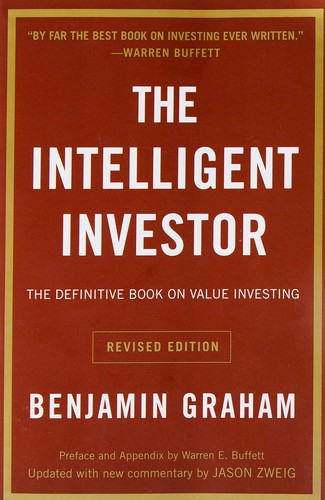
The Intelligent Investor
Benjamin Graham
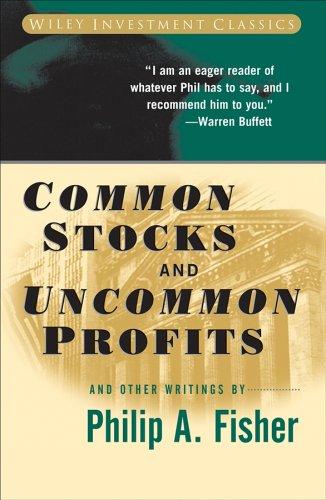
Common Stocks and Uncommon Profits
Philip A. Fisher
The Little Book of Value Investing
Christopher H. Browne
The Snowball: Warren Buffett and the Business of Life
Alice Schroeder
