Business · Book club
Build book club questions
Here are 12 book club questions for Build by Tony Fadell, ordered to open easily and end somewhere worth arguing about. Copy them, print them, or bring them up one at a time.
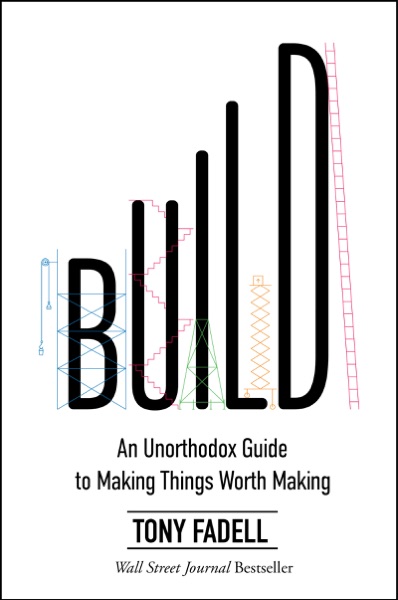
Tony Fadell was the engineer who built the iPod, the executive who led the team that created the original iPhone, and the founder of Nest, the thermostat company he sold to Google for $3.2 billion.
Tony Fadell · 2022 · 8h 45m
Full summary and key takeaways →The 12 questions
- 1.
Fadell argues that great products solve problems people have normalized. What's a product or service in your life that has done that for you — solved a friction you'd stopped noticing?
- 2.
He describes product intuition as a learnable skill built through obsessive observation. How would someone develop that skill deliberately? What practices or habits would it require?
- 3.
The iPod and the iPhone were both built inside Apple's existing organizational structure, under Steve Jobs's direct control. What does that tell us about the relationship between organizational form and product quality?
- 4.
Fadell is honest about the dysfunction he observed and sometimes created at both Apple and Nest. What does he identify as the root causes of organizational breakdown?
- 5.
His advice on hiring — bet on trajectory and judgment over current skill — runs counter to the way most companies hire. What are the conditions under which that approach works? When does it fail?
- 6.
He recommends giving feedback early, specifically, and as data rather than evaluation. What makes that approach hard to execute consistently? What gets in the way?
- 7.
Fadell sold Nest to Google for $3.2 billion and then had a difficult experience inside Alphabet. What does his account of that experience suggest about the integration of acquisitions by large technology companies?
- 8.
The book argues that dysfunction is almost always a leadership failure. Do you think that's true? Are there sources of organizational dysfunction that originate outside leadership?
- 9.
Build is long and covers career advice, product philosophy, management practice, and personal experience. Does that breadth make it more or less useful than a more focused book would be?
- 10.
Fadell's experience with Steve Jobs is a significant thread through the book. How do you evaluate his attempt to be honest about Jobs's methods and their human cost?
- 11.
He argues that knowing when to leave is as important as knowing how to succeed. What are the signals he identifies? Are they applicable to careers outside technology?
- 12.
Who has been the most influential mentor or manager in your own career, and what specifically did they do that made them effective?
How to run the discussion
- Pick six to eight, not all of them. An hour of real discussion covers fewer questions than anyone expects, and racing the list is what makes a book club feel like homework.
- Open with what people noticed, not what they concluded. Asking for a verdict first hardens opinions before anyone has heard each other.
- Let the disagreement run. The questions below that split a room are the ones worth the time; the ones everyone answers the same way can be skipped.
- Ask the quiet person a specific question. A direct, narrow question is far easier to answer than an open invitation to contribute.
Themes worth steering toward
If the conversation stalls, these are the threads that usually restart it.
Common questions
What are good book club questions for Build?
Here are 12 book club questions for Build by Tony Fadell, ordered to open easily and end somewhere worth arguing about. The strongest openers ask what each reader noticed rather than what they concluded, and the discussion usually turns on product development, leadership, startup culture.
How long should a book club discussion of Build last?
Most groups run 60 to 90 minutes of actual discussion. That is roughly six to eight questions, not all of them, so pick the ones that suit your group rather than working down the list in order.
What are the main themes in Build?
Product development, Leadership, Startup culture, Design and engineering, Career craft. Those are the threads most likely to divide a room, which makes them the useful places to steer a discussion that has gone quiet.
Picking the next one? See books like Build or questions for other book club picks.
