History · Book club
Bury My Heart at Wounded Knee: An Indian History of the American West book club questions
Here are 12 book club questions for Bury My Heart at Wounded Knee: An Indian History of the American West by Dee Brown, ordered to open easily and end somewhere worth arguing about. Copy them, print them, or bring them up one at a time.
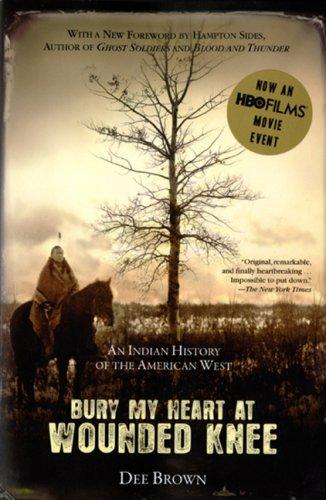
Bury My Heart at Wounded Knee, published in 1970, is Dee Brown's account of the systematic dispossession of Native American peoples across the American West between 1860 and 1890.
Dee Brown · 1970 · 8h 45m
Full summary and key takeaways →The 12 questions
- 1.
Brown uses U.S. government documents as his primary sources. What is the effect of that methodological choice on the book's argument?
- 2.
He covers many different peoples in many different regions. Does treating them as a collective 'Indian history' risk erasing the differences between nations and cultures?
- 3.
The treaty pattern Brown documents — signed, then broken — repeats across chapters. At what point does that repetition become its own argument?
- 4.
Native American leaders appear throughout the book as political strategists. Which speeches or decisions struck you as most revealing of the choices available to them?
- 5.
The book was published in 1970, during the American Indian Movement's rise. How might its historical moment have shaped what Brown included and emphasized?
- 6.
Brown largely avoids making moral arguments explicitly — he lets the record speak. Is that restraint a strength or a limitation?
- 7.
Wounded Knee 1890 is the book's end point. Why there and then? What is gained or lost by ending with that event?
- 8.
The book has been criticized for some historical inaccuracies and for romanticizing Native life. Are those criticisms fair, and do they affect the book's value?
- 9.
Brown writes from outside the communities he documents — he is white, and his access to Native perspectives is mediated through translation and transcription. How does that affect your reading?
- 10.
What do you know about what happened to these communities after 1890 that the book doesn't address?
- 11.
The book's subtitle is 'An Indian History of the American West' — note the article 'an,' not 'the.' What does that humility in the title signal?
- 12.
Has reading this book changed how you think about any aspect of American history you learned in school?
How to run the discussion
- Pick six to eight, not all of them. An hour of real discussion covers fewer questions than anyone expects, and racing the list is what makes a book club feel like homework.
- Open with what people noticed, not what they concluded. Asking for a verdict first hardens opinions before anyone has heard each other.
- Let the disagreement run. The questions below that split a room are the ones worth the time; the ones everyone answers the same way can be skipped.
- Ask the quiet person a specific question. A direct, narrow question is far easier to answer than an open invitation to contribute.
Themes worth steering toward
If the conversation stalls, these are the threads that usually restart it.
Common questions
What are good book club questions for Bury My Heart at Wounded Knee: An Indian History of the American West?
Here are 12 book club questions for Bury My Heart at Wounded Knee: An Indian History of the American West by Dee Brown, ordered to open easily and end somewhere worth arguing about. The strongest openers ask what each reader noticed rather than what they concluded, and the discussion usually turns on indigenous history, conquest, american west.
How long should a book club discussion of Bury My Heart at Wounded Knee: An Indian History of the American West last?
Most groups run 60 to 90 minutes of actual discussion. That is roughly six to eight questions, not all of them, so pick the ones that suit your group rather than working down the list in order.
What are the main themes in Bury My Heart at Wounded Knee: An Indian History of the American West?
Indigenous history, Conquest, American West, Colonialism, Survival. Those are the threads most likely to divide a room, which makes them the useful places to steer a discussion that has gone quiet.
Picking the next one? See books like Bury My Heart at Wounded Knee: An Indian History of the American West or questions for other book club picks.
