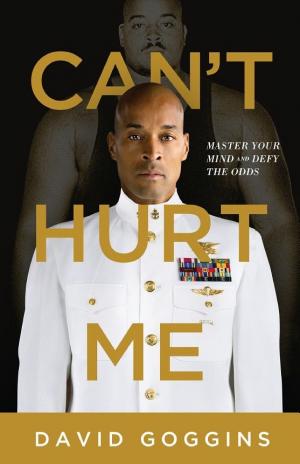
Can't Hurt Me by David Goggins is a 2018 memoir book about mental toughness, endurance, trauma. The 40% Rule: when your mind tells you to stop, you are typically using only forty percent of your actual physical and mental capacity — the governor is a protective mechanism, not an accurate limit.
Summary
Can't Hurt Me is David Goggins's memoir of escaping an abusive childhood, failing military entrance requirements, becoming a Navy SEAL, and then becoming one of the most accomplished endurance athletes in the world — not through talent or privilege but through a deliberate, painful process of forcing himself past every limit he had. The book is co-written with journalist Adam Scullen and alternates between Goggins's narrative and sidebar conversations between the two authors, which interrupts the pace but adds context and challenge to some of Goggins's more extreme claims.
Goggins grew up in abusive poverty, suffered profound trauma from his father, and had learning disabilities that left him functionally illiterate into young adulthood. He entered the book as someone who had every conventional excuse to fail, and he uses that background not for sympathy but as the foundation of his argument: that most people are operating at forty percent of their actual capacity, and that the "governor" — the mental voice that tells you to stop when you're uncomfortable — is lying about where your real limit is.
The physical feats described are extraordinary. Goggins failed SEAL training and began again; he ran ultramarathons on broken bones; he set the world record for pull-ups; he trained for and competed in endurance races that would hospitalize most athletes. The book is not modest about what this required: Goggins describes training until he urinated blood, competing with stress fractures, and a rhabdomyolysis episode severe enough to require kidney dialysis. Whether these are inspirational examples or cautionary tales depends on your point of view, and the book is better when acknowledging the ambiguity.
The practical framework — the "40% Rule," the "Accountability Mirror," the "cookie jar" of remembered accomplishments to draw on when faltering — is genuine and applicable beyond extreme athletics. Goggins's core insight is that comfort is the enemy of growth and that most people stop at the first sign of discomfort rather than because they have actually reached their limit. The book is more useful as a philosophical provocation than as a training manual, and most useful for people who sense they are coasting rather than those already operating near their edge.
Talk to Can't Hurt Me like its author wrote you back.
Get the ideas that fit your life — not generic summaries.
- Chat with the book
- Audiobook-style main ideas
- Adapts to your life and goals
- Helps you take action
Key takeaways
- 1.
The 40% Rule: when your mind tells you to stop, you are typically using only forty percent of your actual physical and mental capacity — the governor is a protective mechanism, not an accurate limit.
- 2.
The Accountability Mirror: brutal honesty with yourself about who you are versus who you want to be is the only starting point for real change; self-deception is the most comfortable form of failure.
- 3.
Trauma can be transformed into fuel: Goggins frames every adversity from his childhood as material that built the mental toughness that later enabled extreme performance.
- 4.
Callusing the mind means systematically doing uncomfortable things to desensitize yourself to discomfort — not once but repeatedly, in an ongoing practice of choosing the hard path.
- 5.
The cookie jar: a mental archive of past accomplishments and challenges overcome, accessible when current difficulty feels insurmountable. Remembering what you've already survived is evidence you can survive the next thing.
- 6.
Greatness requires choosing discomfort deliberately and repeatedly — people who achieve extraordinary results have typically decided, consciously, to pursue something most people would never subject themselves to.
- 7.
Suffering, chosen rather than avoided, produces a different kind of identity than comfort does. Goggins's argument is that who you become through endurance cannot be arrived at through ease.
- 8.
Most people are held back not by physical limitation but by the mental stories they tell about their limits — changing those stories is prior to any training or discipline.
Discussion questions
Use these on your own, with a book club, or as chat starters in Superbook. Book club version, ready to copy or print →
- 1.
Goggins argues most people operate at forty percent capacity. Do you believe that? What evidence from your own life supports or contradicts it?
- 2.
He frames his childhood trauma as the source of his strength rather than an excuse for his limitations. Is that reframing genuinely available to everyone, or does it require a specific kind of person?
- 3.
The book describes training through injury severe enough to require hospitalization. Is that inspiring or reckless? Where's the line between toughness and self-destruction?
- 4.
The Accountability Mirror requires unflinching honesty about your current state. What would you see in yours that you've been avoiding?
- 5.
Goggins's voice is extreme — his prescriptions for most people would cause injury. How do you extract applicable lessons from someone whose methods are literally dangerous?
- 6.
He argues that comfort is the enemy of growth. In what areas of your life are you most comfortable in ways that are holding you back?
- 7.
The 'governor' is his metaphor for the mind's protective limit-setting. When have you felt the governor kick in, and how did you respond?
- 8.
Can't Hurt Me has been enormously influential in fitness culture and military communities. Why do you think the extreme-discipline message resonates so widely now?
- 9.
Goggins's childhood was genuinely horrific. How much of his capacity for extreme suffering do you think was created by that trauma rather than by training?
- 10.
The book is sometimes criticized for glorifying suffering for its own sake. Is there a meaningful distinction between Goggins's chosen suffering and masochism?
- 11.
What is the most challenging physical or mental undertaking you've completed that you didn't believe you could when you started? What did it teach you?
- 12.
If you applied the forty-percent rule to a specific goal in your life, what would doing the other sixty percent actually look like?
Themes
Frequently asked questions
-
Is Can't Hurt Me worth reading?
Yes, if you want a visceral and uncompromising argument that most people are operating below their potential. The memoir is genuinely gripping and the mindset framework is applicable well beyond athletics. Read it knowing that Goggins is a motivational extreme, not a template — apply the philosophy, not the specific training.
-
What is the 40% Rule in Can't Hurt Me?
Goggins's claim that when the mind says stop, the body has only used about forty percent of what it is actually capable of. The governor — the instinct to quit at discomfort — is a protective mechanism that activates long before genuine physical limit. Most people never discover what they can actually do because they honor that voice.
-
Is Can't Hurt Me appropriate for people with trauma histories?
It depends. Goggins is honest about severe childhood trauma, and some readers find his reframing of trauma as fuel empowering. Others find the 'just push through it' approach dismissive of how trauma actually works. The book is not a trauma recovery framework — it is a mental toughness argument that uses trauma as context.
-
Does Can't Hurt Me have practical takeaways?
Yes: the accountability mirror (honest self-assessment), the cookie jar (archive of past accomplishments), the 40% rule, and the practice of deliberately choosing discomfort to build mental calluses. These are applicable in work, relationships, and fitness regardless of whether you pursue extreme endurance.
-
Who should read Can't Hurt Me?
People who feel they are coasting and want a confrontational push. People who are curious about the psychology of extreme performance. People drawn to trauma-to-triumph narratives with real grit. Not particularly useful for people already operating at high capacity who need nuanced guidance rather than a wake-up call.
Similar books
Finding Ultra
Rich Roll
Born to Run
Christopher McDougall
Endurance: Shackleton's Incredible Voyage
Alfred Lansing
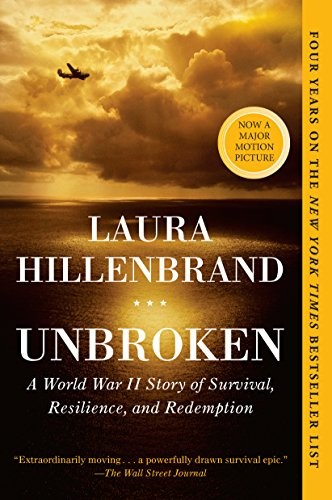
Unbroken: A World War II Story of Survival, Resilience, and Redemption
Laura Hillenbrand
