Carrie Soto Is Back by Taylor Jenkins Reid is a 2022 contemporary fiction book about competitive drive, aging and legacy, father-daughter bonds. Athletic greatness and personal warmth are not always compatible, and the novel refuses to resolve that tension by having Carrie become kinder as she ages.
Summary
Carrie Soto is a retired tennis legend with twenty Grand Slam titles, the most in history — until a young player named Nicki Chan wins her twenty-first and breaks Carrie's record. At thirty-seven, Carrie comes out of retirement to take it back. The premise sounds like a sports movie, and Reid leans into that: this is a novel about competition as a form of self-knowledge, about what drives a person to sacrifice everything for excellence, and about whether the thing you gave your whole life to was worth it.
Carrie is not likable in the conventional sense. She is cold, exacting, relentlessly self-critical, and largely friendless. Reid has said she wanted to write a female protagonist who operates the way male antiheroes do — driven to the point of damage, not apologizing for it. The novel takes that seriously. Carrie's relationship with her father Javier, who has coached her since childhood and whose own failed tennis career runs beneath hers like a shadow, is the emotional core of the book. Their dynamic is loving and warped in equal measure.
The tennis is rendered with credibility — Reid clearly did the research — but the matches serve the character rather than the other way around. What makes the sport work narratively is that tennis is fundamentally solitary: you win and lose alone, which externalizes Carrie's interior life in a way team sports wouldn't. The timeline moves between Carrie's early career and the comeback year of 1994, and the contrast between the two Carries is where the novel finds its deepest material.
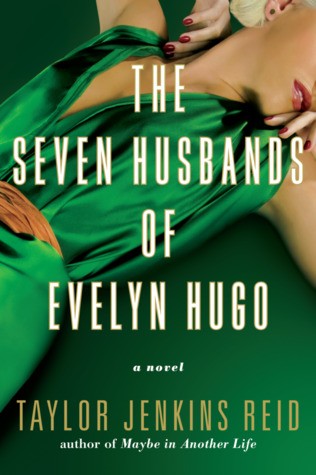
This is Reid's most focused novel and in some ways her least accessible one. Carrie is not designed to be rooted for unambiguously — she's designed to be understood. Readers who want a character who is also genuinely difficult, who makes choices that are self-defeating and still can't stop making them, will find this the most interesting book in Reid's catalog. Readers who want warmth and clear moral sympathy will find Evelyn Hugo easier company.
Talk to Carrie Soto Is Back like its author wrote you back.
Get the ideas that fit your life — not generic summaries.
- Chat with the book
- Audiobook-style main ideas
- Adapts to your life and goals
- Helps you take action
Key takeaways
- 1.
Athletic greatness and personal warmth are not always compatible, and the novel refuses to resolve that tension by having Carrie become kinder as she ages.
- 2.
A parent who lives through their child's success is also, in part, exploiting it — Javier's coaching is love and need simultaneously, and Carrie knows it.
- 3.
The decision to come back is not nostalgia but refusal: Carrie's identity is so fused with her record that losing it feels like losing herself.
- 4.
Nicki Chan — the rival — is drawn with enough complexity that we understand why Carrie both resents and respects her, which is more generosity than rivalries usually get.
- 5.
The novel asks whether a life organized entirely around a single pursuit is wasted or fully realized — and resists a clean answer.
- 6.
Carrie's romantic subplot is present but subordinate; Reid correctly identifies that the love story here is between Carrie and the game.
- 7.
Legacy is shown as both motivation and trap: the record Carrie wants to reclaim was also a prison she built for herself.
- 8.
Aging in women athletes carries a specific social weight the novel does not shy away from — thirty-seven is 'ancient' in tennis, which says something about what the sport requires.
Discussion questions
Use these on your own, with a book club, or as chat starters in Superbook. Book club version, ready to copy or print →
- 1.
Carrie is designed to be difficult to like while being easy to understand. Did that balance work for you, or did you want the novel to give you more reason to root for her?
- 2.
Javier's coaching is clearly loving and clearly distorting. How responsible is he for who Carrie became?
- 3.
The novel presents coming back at thirty-seven as both brave and slightly delusional. How did you read it — triumph, tragedy, or both?
- 4.
Nicki Chan could easily have been a villain, but Reid gives her real interiority. Did that complicate your feelings about Carrie's goal?
- 5.
Carrie's romantic relationship is not the primary story. Did that feel like a feature or a gap?
- 6.
The tennis world described here is largely white and wealthy, and Carrie's Cuban heritage is a constant undercurrent. How does that complicate her position in the sport?
- 7.
Reid structures the novel around a question: what are you willing to give up to be the best at something? What's your answer, and does the novel's ending change it?
- 8.
Is the record — the twenty-first Slam — really the point, or is Carrie after something the record represents?
- 9.
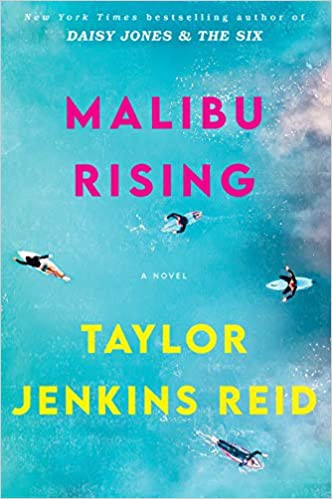
Compared to Malibu Rising or Evelyn Hugo, this novel is more interior and less ensemble-driven. Did the shift in focus work for you?
- 10.
The ending leaves Carrie's legacy in a complicated place. Did you find that satisfying or deliberately incomplete?
- 11.
Carrie has almost no close friendships. Does the novel read that as a consequence of her greatness, or as a failure?
- 12.
If Carrie had been written as a man, how do you think the reception of her character would differ? Does Reid make use of the gender reversal effectively?
Themes
Frequently asked questions
-
Is Carrie Soto Is Back part of a series?
No, it is a standalone novel. Carrie Soto appears as a minor character in Daisy Jones & The Six, but the novels are fully independent and can be read in any order.
-
Do I need to know anything about tennis to enjoy it?
No. Reid provides enough context that the matches are legible even to non-fans. The sport functions as a vehicle for character, not as a technical showcase. Tennis knowledge will enrich the reading but is not required.
-
Is this Reid's most serious novel?
Most readers and critics find it her most psychologically rigorous. The protagonist is more difficult and the tone is less overtly commercial than Evelyn Hugo or Daisy Jones. Whether that makes it 'better' depends on what you want from Reid.
-
Who should skip this book?
Readers who want a warmer narrator or a more straightforward emotional payoff. Carrie is not designed to be comforting, and the novel does not resolve her fundamental contradictions. If you want Reid at her most accessible, start with Evelyn Hugo.
-
Is there an adaptation?
As of 2025, no adaptation has been announced, though Reid's other novels have been adapted for streaming. The narrow, tennis-world setting makes a prestige drama a plausible eventual destination.