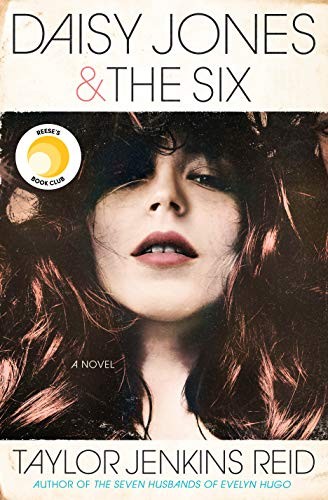
Daisy Jones & The Six by Taylor Jenkins Reid is a 2019 contemporary fiction book about creativity and collaboration, addiction, desire and ambition. The oral history format makes every character an unreliable narrator by design — we can't know what really happened, only what each person needed to believe.
Summary
Daisy Jones & The Six is structured as an oral history — a transcript of interviews with the members of a fictional 1970s rock band, reconstructing how they rose, created their defining album, and then spectacularly fell apart in a single night in 1979. The format is borrowed from Please Kill Me, the real oral history of punk, and Reid uses it with real facility. Every character gets their own voice, their own version of events, and the contradictions between those versions do a lot of the novel's work.
The novel has two parallel arcs. Daisy Jones is a feral, charismatic LA girl who writes songs in her head and sleeps on hotel room floors before she's found and folded into a band she barely understands. Billy Dunne is the band's frontman and songwriter, a recovering alcoholic holding his marriage together by sheer will while his creative partnership with Daisy starts to look like something else. The tension between them — what it is, what it means, whether it gets acted on — is the engine of the second half of the book.
What Reid gets right is the texture of creative obsession: the way a song comes together from disagreement, the way two people can write something true together while lying to themselves about what they're doing. The 1970s detail is generous without being a costume party. The band dynamics — jealousy, deference, ego, loyalty — are drawn with care. The oral-history format, which could be a gimmick, earns its place by removing an authorial filter and forcing the reader to hold multiple unreliable accounts simultaneously.
The novel is not quiet. It moves fast and delivers a clear emotional throughline. Readers who want rock-era atmosphere, romantic tension that doesn't resolve simply, and the particular sadness of something brilliant that didn't last will find exactly that. Readers who expect literary interiority or complicated moral ambiguity will find Reid's instincts tilt commercial. The final interview revelation lands the way a great last chord should: obvious in retrospect, satisfying anyway.
Talk to Daisy Jones & The Six like its author wrote you back.
Get the ideas that fit your life — not generic summaries.
- Chat with the book
- Audiobook-style main ideas
- Adapts to your life and goals
- Helps you take action
Key takeaways
- 1.
The oral history format makes every character an unreliable narrator by design — we can't know what really happened, only what each person needed to believe.
- 2.
Creative partnership at its most intense is indistinguishable from romantic love in its outward signs, which is its own kind of problem.
- 3.
Addiction is not treated as a flaw to overcome but as a persistent structural force in Billy's life — sobriety requires constant work, not a single heroic decision.
- 4.
Reid shows that the price of artistic commitment can be paid by the people closest to the artist, not just the artist themselves.
- 5.
What gets suppressed for the sake of art — desire, honesty, confrontation — doesn't disappear; it accumulates until something gives.
- 6.
The band-as-family structure means that dissolving it is a kind of death, felt differently by everyone who built it.
- 7.
The '70s rock scene is evoked not as nostalgia but as a specific economic and social environment that enabled and consumed people in particular ways.
- 8.
The question the novel never answers directly — what Daisy and Billy actually meant to each other — is the right question to leave open.
Discussion questions
Use these on your own, with a book club, or as chat starters in Superbook. Book club version, ready to copy or print →
- 1.
The oral history format means we never get a definitive account of what happened between Daisy and Billy. Does that ambiguity feel satisfying, or frustrating?
- 2.
Billy chooses his marriage over Daisy and the band. Do you think the novel endorses that choice, or simply presents it?
- 3.
Daisy spends most of the novel being perceived by others before she gets to narrate herself. How does that structure shape your reading of her?
- 4.
The addiction subplot is handled with unusual restraint — no rock-bottom scenes, no triumphant recovery arc. Did that feel realistic or did something get avoided?
- 5.
Which band member's account did you find most trustworthy? Why?
- 6.
The novel ends on a revelation that recontextualizes the entire interview structure. Did it earn that moment, or did it feel like a trick?
- 7.
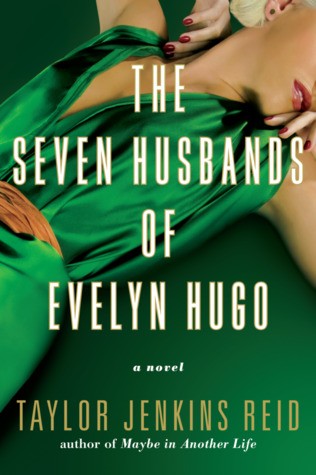
Compared to The Seven Husbands of Evelyn Hugo, this novel is more interested in what doesn't happen than what does. Which approach worked better for you?
- 8.
The '70s setting means certain things about women in the music industry go largely unremarked. Did you notice what the characters don't say?
- 9.
Camila — Billy's wife — is arguably the moral center of the book. Does she get enough space to be a full character, or is she primarily a function of the Billy-Daisy tension?
- 10.
Is the Aurora album as described in the book the kind of album you'd actually want to listen to? What does your answer reveal about how you read the novel?
- 11.
The format borrows from non-fiction oral history. Did that make the story feel more real, or did the fictional scaffolding show through?
- 12.
What stays with you most: the love story, the music, the addiction narrative, or the band's dissolution? What does your answer tell you about what the book is actually about?
Themes
Frequently asked questions
-
Is Daisy Jones & The Six a real band?
No. The band, the album Aurora, and all the characters are fictional. Reid has mentioned Fleetwood Mac as a loose inspiration for the creative tension between frontman and female singer-songwriter, but the story is entirely invented.
-
Do I need to read The Seven Husbands of Evelyn Hugo first?
No. The books are set in the same world — they share a minor character — but are completely standalone. Reading order doesn't affect either book.
-
Is the Prime Video adaptation worth watching?
The series received strong reviews, particularly for its music and performances. If you liked the novel, the adaptation is faithful to the emotional arc while necessarily changing the format from interview transcript to dramatized scenes.
-
Who shouldn't read this book?
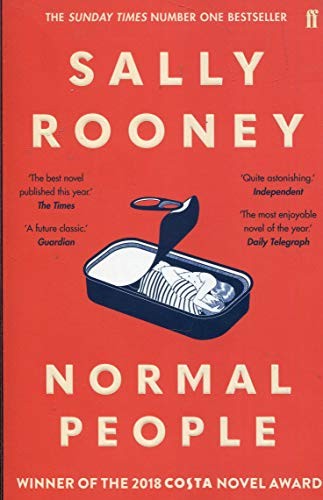
Readers who want deep interiority or slow-burn literary fiction will find the oral history format too surface-level. Each voice is distinct but brief, and the format trades depth for momentum. If you want a more interior version of similar themes, try a Sally Rooney novel instead.
-
How long does it take to read?
Around six hours at average pace. The oral history format reads very quickly — short chapters, punchy dialogue, no extended description. Many readers finish it in a single weekend.