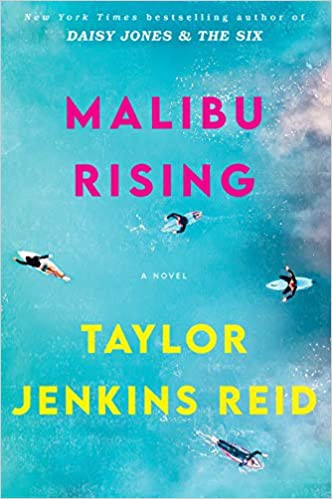
Malibu Rising by Taylor Jenkins Reid is a 2021 contemporary fiction book about family and legacy, fame and neglect, sibling bonds. The children of a famous absent parent carry different wounds depending on when they were abandoned and who stepped into the gap — Reid traces those differences with precision.
Summary
Malibu Rising takes place across a single night in August 1983, when the four Riva siblings throw the most famous party in Malibu — and the night ends in fire. The novel unfolds in intercut timelines: the party itself, moving hour by hour through the night, and a multigenerational backstory that reaches back to the 1950s and the marriage of June, the siblings' mother, to Mick Riva, a rock-and-roll celebrity who left early and returned at intervals like a disaster. The present-night frame creates propulsive tension; the backstory does the real emotional work.
The four siblings — Nina, Jay, Hud, and Kit — are each carrying the weight of growing up without a father, raising each other in a Malibu beach house after their mother's breakdown, each shaped differently by the same childhood deprivation. Nina, the eldest, is a famous surfer who has also become the family's de facto parent; she is on the verge of collapse when the party starts. Reid is interested in what gets passed down: how a father's abandonment ripples through children who never quite got to be children, and how the same wound manifests differently depending on birth order, temperament, and luck.
The novel is Reid at her most structurally ambitious for commercial fiction. The countdown structure creates dread and forward motion. The Mick Riva backstory — which runs in chapters from the 1950s through the 1980s — gives the siblings' situation context that they don't fully have themselves. Reid handles the ensemble with confidence; each sibling has a distinct voice and a distinct arc, and the night's revelations feel earned rather than contrived. The Malibu setting is vivid without being real-estate porn.
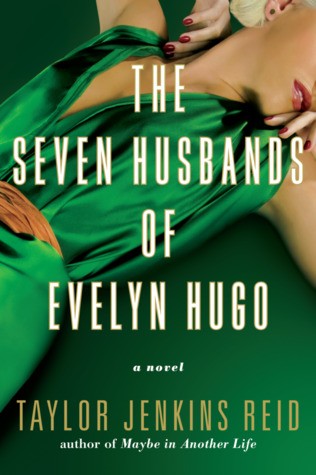
Readers who responded to The Seven Husbands of Evelyn Hugo will find similar satisfactions: vivid period atmosphere, romantic and family drama with real stakes, and a climactic payoff. The novel is longer than it needs to be in places, and the Mick Riva sections occasionally slow the momentum they're meant to build. But as a portrait of siblings holding each other together while falling apart, it is Reid's most emotionally complete work.
Talk to Malibu Rising like its author wrote you back.
Get the ideas that fit your life — not generic summaries.
- Chat with the book
- Audiobook-style main ideas
- Adapts to your life and goals
- Helps you take action
Key takeaways
- 1.
The children of a famous absent parent carry different wounds depending on when they were abandoned and who stepped into the gap — Reid traces those differences with precision.
- 2.
A single night of reckoning can do what years of avoidance couldn't: the party forces confrontations that daylight had kept deferred.
- 3.
Fame functions in the novel as a kind of chronic neglect — Mick Riva's stardom didn't cause his failures as a father, but it enabled them.
- 4.
Nina's caretaking of her siblings is both selfless and self-destroying; the novel asks what happens when the person everyone leans on finally breaks.
- 5.
Sibling loyalty can be more durable than romantic love — the bonds built in shared childhood hardship are the novel's most convincing relationships.
- 6.
The backstory structure reveals that the siblings understand their own origin story less completely than the reader does, which creates a particular kind of sympathy.
- 7.
Fire as metaphor is perhaps too obvious, but Reid earns it by making the literal fire a consequence of specific choices rather than a symbol imposed from outside.
- 8.
Escape from a parent's shadow requires understanding whose shadow it actually is — not all four siblings get there by the end.
Discussion questions
Use these on your own, with a book club, or as chat starters in Superbook. Book club version, ready to copy or print →
- 1.
Nina has been the family's parent since she was a teenager. What do you think she gave up, and does the novel fully account for that cost?
- 2.
Mick Riva is portrayed with more sympathy as the backstory deepens. Did your feeling about him change over the course of the novel?
- 3.
The siblings all turned out differently despite the same childhood. Which of the four felt most real to you, and why?
- 4.
The party-as-reckoning structure means everything comes to a head in one night. Does that feel realistic, or is it a narrative convenience?
- 5.
Reid uses the backstory to give readers information the characters don't have. Did that dramatic irony deepen the story or create distance?
- 6.
June — the mother — is a tragic figure who largely disappears from her children's lives. Does she get a fair accounting in the novel?
- 7.
The ending is explicitly hopeful. Did it feel earned, or did it arrive before the characters had fully worked through what happened?
- 8.
Compared to Daisy Jones & The Six, this novel is more interested in family than romance. Which Reid framework do you find more compelling?
- 9.
The Malibu setting is aspirational — beautiful houses, surf culture, wealth. How does that backdrop complicate or reinforce the story's emotional stakes?
- 10.
Fire destroys the house but also potentially liberates the siblings from it. Is that reading too neat, or does the novel support it?
- 11.
Which sibling's story would you most want to see continued beyond the novel's ending?
- 12.
The novel spans about thirty years of backstory for a single night. Did the ratio of past to present feel right, or did you want more of one?
Themes
Frequently asked questions
-
Is Malibu Rising a standalone novel?
Yes, completely. Mick Riva appears briefly as a character in Daisy Jones & The Six, but Malibu Rising works entirely without that context. You can read either book first.
-
How dark does Malibu Rising get?
Darker than the Malibu setting suggests. The novel deals with parental abandonment, a mother's mental illness, sexual assault, and addiction. The tone is not hopeless — Reid is fundamentally an optimist about family — but it doesn't sanitize the damage.
-
Is this Reid's best book?
Many readers consider it her most emotionally complete work, because the ensemble structure gives more space for character development than the single-narrator format of Evelyn Hugo. Others prefer Evelyn Hugo's focused propulsion. Both cases are defensible.
-
Who should skip Malibu Rising?
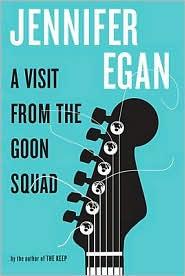
Readers who find Reid's pacing too fast and her emotional signals too explicit. The novel moves quickly and tells you clearly how to feel at key moments. If you want a more demanding treatment of similar themes — famous fathers, sibling dynamics, failed families — try A Visit from the Goon Squad instead.
-
Is there a film or TV adaptation?
As of 2025, no adaptation has been announced. The rights have reportedly been optioned but no project has moved into production.