Fantasy · Book club
Circe book club questions
Here are 12 book club questions for Circe by Madeline Miller, ordered to open easily and end somewhere worth arguing about. Copy them, print them, or bring them up one at a time.
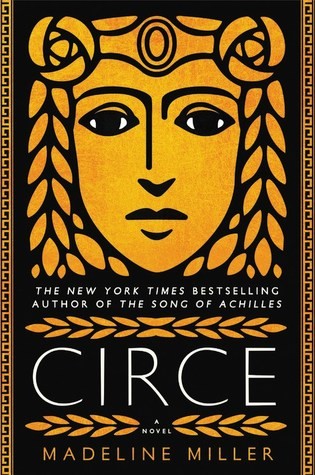
Circe is the daughter of Helios, god of the sun, but she inherits neither divine radiance nor power — only a human voice that embarrasses her immortal family.
Madeline Miller · 2018 · 7h 45m
Full summary and key takeaways →The 12 questions
- 1.
Circe's witchcraft requires practice, patience, and failure — it is not a gift. Does the novel argue this makes it more valuable than divine power?
- 2.
Circe's isolation on Aeaea shifts over the centuries from punishment to something like home. At what point in the novel did you feel that shift happening?
- 3.
Miller's Odysseus is neither heroic nor villainous, but Circe eventually chooses to stop waiting for him. Was that a satisfying reading of their relationship?
- 4.
The gods in the novel are mostly petty, vain, and cruel. Does Miller give any of them genuine depth, or are they meant to function as a system rather than individuals?
- 5.
Circe's relationship with her son Telegonus changes what she values and what she risks. Did the novel handle the motherhood arc well, or did it feel like a change of register?
- 6.
Scylla and Charybdis in the novel are Circe's creations — accidents of her rage and her learning. What does Miller seem to want to do with that myth revision?
- 7.
The ending of the novel asks Circe to make a final choice about her own nature. Did you find that choice earned, or too tidy?
- 8.
Compared to The Song of Achilles, where Madeline Miller's approach is more elegiac, Circe feels more interested in autonomy and will. Did the tonal difference work for you?
- 9.
Which of the mythological encounters — Prometheus, Daedalus, Medea, Odysseus — felt most alive to you? Why?
- 10.
Is Circe's loneliness in the novel sympathetic, or does Miller keep enough distance that you observe it rather than feel it?
- 11.
The novel frames witchcraft as something women discovered when gods wouldn't share power. Does that reading hold up throughout the book?
- 12.
Penelope appears late in the novel. Did adding her change how you read Circe's story?
How to run the discussion
- Pick six to eight, not all of them. An hour of real discussion covers fewer questions than anyone expects, and racing the list is what makes a book club feel like homework.
- Open with what people noticed, not what they concluded. Asking for a verdict first hardens opinions before anyone has heard each other.
- Let the disagreement run. The questions below that split a room are the ones worth the time; the ones everyone answers the same way can be skipped.
- Ask the quiet person a specific question. A direct, narrow question is far easier to answer than an open invitation to contribute.
Themes worth steering toward
If the conversation stalls, these are the threads that usually restart it.
Common questions
What are good book club questions for Circe?
Here are 12 book club questions for Circe by Madeline Miller, ordered to open easily and end somewhere worth arguing about. The strongest openers ask what each reader noticed rather than what they concluded, and the discussion usually turns on power and self-determination, isolation and identity, motherhood.
How long should a book club discussion of Circe last?
Most groups run 60 to 90 minutes of actual discussion. That is roughly six to eight questions, not all of them, so pick the ones that suit your group rather than working down the list in order.
What are the main themes in Circe?
Power and self-determination, Isolation and identity, Motherhood, Magic and transformation, Mortality. Those are the threads most likely to divide a room, which makes them the useful places to steer a discussion that has gone quiet.
Picking the next one? See books like Circe or questions for other book club picks.
