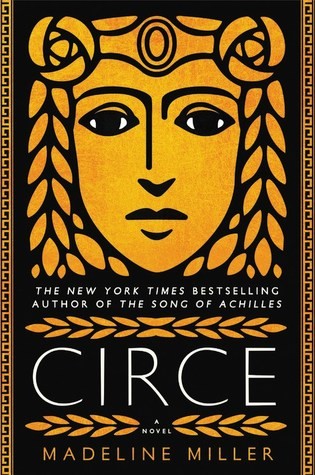
Circe by Madeline Miller is a 2018 fantasy book about power and self-determination, isolation and identity, motherhood. Power earned through study and practice — witchcraft — is more transformative than power inherited from family or divinity.
Summary
Circe is the daughter of Helios, god of the sun, but she inherits neither divine radiance nor power — only a human voice that embarrasses her immortal family. The novel follows her from Olympian halls to a remote island, Aeaea, where she discovers witchcraft and the patience to perfect it alone. Miller takes a figure who appears briefly in Homer — the sorceress who turns Odysseus's men into pigs — and gives her a full interior life: millennia of isolation, encounters with figures from across Greek myth, and a slow reckoning with what she is and what she wants.
The book is about what it means to choose your own power when the world has decided your place for you. Circe is neither goddess nor mortal; she's scorned by both. Her witchcraft — pharmaka, the magic of herbs and will — is earned rather than inherited, which makes it hers in a way that divine gifts cannot be. The novel asks what someone does with centuries of solitude, how they decide to use what they've learned, and whether freedom from a world that dismissed you is liberation or just another kind of exile.
Miller's prose is rich without being ornate — the sentences move with the weight of myth but the clarity of contemporary fiction. The novel is structured as a series of encounters: Prometheus, the Minotaur's mother Pasiphae, Daedalus, Medea, Odysseus himself. Each relationship sharpens what Circe is and what she refuses to be. The Odysseus section is particularly well-handled: Miller doesn't rehabilitate him or vilify him, but she makes clear that Circe's story was never his to narrate.
Readers expecting epic adventure will find something more like a meditation on feminine power and the cost of being exceptional in a world that punishes it. The novel moves slowly in places — this is deliberate, matching Circe's centuries-long rhythms — and the ending is quietly radical. This is accessible literary fantasy at its best: the kind of book that uses myth to say something specific about power, autonomy, and what it means to make a life outside the story others have written for you.
Talk to Circe like its author wrote you back.
Get the ideas that fit your life — not generic summaries.
- Chat with the book
- Audiobook-style main ideas
- Adapts to your life and goals
- Helps you take action
Key takeaways
- 1.
Power earned through study and practice — witchcraft — is more transformative than power inherited from family or divinity.
- 2.
Circe's isolation on Aeaea is not just punishment; over time it becomes the condition in which she becomes herself.
- 3.
The novel reclaims a woman who appears only as an obstacle in Homer and gives her full interiority, ambition, and a coherent set of values.
- 4.
Motherhood, when it arrives, is treated as neither sentimentalized nor secondary — it changes what Circe is willing to fight for.
- 5.
The Olympian world runs on hierarchy and contempt; Circe's choice is essentially to opt out of it, which is presented as genuinely revolutionary.
- 6.
Miller is precise about the logic of Greek myth — the internal consistency of divine rules, oaths, and consequences — which makes the world feel earned rather than arbitrary.
- 7.
Transformation, which Circe performs on others, is also what the novel is about: what it takes to change, and whether you can choose what you become.
- 8.
The encounter with Odysseus is the novel's pivot — it is where Circe stops measuring herself against the men who have passed through her life.
Discussion questions
Use these on your own, with a book club, or as chat starters in Superbook. Book club version, ready to copy or print →
- 1.
Circe's witchcraft requires practice, patience, and failure — it is not a gift. Does the novel argue this makes it more valuable than divine power?
- 2.
Circe's isolation on Aeaea shifts over the centuries from punishment to something like home. At what point in the novel did you feel that shift happening?
- 3.
Miller's Odysseus is neither heroic nor villainous, but Circe eventually chooses to stop waiting for him. Was that a satisfying reading of their relationship?
- 4.
The gods in the novel are mostly petty, vain, and cruel. Does Miller give any of them genuine depth, or are they meant to function as a system rather than individuals?
- 5.
Circe's relationship with her son Telegonus changes what she values and what she risks. Did the novel handle the motherhood arc well, or did it feel like a change of register?
- 6.
Scylla and Charybdis in the novel are Circe's creations — accidents of her rage and her learning. What does Miller seem to want to do with that myth revision?
- 7.
The ending of the novel asks Circe to make a final choice about her own nature. Did you find that choice earned, or too tidy?
- 8.
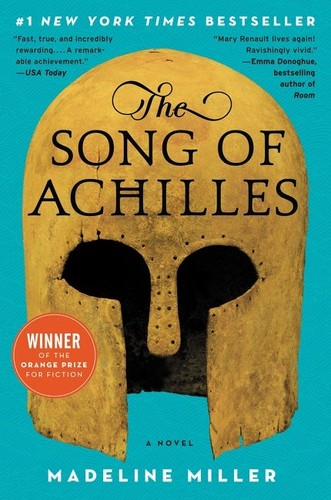
Compared to The Song of Achilles, where Madeline Miller's approach is more elegiac, Circe feels more interested in autonomy and will. Did the tonal difference work for you?
- 9.
Which of the mythological encounters — Prometheus, Daedalus, Medea, Odysseus — felt most alive to you? Why?
- 10.
Is Circe's loneliness in the novel sympathetic, or does Miller keep enough distance that you observe it rather than feel it?
- 11.
The novel frames witchcraft as something women discovered when gods wouldn't share power. Does that reading hold up throughout the book?
- 12.
Penelope appears late in the novel. Did adding her change how you read Circe's story?
Themes
Frequently asked questions
-
Do I need to know Greek mythology to read Circe?
No. Miller handles the mythological context well enough that readers who don't know Homer can follow and enjoy the novel. Knowledge of the Odyssey and Greek myth deepens the reading but isn't required.
-
Is Circe a feminist retelling?
That framing is reductive but not wrong. The novel is interested in what happens to a woman who is powerful in a world built to suppress that power. It doesn't make Circe a symbol — she's too specific and complicated for that — but the politics are clear.
-
Is Circe worth reading if I loved The Song of Achilles?
Yes, though the books feel different. The Song of Achilles is a love story and tragedy; Circe is a long arc of self-determination. The prose quality is similar. Readers who loved the mythological world-building in Song of Achilles will feel at home.
-
How long does Circe take to read?
Around seven to eight hours at average pace. The novel has a wide time scale — Circe is immortal — and some sections move slowly on purpose. It rewards reading in longer stretches rather than short sessions.
-
Who shouldn't read Circe?
Readers who want plot-driven fantasy with high momentum. The novel is a character study spread across centuries; the pacing reflects Circe's immortal rhythms, not narrative urgency. If you need something to happen on every page, this will frustrate you.