Science · Book club
Clean Code book club questions
Here are 12 book club questions for Clean Code by Robert C. Martin, ordered to open easily and end somewhere worth arguing about. Copy them, print them, or bring them up one at a time.
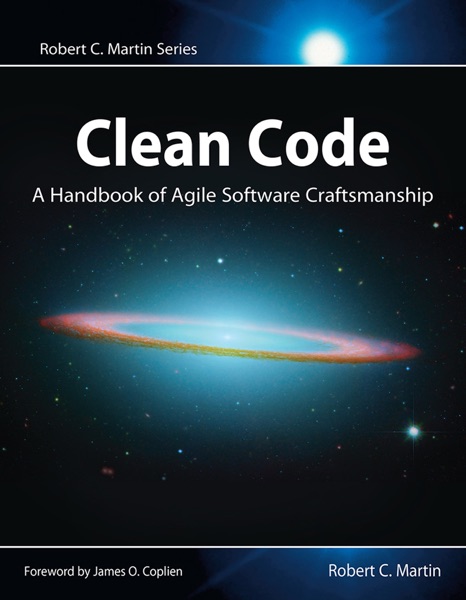
Clean Code is Robert Martin's extended argument that writing readable, maintainable code is a professional obligation, not an optional refinement.
Robert C. Martin · 2008 · 6h 15m
Full summary and key takeaways →The 12 questions
- 1.
Martin argues that bad code is primarily a professional failure, not a technical one. Do you agree? Have you experienced the slowdown of a messy codebase?
- 2.
His rule about function length is strict: very short, often three to five lines. Does that match how you write or prefer to read code?
- 3.
Comments that explain what code does are almost always a code smell, Martin says. What's an example where you've used a comment to avoid rewriting something?
- 4.
The Boy Scout Rule asks you to improve code whenever you touch it. What stops people from actually doing that in practice?
- 5.
Martin is firm about test-driven development. Have you used TDD? What changed about the design of your code when tests came first?
- 6.
Some of Martin's style preferences — like avoiding else clauses, keeping all objects small — are contested. Which rules do you find most useful and which feel too absolute?
- 7.
The book assumes a specific kind of software work: object-oriented, business-logic-heavy systems. How much do the rules transfer to other contexts — scripts, data pipelines, embedded code?
- 8.
What's the most useful refactoring technique you've learned, and does it appear in this book?
- 9.
Martin often shows a before and after: ugly code, then clean code. Which transformation surprised you most, and why?
- 10.
The concurrency chapter describes genuinely hard problems. What practices have you found useful for managing concurrent code that isn't covered here?
- 11.
Clean code is sometimes slower to write initially. How do you make the case to a team or manager that the upfront cost is worth it?
- 12.
How does the book's advice apply to a codebase you inherit versus one you build from scratch?
How to run the discussion
- Pick six to eight, not all of them. An hour of real discussion covers fewer questions than anyone expects, and racing the list is what makes a book club feel like homework.
- Open with what people noticed, not what they concluded. Asking for a verdict first hardens opinions before anyone has heard each other.
- Let the disagreement run. The questions below that split a room are the ones worth the time; the ones everyone answers the same way can be skipped.
- Ask the quiet person a specific question. A direct, narrow question is far easier to answer than an open invitation to contribute.
Themes worth steering toward
If the conversation stalls, these are the threads that usually restart it.
Common questions
What are good book club questions for Clean Code?
Here are 12 book club questions for Clean Code by Robert C. Martin, ordered to open easily and end somewhere worth arguing about. The strongest openers ask what each reader noticed rather than what they concluded, and the discussion usually turns on software craftsmanship, readability, refactoring.
How long should a book club discussion of Clean Code last?
Most groups run 60 to 90 minutes of actual discussion. That is roughly six to eight questions, not all of them, so pick the ones that suit your group rather than working down the list in order.
What are the main themes in Clean Code?
Software craftsmanship, Readability, Refactoring, Professional practice, Code design. Those are the threads most likely to divide a room, which makes them the useful places to steer a discussion that has gone quiet.
Picking the next one? See books like Clean Code or questions for other book club picks.
