History · Book club
Command and Control: Nuclear Weapons, the Damascus Accident, and the Illusion of Safety book club questions
Here are 12 book club questions for Command and Control: Nuclear Weapons, the Damascus Accident, and the Illusion of Safety by Eric Schlosser, ordered to open easily and end somewhere worth arguing about. Copy them, print them, or bring them up one at a time.
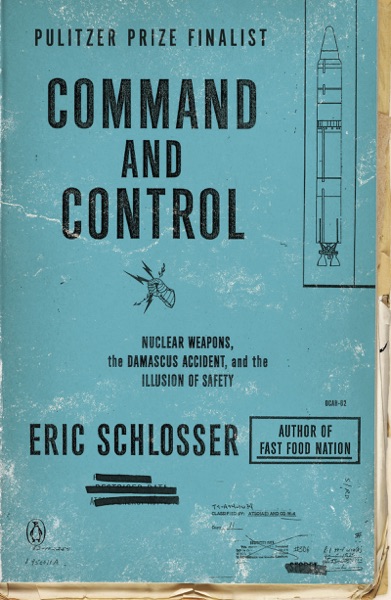
Command and Control is Eric Schlosser's investigation into the hidden history of nuclear weapons accidents and the organizations that tried to prevent them from detonating by accident.
Eric Schlosser · 2013 · 9h 45m
Full summary and key takeaways →The 12 questions
- 1.
Schlosser argues that near-accidents were far more common than the government acknowledged. Does this change how you think about nuclear deterrence as a stable policy?
- 2.
The Air Force culture favored readiness over safety. What organizational pressures created that culture, and do similar pressures exist in other high-stakes industries?
- 3.
How does Charles Perrow's 'normal accidents' theory apply beyond nuclear weapons? What other complex systems might be subject to the same inevitable failure modes?
- 4.
The engineers who built the warheads often knew about safety risks that were being ignored. What responsibility did they have to push harder, and what constraints limited them?
- 5.
The Damascus accident was caused by a dropped wrench socket. How does the mundaneness of the initial failure affect how you think about catastrophic risk?
- 6.
Schlosser shows that much of this history was deliberately classified. What is the public's legitimate interest in knowing about near-disasters involving nuclear weapons?
- 7.
The book profiles workers at the Damascus site who risked their lives trying to save a weapon that might have killed them. What does it say about institutional culture that they felt compelled to try?
- 8.
Does the long stretch of Cold War without an accidental detonation prove that the system worked, or does it merely prove that we got lucky? How would you distinguish between these two interpretations?
- 9.
Many safety improvements were resisted because they added cost or reduced capability. How should governments balance operational capability against safety in systems with catastrophic failure modes?
- 10.
How does Schlosser's portrait of the military-industrial complex compare to popular images of cold, calculating deterrence strategy?
- 11.
The book was written in 2013. How do the risks it describes change as nuclear arsenals age and new countries acquire weapons?
- 12.
Which specific accident in the book alarmed you most, and why?
How to run the discussion
- Pick six to eight, not all of them. An hour of real discussion covers fewer questions than anyone expects, and racing the list is what makes a book club feel like homework.
- Open with what people noticed, not what they concluded. Asking for a verdict first hardens opinions before anyone has heard each other.
- Let the disagreement run. The questions below that split a room are the ones worth the time; the ones everyone answers the same way can be skipped.
- Ask the quiet person a specific question. A direct, narrow question is far easier to answer than an open invitation to contribute.
Themes worth steering toward
If the conversation stalls, these are the threads that usually restart it.
Common questions
What are good book club questions for Command and Control: Nuclear Weapons, the Damascus Accident, and the Illusion of Safety?
Here are 12 book club questions for Command and Control: Nuclear Weapons, the Damascus Accident, and the Illusion of Safety by Eric Schlosser, ordered to open easily and end somewhere worth arguing about. The strongest openers ask what each reader noticed rather than what they concluded, and the discussion usually turns on nuclear weapons, bureaucracy and safety, cold war.
How long should a book club discussion of Command and Control: Nuclear Weapons, the Damascus Accident, and the Illusion of Safety last?
Most groups run 60 to 90 minutes of actual discussion. That is roughly six to eight questions, not all of them, so pick the ones that suit your group rather than working down the list in order.
What are the main themes in Command and Control: Nuclear Weapons, the Damascus Accident, and the Illusion of Safety?
Nuclear weapons, Bureaucracy and safety, Cold War, Accident and risk, Military policy. Those are the threads most likely to divide a room, which makes them the useful places to steer a discussion that has gone quiet.
Picking the next one? See books like Command and Control: Nuclear Weapons, the Damascus Accident, and the Illusion of Safety or questions for other book club picks.
