Economics · Book club
Common Sense on Mutual Funds book club questions
Here are 11 book club questions for Common Sense on Mutual Funds by John C. Bogle, ordered to open easily and end somewhere worth arguing about. Copy them, print them, or bring them up one at a time.
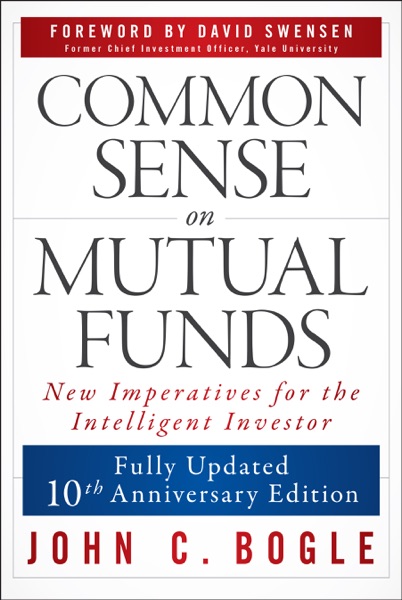
John Bogle, the founder of Vanguard and inventor of the retail index fund, wrote Common Sense on Mutual Funds as a comprehensive argument for why most investors should own index funds rather than actively managed funds.
John C. Bogle · 1999 · 11h 15m
Full summary and key takeaways →The 11 questions
- 1.
Bogle's core argument is arithmetic: after costs, active management must underperform the index on average. If that's true, why do so many investors and advisors continue using active funds?
- 2.
The compounding of costs over thirty years produces a dramatic gap between index and active fund outcomes. Had you internalized this calculation before reading the book?
- 3.
Bogle argues that the fund industry primarily serves its own interests rather than investors'. How does that compare to other professional advisory relationships you've had?
- 4.
Past performance does not predict future performance. What other decisions do you make by assuming recent trends will continue, and is Bogle's warning transferable to those domains?
- 5.
Vanguard's structure — owned by its funds, which are owned by investors — is meant to eliminate the manager-investor conflict. Do you think ownership structure actually drives behavior in financial institutions?
- 6.
Bogle was writing in 1999, near the peak of the dot-com boom when active stock picking seemed to be generating huge returns. How should a reader in that environment have evaluated his argument?
- 7.
The book is primarily about US equity markets. How much do his conclusions transfer to international markets or to asset classes other than stocks?
- 8.
Bogle advocates for simplicity: a total market index fund and a total bond market fund, in an age-appropriate ratio. What is the counterargument from someone who believes complexity creates value?
- 9.
The book argues that most financial advisors cost their clients more than they add. What would it take for you to decide your financial advisor (if you have one) is worth the fee?
- 10.
Bogle's advice requires accepting market returns and not trying to beat them. Psychologically, how hard is that acceptance, and what makes it difficult?
- 11.
What would change about personal financial behavior in the United States if every investor in the country read and believed this book?
How to run the discussion
- Pick six to eight, not all of them. An hour of real discussion covers fewer questions than anyone expects, and racing the list is what makes a book club feel like homework.
- Open with what people noticed, not what they concluded. Asking for a verdict first hardens opinions before anyone has heard each other.
- Let the disagreement run. The questions below that split a room are the ones worth the time; the ones everyone answers the same way can be skipped.
- Ask the quiet person a specific question. A direct, narrow question is far easier to answer than an open invitation to contribute.
Themes worth steering toward
If the conversation stalls, these are the threads that usually restart it.
Common questions
What are good book club questions for Common Sense on Mutual Funds?
Here are 11 book club questions for Common Sense on Mutual Funds by John C. Bogle, ordered to open easily and end somewhere worth arguing about. The strongest openers ask what each reader noticed rather than what they concluded, and the discussion usually turns on investing, index funds, cost minimization.
How long should a book club discussion of Common Sense on Mutual Funds last?
Most groups run 60 to 90 minutes of actual discussion. That is roughly six to eight questions, not all of them, so pick the ones that suit your group rather than working down the list in order.
What are the main themes in Common Sense on Mutual Funds?
Investing, Index funds, Cost minimization, Long-term thinking, Fiduciary duty. Those are the threads most likely to divide a room, which makes them the useful places to steer a discussion that has gone quiet.
Picking the next one? See books like Common Sense on Mutual Funds or questions for other book club picks.
