Business · Book club
Competitive Strategy book club questions
Here are 12 book club questions for Competitive Strategy by Michael E. Porter, ordered to open easily and end somewhere worth arguing about. Copy them, print them, or bring them up one at a time.
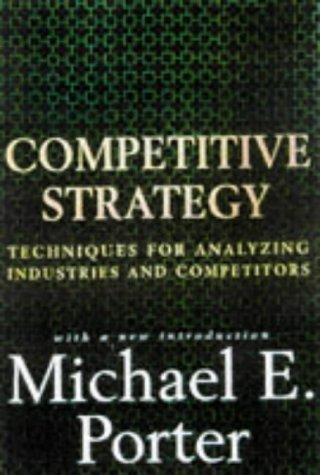
Competitive Strategy is Michael Porter's foundational framework for analyzing industries and developing competitive strategy.
Michael E. Porter · 1980 · 8h 0m
Full summary and key takeaways →The 12 questions
- 1.
Apply the Five Forces to an industry you know well. Which force is most powerful? How does that shape the strategic choices available to companies in that industry?
- 2.
Porter says the most dangerous competitive position is being stuck in the middle. Where do you see companies that are neither cost leaders nor differentiated, and what is their trajectory?
- 3.
Can a company be both a cost leader and differentiated simultaneously? Porter says no — that pursuing both usually leads to being stuck in the middle. Do you agree?
- 4.
How do entry barriers shape the competitive dynamics of an industry you follow? What would lower those barriers, and what would that mean for existing players?
- 5.
Porter wrote this in 1980, before the internet, platform businesses, and network effects were dominant. What would he add to the Five Forces framework today?
- 6.
The threat of substitutes is different from the threat of new entrants. What is an example of a substitution threat that destroyed an industry that wasn't adequately competed away by a new entrant?
- 7.
Porter's three generic strategies assume a single competitive position. Is that assumption still valid in markets where companies can rapidly shift between positions?
- 8.
Buyer power and supplier power are structural factors, not just negotiating tactics. How does a company shift its position on one of these forces over time?
- 9.
Industry structure determines average profitability, but individual companies outperform their industry average. What allows specific companies to beat the structural average consistently?
- 10.
How does the generic strategies framework apply to nonprofit organizations, government agencies, or other non-commercial entities?
- 11.
Porter's framework is primarily a diagnostic tool — it tells you what's happening but requires judgment to prescribe what to do. What are its limitations as an action-planning framework?
- 12.
Choose a company that has recently changed its competitive strategy. Map the before and after on the Five Forces framework. What changed in the structure, and what did the company do in response?
How to run the discussion
- Pick six to eight, not all of them. An hour of real discussion covers fewer questions than anyone expects, and racing the list is what makes a book club feel like homework.
- Open with what people noticed, not what they concluded. Asking for a verdict first hardens opinions before anyone has heard each other.
- Let the disagreement run. The questions below that split a room are the ones worth the time; the ones everyone answers the same way can be skipped.
- Ask the quiet person a specific question. A direct, narrow question is far easier to answer than an open invitation to contribute.
Themes worth steering toward
If the conversation stalls, these are the threads that usually restart it.
Common questions
What are good book club questions for Competitive Strategy?
Here are 12 book club questions for Competitive Strategy by Michael E. Porter, ordered to open easily and end somewhere worth arguing about. The strongest openers ask what each reader noticed rather than what they concluded, and the discussion usually turns on strategy, competition, industry analysis.
How long should a book club discussion of Competitive Strategy last?
Most groups run 60 to 90 minutes of actual discussion. That is roughly six to eight questions, not all of them, so pick the ones that suit your group rather than working down the list in order.
What are the main themes in Competitive Strategy?
Strategy, Competition, Industry analysis, Competitive advantage, Economics. Those are the threads most likely to divide a room, which makes them the useful places to steer a discussion that has gone quiet.
Picking the next one? See books like Competitive Strategy or questions for other book club picks.
