Philosophy · Book club
Concerning the Spiritual in Art book club questions
Here are 11 book club questions for Concerning the Spiritual in Art by Wassily Kandinsky, ordered to open easily and end somewhere worth arguing about. Copy them, print them, or bring them up one at a time.
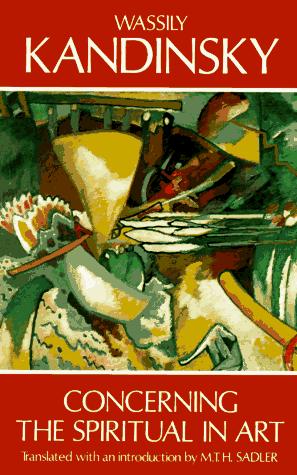
Wassily Kandinsky's 1911 manifesto is the founding document of abstract art.
Wassily Kandinsky · 1911 · 2h 0m
Full summary and key takeaways →The 11 questions
- 1.
Kandinsky wrote this at the moment he was abandoning representational painting. How does knowing the historical stakes change how you read the arguments?
- 2.
Do his color associations — yellow as aggressive, blue as spiritual — match your own experience, or do they feel culturally specific?
- 3.
What does 'inner necessity' mean in practice? Can you think of art that obviously has it and art that obviously doesn't?
- 4.
Kandinsky draws extensive parallels to music. Does music work on you the way he describes, bypassing intellect and hitting directly? Does visual art do the same?
- 5.
He believed Western culture was in a materialist crisis that art could help correct. Does that diagnosis feel relevant now?
- 6.
The book's spiritualism draws on theosophy and Steiner. How much does the philosophical scaffolding matter if the color observations are accurate?
- 7.
Is abstract art actually more emotionally direct than representational art, or does it just require a different kind of learned perception?
- 8.
Kandinsky was synesthetic — he heard colors. How much of his theory depends on that unusual sensory equipment?
- 9.
Which of his color analyses has most changed how you see a specific painting or composition?
- 10.
The book was published in 1911, a year before his first purely abstract works. Does it feel like a manifesto building toward a decision, or a retrospective justification?
- 11.
What would it mean to apply 'inner necessity' as a standard to work outside art — writing, design, or music you make yourself?
How to run the discussion
- Pick six to eight, not all of them. An hour of real discussion covers fewer questions than anyone expects, and racing the list is what makes a book club feel like homework.
- Open with what people noticed, not what they concluded. Asking for a verdict first hardens opinions before anyone has heard each other.
- Let the disagreement run. The questions below that split a room are the ones worth the time; the ones everyone answers the same way can be skipped.
- Ask the quiet person a specific question. A direct, narrow question is far easier to answer than an open invitation to contribute.
Themes worth steering toward
If the conversation stalls, these are the threads that usually restart it.
Common questions
What are good book club questions for Concerning the Spiritual in Art?
Here are 11 book club questions for Concerning the Spiritual in Art by Wassily Kandinsky, ordered to open easily and end somewhere worth arguing about. The strongest openers ask what each reader noticed rather than what they concluded, and the discussion usually turns on abstract art, color theory, spiritual experience.
How long should a book club discussion of Concerning the Spiritual in Art last?
Most groups run 60 to 90 minutes of actual discussion. That is roughly six to eight questions, not all of them, so pick the ones that suit your group rather than working down the list in order.
What are the main themes in Concerning the Spiritual in Art?
Abstract art, Color theory, Spiritual experience, Inner necessity, Modernism. Those are the threads most likely to divide a room, which makes them the useful places to steer a discussion that has gone quiet.
Picking the next one? See books like Concerning the Spiritual in Art or questions for other book club picks.
