Philosophy · Book club
Confessions book club questions
Here are 12 book club questions for Confessions by Saint Augustine, ordered to open easily and end somewhere worth arguing about. Copy them, print them, or bring them up one at a time.
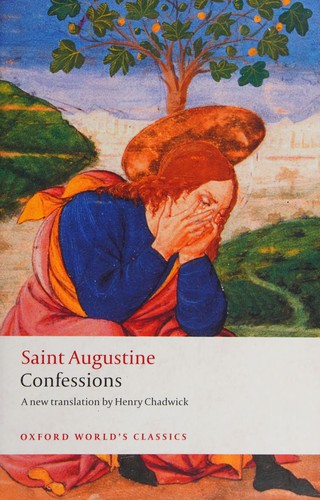
Confessions, written around 397 CE, is the spiritual autobiography of Augustine of Hippo and one of the most influential texts in Western philosophy and Christian theology.
Saint Augustine · 1909 · 7h 45m
Full summary and key takeaways →The 12 questions
- 1.
Augustine reads his entire early life as a misdirected search for something he couldn't name. Looking back at your own history, is there a pattern in what you have sought — and what it might have been aiming at?
- 2.
The pear-tree theft: Augustine steals purely for the act of stealing. Does the idea of evil for its own sake — transgression without any gain — resonate with anything in human behavior you've observed?
- 3.
Augustine spent years as a Manichaean before deciding it was wrong. What does his experience suggest about the relationship between intelligence and belief?
- 4.
The conversion comes after years of knowing intellectually but not being able to will the change. Have you experienced the gap between knowing what you should do and being able to actually do it? What closed that gap, if it closed?
- 5.
Augustine's mother Monica prays for him for more than a decade. What does his treatment of her suggest about the relationship between persistence, love, and influence?
- 6.
Books 10–13 pivot from autobiography to philosophy. Does the shift feel like the same book — or does Augustine's project change in a way that disrupts the narrative?
- 7.
Augustine's account of time — that past and future only exist as mental states — is still philosophically contested. Does it match your experience of how time feels from the inside?
- 8.
The Confessions is addressed to God rather than a human reader. How does that rhetorical choice change what Augustine can say, and how you receive it?
- 9.
Augustine writes with intense self-criticism but also with retrospective confidence that everything was heading somewhere. Is that combination honest — or does conversion change the story too conveniently?
- 10.
Which passages in the Confessions felt most contemporary — as if Augustine could have been writing now rather than in the late fourth century?
- 11.
Augustine treats intellectual pride as his deepest sin, more dangerous than sexual sin. Do you think that ordering is right?
- 12.
What would an honest modern confessions — written in the spirit of Augustine but without the religious framework — look like? What would it have to include?
How to run the discussion
- Pick six to eight, not all of them. An hour of real discussion covers fewer questions than anyone expects, and racing the list is what makes a book club feel like homework.
- Open with what people noticed, not what they concluded. Asking for a verdict first hardens opinions before anyone has heard each other.
- Let the disagreement run. The questions below that split a room are the ones worth the time; the ones everyone answers the same way can be skipped.
- Ask the quiet person a specific question. A direct, narrow question is far easier to answer than an open invitation to contribute.
Themes worth steering toward
If the conversation stalls, these are the threads that usually restart it.
Common questions
What are good book club questions for Confessions?
Here are 12 book club questions for Confessions by Saint Augustine, ordered to open easily and end somewhere worth arguing about. The strongest openers ask what each reader noticed rather than what they concluded, and the discussion usually turns on conversion, memory, divine love.
How long should a book club discussion of Confessions last?
Most groups run 60 to 90 minutes of actual discussion. That is roughly six to eight questions, not all of them, so pick the ones that suit your group rather than working down the list in order.
What are the main themes in Confessions?
Conversion, Memory, Divine love, Sin and grace, Self-examination. Those are the threads most likely to divide a room, which makes them the useful places to steer a discussion that has gone quiet.
Picking the next one? See books like Confessions or questions for other book club picks.
