Philosophy · Book club
Consciousness Explained book club questions
Here are 12 book club questions for Consciousness Explained by Daniel C. Dennett, ordered to open easily and end somewhere worth arguing about. Copy them, print them, or bring them up one at a time.
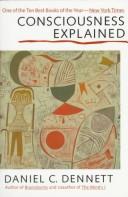
Consciousness Explained is Daniel Dennett's attempt to replace what he calls the Cartesian Theater — the intuitive picture of consciousness as a single unified stream of experience observed by a self — with a model he calls Multiple Drafts.
Daniel C. Dennett · 1991 · 10h 45m
Full summary and key takeaways →The 12 questions
- 1.
Dennett argues the Cartesian Theater is a myth but admits it feels real. What does that gap between how mind feels from the inside and what neuroscience suggests tell us?
- 2.
The Multiple Drafts model says there is no single moment of consciousness. Does that match your own experience, or does it feel wrong in a way that seems significant?
- 3.
Dennett claims introspection is unreliable. Which of the experiments he describes do you find most convincing on this point?
- 4.
His critics say he explains qualia away rather than explains them. What would count as genuinely explaining subjective experience rather than explaining it away?
- 5.
If the self is a narrative fiction the brain generates, does that change anything about how you think about personal identity or moral responsibility?
- 6.
Dennett is a physicalist: he believes consciousness is entirely a product of physical processes. What would persuade you that he's wrong?
- 7.
The book was published in 1991. Which parts feel most outdated given developments in neuroscience since then, and which still hold up?
- 8.
Why do you think the intuition that there must be 'something it is like' to be conscious persists even among people who accept Dennett's framework intellectually?
- 9.
Dennett dismisses the 'hard problem' of consciousness as a pseudo-problem. Is that a satisfying philosophical move or an evasion?
- 10.
How does reading this book change, if at all, how you think about the consciousness of animals, infants, or AI systems?
- 11.
Dennett's tone is confident and sometimes dismissive of his opponents. Does that rhetorical style make the argument stronger or weaker?
- 12.
If everything Dennett claims is true, is there still a meaningful distinction between being awake and dreaming?
How to run the discussion
- Pick six to eight, not all of them. An hour of real discussion covers fewer questions than anyone expects, and racing the list is what makes a book club feel like homework.
- Open with what people noticed, not what they concluded. Asking for a verdict first hardens opinions before anyone has heard each other.
- Let the disagreement run. The questions below that split a room are the ones worth the time; the ones everyone answers the same way can be skipped.
- Ask the quiet person a specific question. A direct, narrow question is far easier to answer than an open invitation to contribute.
Themes worth steering toward
If the conversation stalls, these are the threads that usually restart it.
Common questions
What are good book club questions for Consciousness Explained?
Here are 12 book club questions for Consciousness Explained by Daniel C. Dennett, ordered to open easily and end somewhere worth arguing about. The strongest openers ask what each reader noticed rather than what they concluded, and the discussion usually turns on consciousness, philosophy of mind, neuroscience.
How long should a book club discussion of Consciousness Explained last?
Most groups run 60 to 90 minutes of actual discussion. That is roughly six to eight questions, not all of them, so pick the ones that suit your group rather than working down the list in order.
What are the main themes in Consciousness Explained?
Consciousness, Philosophy of mind, Neuroscience, Cognition, Naturalism. Those are the threads most likely to divide a room, which makes them the useful places to steer a discussion that has gone quiet.
Picking the next one? See books like Consciousness Explained or questions for other book club picks.
