Literary fiction · Book club
Conversations with Friends book club questions
Here are 12 book club questions for Conversations with Friends by Sally Rooney, ordered to open easily and end somewhere worth arguing about. Copy them, print them, or bring them up one at a time.
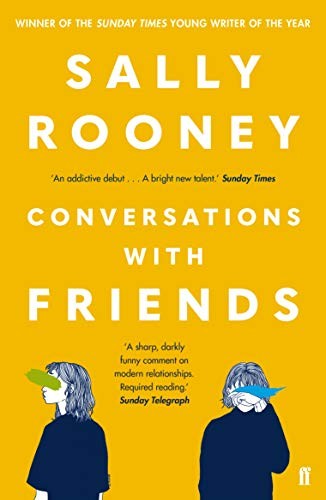
Conversations with Friends is told by Frances, a twenty-one-year-old Dublin student who performs spoken-word poetry with her best friend and ex-girlfriend Bobbi.
Sally Rooney · 2017 · 4h 45m
Full summary and key takeaways →The 12 questions
- 1.
Frances maintains that she doesn't have feelings, or that feelings are something she observes from a distance. By the end of the novel, does she still believe this? Does the reader?
- 2.
Nick is passive, accommodating, and somewhat flat as a character. Is that a flaw in the novel or a deliberate choice about who Frances is capable of seeing clearly?
- 3.
The novel is set in a specific Dublin intellectual milieu — dinner parties, literary magazines, progressive politics. How much does this setting define the characters? Would they be the same people in a different context?
- 4.
Frances and Bobbi describe their relationship as a friendship after having been lovers. Is that framing honest, or is the novel suggesting something more complicated is still happening?
- 5.
Melissa knows about the affair, eventually. How does the novel want us to feel about her response? Do you think that response is realistic?
- 6.
Frances uses the language of politics and theory to analyze her own life. Does the novel suggest this is useful, or a sophisticated form of avoidance?
- 7.
The endometriosis subplot arrives fairly late. What does it change? Does Frances's illness affect how you read her emotional detachment earlier in the book?
- 8.
Compared to Normal People, is Frances or Marianne a more honest self-portrait of a certain kind of young woman? Which novel is more unsettling to read?
- 9.
By the end, Frances is considering resuming the affair. Is this a hopeful sign of emotional growth or evidence that she hasn't changed at all?
- 10.
Who has the most power in the four-way dynamic between Frances, Bobbi, Nick, and Melissa? Does it shift over the course of the novel?
- 11.
The novel implies that Frances is attracted to Nick partly because of his higher social position. How much does class operate as erotic charge in Rooney's work?
- 12.
Rooney has said she wanted to write a novel that didn't punish people for infidelity in the conventional way. Did she succeed? Is the novel actually morally neutral about the affair?
How to run the discussion
- Pick six to eight, not all of them. An hour of real discussion covers fewer questions than anyone expects, and racing the list is what makes a book club feel like homework.
- Open with what people noticed, not what they concluded. Asking for a verdict first hardens opinions before anyone has heard each other.
- Let the disagreement run. The questions below that split a room are the ones worth the time; the ones everyone answers the same way can be skipped.
- Ask the quiet person a specific question. A direct, narrow question is far easier to answer than an open invitation to contribute.
Themes worth steering toward
If the conversation stalls, these are the threads that usually restart it.
Common questions
What are good book club questions for Conversations with Friends?
Here are 12 book club questions for Conversations with Friends by Sally Rooney, ordered to open easily and end somewhere worth arguing about. The strongest openers ask what each reader noticed rather than what they concluded, and the discussion usually turns on desire and self-knowledge, friendship and betrayal, class and privilege.
How long should a book club discussion of Conversations with Friends last?
Most groups run 60 to 90 minutes of actual discussion. That is roughly six to eight questions, not all of them, so pick the ones that suit your group rather than working down the list in order.
What are the main themes in Conversations with Friends?
Desire and self-knowledge, Friendship and betrayal, Class and privilege, Marriage and unconventional relationships, Identity and performance. Those are the threads most likely to divide a room, which makes them the useful places to steer a discussion that has gone quiet.
Picking the next one? See books like Conversations with Friends or questions for other book club picks.
