Science · Book club
Cradle to Cradle: Remaking the Way We Make Things book club questions
Here are 11 book club questions for Cradle to Cradle: Remaking the Way We Make Things by William McDonough & Michael Braungart, ordered to open easily and end somewhere worth arguing about. Copy them, print them, or bring them up one at a time.
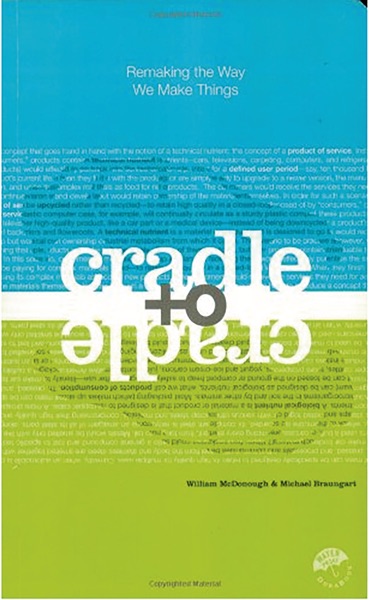
Cradle to Cradle is William McDonough and Michael Braungart's argument that the conventional approach to environmentalism — reducing, reusing, recycling, being "less bad" — is insufficient and in some ways misleading.
William McDonough & Michael Braungart · 2002 · 3h 45m
Full summary and key takeaways →The 11 questions
- 1.
McDonough and Braungart argue that incremental eco-efficiency is the wrong target. Do you find their critique of 'being less bad' convincing, or is it too idealistic for current industrial reality?
- 2.
Can you identify a product you use daily that is genuinely designed for material recovery at end of life? What would need to change to make it so?
- 3.
The book distinguishes biological from technical metabolisms. Is this a useful conceptual distinction in practice, or does it oversimplify the complexity of real product materials?
- 4.
The authors are an architect and a chemist. Does that combination come through in the argument, and how does interdisciplinarity affect the strength of the case they make?
- 5.
Cradle to Cradle was published in 2002. How much has industrial practice moved toward the model they describe in the two decades since, and what has slowed or accelerated progress?
- 6.
The book itself is printed on synthetic polymer pages, not paper. Is this more of a provocation than a practical choice, and what does it say about the authors' priorities?
- 7.
Many sustainability initiatives in large companies emphasize carbon reduction. How does the cradle-to-cradle framework relate to — or compete with — that framing?
- 8.
McDonough and Braungart are optimistic about industrial transformation through better design. What role do regulation, taxation, and consumer behavior need to play for their vision to be achievable?
- 9.
The circular economy concept has become mainstream in policy and business since 2002. How much of that shift traces back to Cradle to Cradle, and how much has the mainstream adoption changed or diluted the original argument?
- 10.
The book is relatively short and polemical. Does it succeed as a call to action, or does it need the level of detail it lacks to be operationally useful?
- 11.
What is the most practically feasible change a designer, engineer, or product manager could make today that reflects the cradle-to-cradle principles?
How to run the discussion
- Pick six to eight, not all of them. An hour of real discussion covers fewer questions than anyone expects, and racing the list is what makes a book club feel like homework.
- Open with what people noticed, not what they concluded. Asking for a verdict first hardens opinions before anyone has heard each other.
- Let the disagreement run. The questions below that split a room are the ones worth the time; the ones everyone answers the same way can be skipped.
- Ask the quiet person a specific question. A direct, narrow question is far easier to answer than an open invitation to contribute.
Themes worth steering toward
If the conversation stalls, these are the threads that usually restart it.
Common questions
What are good book club questions for Cradle to Cradle: Remaking the Way We Make Things?
Here are 11 book club questions for Cradle to Cradle: Remaking the Way We Make Things by William McDonough & Michael Braungart, ordered to open easily and end somewhere worth arguing about. The strongest openers ask what each reader noticed rather than what they concluded, and the discussion usually turns on sustainability, design, circular economy.
How long should a book club discussion of Cradle to Cradle: Remaking the Way We Make Things last?
Most groups run 60 to 90 minutes of actual discussion. That is roughly six to eight questions, not all of them, so pick the ones that suit your group rather than working down the list in order.
What are the main themes in Cradle to Cradle: Remaking the Way We Make Things?
Sustainability, Design, Circular economy, Manufacturing, Ecology. Those are the threads most likely to divide a room, which makes them the useful places to steer a discussion that has gone quiet.
Picking the next one? See books like Cradle to Cradle: Remaking the Way We Make Things or questions for other book club picks.
