Business · Book club
Creative Selection book club questions
Here are 12 book club questions for Creative Selection by Ken Kocienda, ordered to open easily and end somewhere worth arguing about. Copy them, print them, or bring them up one at a time.
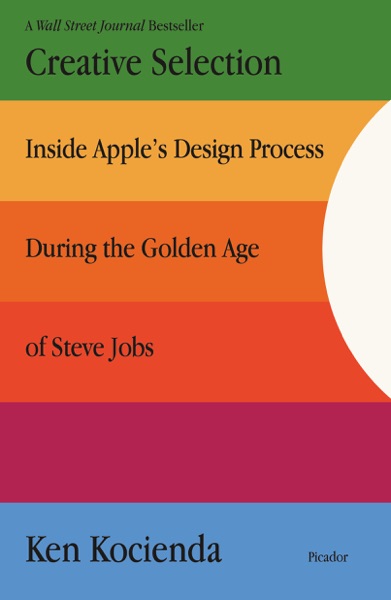
Creative Selection is Ken Kocienda's first-hand account of how software gets made at Apple during the period when the iPhone and iPad were born.
Ken Kocienda · 2018 · 4h 45m
Full summary and key takeaways →The 12 questions
- 1.
Kocienda argues that demos are a better design tool than documents. Where in your own work could you replace a document with a working prototype?
- 2.
The creative selection loop requires honest, immediate feedback. What cultural conditions in your workplace make that kind of feedback easier or harder to give?
- 3.
How did Kocienda develop his sense of taste, and how do you develop yours in your own field?
- 4.
Jobs pushed teams to eliminate features rather than add them. Think of a project you've been involved in — what would have happened if the default answer to 'add this?' was no?
- 5.
Kocienda describes months of failing on the keyboard problem before finding an approach that worked. What's your tolerance for that kind of ambiguity on creative work?
- 6.
The book suggests that small, focused teams produce better work than large, distributed ones. Does your experience support or complicate that claim?
- 7.
Apple's culture under Jobs was demanding in ways that would look different in other organizations. What parts of that approach are genuinely worth importing, and what parts rely on context that can't be replicated?
- 8.
Kocienda says inspiration follows preparation. Think of your most effective creative work — what kind of deep preparation preceded it?
- 9.
The iPhone keyboard had to be good enough to build trust with users. What product or service in your life has earned your trust through that kind of calibration?
- 10.
Creative selection involves a lot of thrown-away work. What makes it hard to discard something you've invested time in, and how do you decide when to cut?
- 11.
Kocienda mostly sidesteps questions about Apple's broader culture and business decisions. Does that limit the book's usefulness, or does narrowing the focus make it stronger?
- 12.
What does 'good taste' mean in your professional domain, and how would you recognize when someone has it or lacks it?
How to run the discussion
- Pick six to eight, not all of them. An hour of real discussion covers fewer questions than anyone expects, and racing the list is what makes a book club feel like homework.
- Open with what people noticed, not what they concluded. Asking for a verdict first hardens opinions before anyone has heard each other.
- Let the disagreement run. The questions below that split a room are the ones worth the time; the ones everyone answers the same way can be skipped.
- Ask the quiet person a specific question. A direct, narrow question is far easier to answer than an open invitation to contribute.
Themes worth steering toward
If the conversation stalls, these are the threads that usually restart it.
Common questions
What are good book club questions for Creative Selection?
Here are 12 book club questions for Creative Selection by Ken Kocienda, ordered to open easily and end somewhere worth arguing about. The strongest openers ask what each reader noticed rather than what they concluded, and the discussion usually turns on design, innovation, software craftsmanship.
How long should a book club discussion of Creative Selection last?
Most groups run 60 to 90 minutes of actual discussion. That is roughly six to eight questions, not all of them, so pick the ones that suit your group rather than working down the list in order.
What are the main themes in Creative Selection?
Design, Innovation, Software craftsmanship, Apple culture, Creativity. Those are the threads most likely to divide a room, which makes them the useful places to steer a discussion that has gone quiet.
Picking the next one? See books like Creative Selection or questions for other book club picks.
