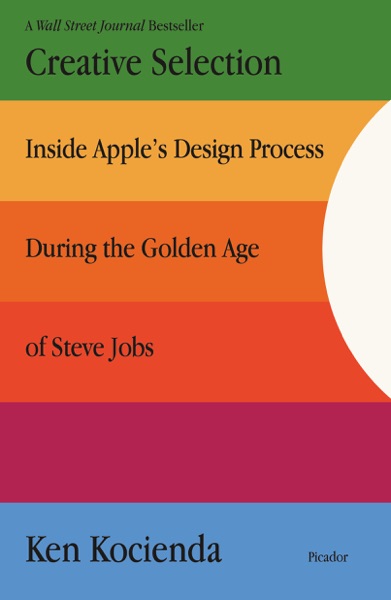
Creative Selection by Ken Kocienda is a 2018 business book about design, innovation, software craftsmanship. Creative selection is the iterative process of demo, critique, and refinement. Ideas improve through repeated exposure to honest feedback, not through up-front planning.
Summary
Creative Selection is Ken Kocienda's first-hand account of how software gets made at Apple during the period when the iPhone and iPad were born. Kocienda spent fifteen years at Apple, building the original iPhone keyboard and contributing to the Safari browser. The book is partly memoir, partly design philosophy, partly an argument that the way you work matters as much as what you're working on.
The central idea is what Kocienda calls "creative selection" — an iterative loop of demo, critique, and refinement that he witnessed repeatedly in Steve Jobs's review sessions. The process wasn't about committees or feature specs. An engineer or designer would build something, show it, get immediate and direct feedback, refine it, and show it again. Over hundreds of cycles, weak ideas died and strong ones survived. The keyboard auto-correction that shipped on the first iPhone was the product of exactly this kind of evolution, not a single moment of inspiration.
Kocienda is unusually honest about what building the keyboard actually looked like: months of dead ends, failed approaches, uncertainty about whether a touchscreen keyboard could even work. The book makes clear that the legendary Apple polish wasn't the result of genius alone but of enormous sustained effort and a willingness to throw out work that wasn't good enough. Jobs's demos were not just theatrical — they were the mechanism by which quality was enforced.
The book has clear limits. It covers one engineer's view of one slice of Apple during a specific era. It doesn't address the company's management structures, its hardware process, or what happened after Jobs. But as a ground-level account of how excellent software is built — the role of taste, the importance of focus, the necessity of the demo — it's more useful than most books on creativity or product development.
Talk to Creative Selection like its author wrote you back.
Get the ideas that fit your life — not generic summaries.
- Chat with the book
- Audiobook-style main ideas
- Adapts to your life and goals
- Helps you take action
Key takeaways
- 1.
Creative selection is the iterative process of demo, critique, and refinement. Ideas improve through repeated exposure to honest feedback, not through up-front planning.
- 2.
The demo is a forcing function. Showing real, working software — not slides or wireframes — forces concrete decisions and surfaces problems that documents hide.
- 3.
Taste in design isn't mystical. It's developed through sustained exposure to good and bad work, and through making many small judgments repeatedly.
- 4.
Focus is a precondition for excellence. The best work Kocienda saw at Apple came from small teams working on one thing, not large teams managing many priorities at once.
- 5.
Steve Jobs's feedback in demos was immediate, specific, and often brutal — and it was the mechanism that enforced quality across the company's output.
- 6.
Building the iPhone keyboard required solving a layered problem: auto-correction had to be good enough that users trusted it rather than fighting it. That required months of calibration, not a single algorithm.
- 7.
Inspiration follows preparation. The insights that felt like breakthroughs came only after deep immersion in the problem, not from stepping back and waiting.
- 8.
The right people matter more than the right process. Apple's results in this era came from assembling people with taste, craft, and the willingness to be demanding of themselves.
Discussion questions
Use these on your own, with a book club, or as chat starters in Superbook. Book club version, ready to copy or print →
- 1.
Kocienda argues that demos are a better design tool than documents. Where in your own work could you replace a document with a working prototype?
- 2.
The creative selection loop requires honest, immediate feedback. What cultural conditions in your workplace make that kind of feedback easier or harder to give?
- 3.
How did Kocienda develop his sense of taste, and how do you develop yours in your own field?
- 4.
Jobs pushed teams to eliminate features rather than add them. Think of a project you've been involved in — what would have happened if the default answer to 'add this?' was no?
- 5.
Kocienda describes months of failing on the keyboard problem before finding an approach that worked. What's your tolerance for that kind of ambiguity on creative work?
- 6.
The book suggests that small, focused teams produce better work than large, distributed ones. Does your experience support or complicate that claim?
- 7.
Apple's culture under Jobs was demanding in ways that would look different in other organizations. What parts of that approach are genuinely worth importing, and what parts rely on context that can't be replicated?
- 8.
Kocienda says inspiration follows preparation. Think of your most effective creative work — what kind of deep preparation preceded it?
- 9.
The iPhone keyboard had to be good enough to build trust with users. What product or service in your life has earned your trust through that kind of calibration?
- 10.
Creative selection involves a lot of thrown-away work. What makes it hard to discard something you've invested time in, and how do you decide when to cut?
- 11.
Kocienda mostly sidesteps questions about Apple's broader culture and business decisions. Does that limit the book's usefulness, or does narrowing the focus make it stronger?
- 12.
What does 'good taste' mean in your professional domain, and how would you recognize when someone has it or lacks it?
Themes
Frequently asked questions
-
Is Creative Selection worth reading if you don't work in tech?
Yes, with some caveats. The book is ultimately about creative process — iteration, taste, focus, honest feedback — and those ideas transfer outside software. But the technical passages require patience if you have no programming background, and some of the Apple mythology may grate if you're skeptical of it.
-
How long does it take to read Creative Selection?
Around four to five hours. The chapters are short and the writing is accessible. Readers with a software background will move faster; others may slow down at the more technical sections.
-
What is creative selection, exactly?
It's Kocienda's term for Apple's iterative demo-critique-refine cycle. Individuals build working prototypes, show them to colleagues and leadership, receive direct feedback, and improve. Over many cycles, the best ideas survive. Kocienda explicitly draws the analogy to natural selection.
-
Does the book offer a realistic picture of Apple, or is it hagiography?
It's more honest than most Apple books but deliberately narrow in scope. Kocienda doesn't disguise the difficulty and uncertainty of his work, and he portrays Jobs as genuinely demanding rather than mythologically brilliant. But the book covers a specific team in a specific era and doesn't engage with Apple's broader culture or controversies.
-
What's the most useful idea for someone building products?
The demo as a quality-enforcement mechanism. Requiring working software rather than documents at review forces precision and surfaces problems early. Most product processes tolerate vagueness that a live demo immediately exposes.
Similar books
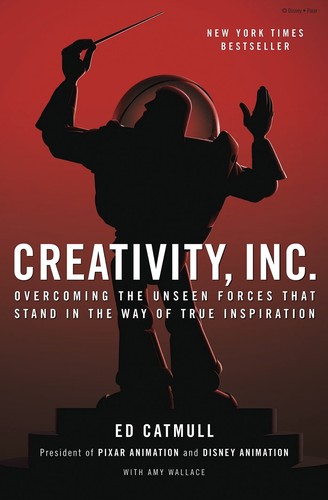
Creativity, Inc.: Overcoming the Unseen Forces That Stand in the Way of True Inspiration
Ed Catmull and Amy Wallace
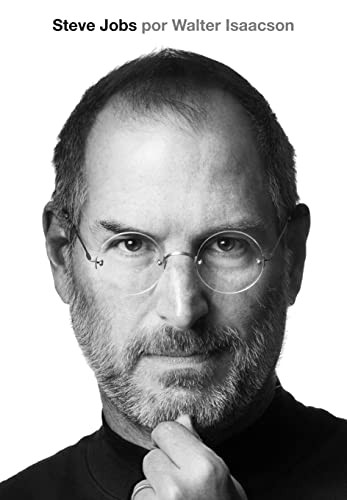
Steve Jobs
Walter Isaacson
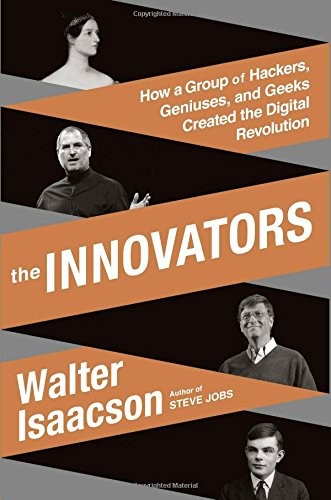
The Innovators: How a Group of Hackers, Geniuses, and Geeks Created the Digital Revolution
Walter Isaacson
Hackers: Heroes of the Computer Revolution
Steven Levy
