Business · Book club
Creativity, Inc.: Overcoming the Unseen Forces That Stand in the Way of True Inspiration book club questions
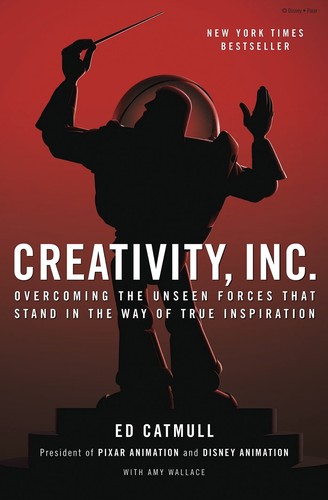
Here are 12 book club questions for Creativity, Inc.: Overcoming the Unseen Forces That Stand in the Way of True Inspiration by Ed Catmull and Amy Wallace, ordered to open easily and end somewhere worth arguing about. Copy them, print them, or bring them up one at a time.
The 12 questions
- 1.
Catmull describes the Braintrust as the single most important management practice at Pixar. What makes it work, and why is this structure so rare in most organizations?
- 2.
The 'ugly baby' problem is that early-stage work needs protection from premature judgment. How do you create that protection in an environment where everyone is busy and opinionated?
- 3.
Catmull says fear and candor are incompatible. What are the specific signals — in meetings, promotions, and how leaders respond to bad news — that communicate whether candor is genuinely safe?
- 4.
What's the difference between an organization that has a diversity of voices and one that has an environment where those voices are actually heard? What creates the gap?
- 5.
Catmull describes postmortems that worked and ones that didn't. What's the difference between a postmortem that produces genuine learning and one that produces only defensive positioning?
- 6.
How do you know when your organization is in the grip of fear? What are the behavioral signs that people are managing appearances rather than doing the work?
- 7.
Catmull argues that success can mask the accumulation of problems. What mechanisms can a leadership team use to see clearly when everything looks fine on the surface?
- 8.
The Braintrust worked because it had both psychological safety and high standards. Can an organization have both, or does one tend to erode the other over time?
- 9.
What did Catmull learn about the limits of transplanting Pixar's culture to Disney Animation? What would you need to change to adapt a creative culture to a different organizational context?
- 10.
Catmull talks about the invisible forces — organizational hierarchy, fear, the appearance of harmony — that suppress creativity. Which one do you think is hardest to see and why?
- 11.
Pixar succeeded by making original films rather than sequels — a financially riskier strategy than what most studios chose. What does that choice tell you about the relationship between creative culture and business model?
- 12.
What's a creative culture outside Pixar that you think manages these challenges well? What practices do they use that are analogous to Catmull's framework?
How to run the discussion
- Pick six to eight, not all of them. An hour of real discussion covers fewer questions than anyone expects, and racing the list is what makes a book club feel like homework.
- Open with what people noticed, not what they concluded. Asking for a verdict first hardens opinions before anyone has heard each other.
- Let the disagreement run. The questions below that split a room are the ones worth the time; the ones everyone answers the same way can be skipped.
- Ask the quiet person a specific question. A direct, narrow question is far easier to answer than an open invitation to contribute.
Themes worth steering toward
If the conversation stalls, these are the threads that usually restart it.
Common questions
What are good book club questions for Creativity, Inc.: Overcoming the Unseen Forces That Stand in the Way of True Inspiration?
Here are 12 book club questions for Creativity, Inc.: Overcoming the Unseen Forces That Stand in the Way of True Inspiration by Ed Catmull and Amy Wallace, ordered to open easily and end somewhere worth arguing about. The strongest openers ask what each reader noticed rather than what they concluded, and the discussion usually turns on innovation, organizational culture, creativity.
How long should a book club discussion of Creativity, Inc.: Overcoming the Unseen Forces That Stand in the Way of True Inspiration last?
Most groups run 60 to 90 minutes of actual discussion. That is roughly six to eight questions, not all of them, so pick the ones that suit your group rather than working down the list in order.
What are the main themes in Creativity, Inc.: Overcoming the Unseen Forces That Stand in the Way of True Inspiration?
Innovation, Organizational culture, Creativity, Leadership, Startups. Those are the threads most likely to divide a room, which makes them the useful places to steer a discussion that has gone quiet.
Picking the next one? See books like Creativity, Inc.: Overcoming the Unseen Forces That Stand in the Way of True Inspiration or questions for other book club picks.
