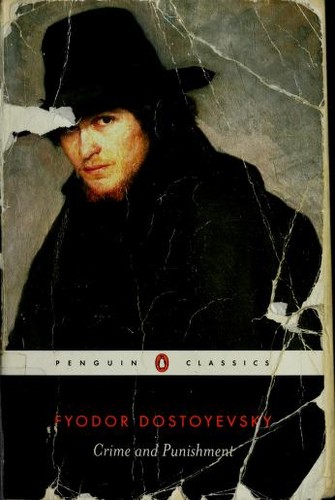
Talk to Crime and Punishment like its author wrote you back.
Get the ideas that fit your life — not generic summaries.
- Chat with the book
- Audiobook-style main ideas
- Adapts to your life and goals
- Helps you take action
What it argues
Raskolnikov is a former student living in desperate poverty in St. Petersburg. He has an idea: that extraordinary individuals are above the ordinary moral law that governs lesser people. He tests that idea by killing a pawnbroker — a woman he has rationalized as a louse, a parasite on society. The murder takes seconds. The psychological aftermath takes the entire rest of the novel.
Crime and Punishment is less a whodunit than an inside view of a man who cannot bear the weight of what he has done, told from inside his feverish, contradictory consciousness. Dostoevsky is not primarily interested in whether Raskolnikov will be caught — he is interested in whether the extraordinary-man theory can survive contact with the fact of actual guilt. The novel systematically destroys that theory not through argument but through Raskolnikov's own inability to feel nothing.
What it gets right
- 1.
Dostoevsky's argument is that ideas have moral consequences, and that Raskolnikov's 'extraordinary man' theory collapses the moment it meets the reality of a human corpse.
- 2.
Guilt does not require detection. Raskolnikov's psychological disintegration begins before anyone suspects him, driven entirely by his own conscience.
- 3.
Sonya represents Dostoevsky's counter-ideal: not ideological, not intellectual, but capable of authentic compassion rooted in faith rather than theory.
What it covers
Who wrote it
Fyodor Dostoevsky (1821–1881) was a Russian novelist, journalist, and philosopher whose work explored psychology, religion, political ideology, and the suffering of the poor. He was arrested in 1849 for involvement with a radical literary circle and came within minutes of execution before his sentence was commuted to Siberian imprisonment. That near-death experience shaped everything he wrote afterwards. His major novels — Crime and Punishment, The Idiot, Demons, and The Brothers Karamazov — form the core of the existentialist literary tradition and influenced writers from Kafka to Camus to contemporary psychological fiction.
