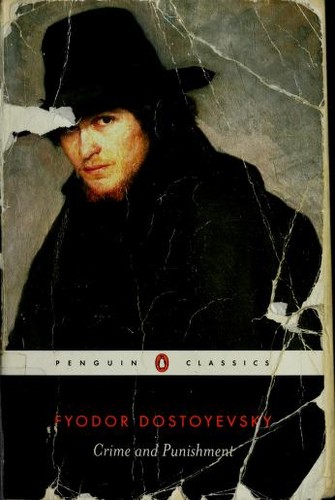
Crime and Punishment by Fyodor Dostoevsky is a 1866 literary fiction book about guilt and conscience, ideology and its limits, poverty and dehumanization. Dostoevsky's argument is that ideas have moral consequences, and that Raskolnikov's 'extraordinary man' theory collapses the moment it meets the reality of a human corpse.
Summary
Raskolnikov is a former student living in desperate poverty in St. Petersburg. He has an idea: that extraordinary individuals are above the ordinary moral law that governs lesser people. He tests that idea by killing a pawnbroker — a woman he has rationalized as a louse, a parasite on society. The murder takes seconds. The psychological aftermath takes the entire rest of the novel.
Crime and Punishment is less a whodunit than an inside view of a man who cannot bear the weight of what he has done, told from inside his feverish, contradictory consciousness. Dostoevsky is not primarily interested in whether Raskolnikov will be caught — he is interested in whether the extraordinary-man theory can survive contact with the fact of actual guilt. The novel systematically destroys that theory not through argument but through Raskolnikov's own inability to feel nothing.
The supporting cast is as richly drawn as any in Dostoevsky: Sonya, the devout young woman forced into prostitution to support her family, who becomes Raskolnikov's confessor and moral counterweight; Porfiry Petrovich, the investigator whose socratic interrogations are some of the most psychologically acute scenes in the book; Svidrigailov, a genuinely corrupt figure who mirrors Raskolnikov's ideas without his idealism and is somehow more frightening for it. Dostoevsky believed ideas had consequences in bodies and relationships, and this novel is the demonstration.
The prose is urgent, compressed, sometimes frantic — very different from Tolstoy's expansive clarity. The St. Petersburg setting functions almost as a character: squalid, stifling, full of drunks and students and desperate women. Readers who love the psychological intensity will finish the novel in long compulsive sessions. Readers who need narrative economy may find the length and the intensity exhausting. It is one of the most studied novels in the Western curriculum for good reason, but it is also genuinely gripping in the way thrillers aspire to be.
Talk to Crime and Punishment like its author wrote you back.
Get the ideas that fit your life — not generic summaries.
- Chat with the book
- Audiobook-style main ideas
- Adapts to your life and goals
- Helps you take action
Key takeaways
- 1.
Dostoevsky's argument is that ideas have moral consequences, and that Raskolnikov's 'extraordinary man' theory collapses the moment it meets the reality of a human corpse.
- 2.
Guilt does not require detection. Raskolnikov's psychological disintegration begins before anyone suspects him, driven entirely by his own conscience.
- 3.
Sonya represents Dostoevsky's counter-ideal: not ideological, not intellectual, but capable of authentic compassion rooted in faith rather than theory.
- 4.
Porfiry's interrogation technique is proto-psychological — he creates enough doubt in Raskolnikov's mind that the confession becomes almost inevitable.
- 5.
Svidrigailov is the version of Raskolnikov's ideology pursued without idealism — cynical, nihilistic, and somehow more coherent than Raskolnikov's tortured version.
- 6.
The novel diagnoses a specifically modern pathology: the intellectual who convinces himself that reason has exempted him from the moral order that applies to everyone else.
- 7.
St. Petersburg's poverty is not background — it is one of the causes, and Dostoevsky shows how dehumanizing conditions produce dehumanizing ideas.
- 8.
The epilogue, set in Siberia, is rushed and has frustrated readers since 1866. But its point is simple: redemption is possible, it just looks nothing like what Raskolnikov imagined.
Discussion questions
Use these on your own, with a book club, or as chat starters in Superbook. Book club version, ready to copy or print →
- 1.
Raskolnikov kills a woman he has described to himself as a louse. Does the novel ever let you see the pawnbroker as anything other than Raskolnikov's rationalization? What does that do to your sympathy for him?
- 2.
The 'extraordinary man' theory is obviously wrong by the end. Did you ever find it convincing, even provisionally? What made it appealing?
- 3.
Porfiry knows Raskolnikov is guilty before he has any evidence. Is his technique admirable or is it a form of psychological manipulation the novel endorses without examining?
- 4.
Sonya reads to Raskolnikov from the Gospel of John — the raising of Lazarus. Does the religious framing feel earned by what the novel has built, or does it feel imposed?
- 5.
Svidrigailov carries out Raskolnikov's ideas without Raskolnikov's conscience. Is he a warning, a mirror, or both? And why does he kill himself?
- 6.
Dostoevsky was himself imprisoned in Siberia and almost executed. How does that biographical context change how you read the epilogue?
- 7.
The novel ends with Raskolnikov on the edge of a new life, with Sonya, in Siberia. Does that ending feel earned, or does Dostoevsky give his protagonist an easier exit than the logic of the book supports?
- 8.
Compare Raskolnikov's ideology to other 'end justifies the means' arguments you've encountered — political, philosophical, or personal. Where does the novel's refutation of that ideology land hardest?
- 9.
Dunya, Raskolnikov's sister, refuses Svidrigailov's advances and Luzhin's marriage proposal. Is she the novel's most self-possessed character, and what does her presence say about the men around her?
- 10.
Raskolnikov commits his crime in part because of poverty. Does the novel invite sympathy for economic desperation as mitigation, or does it reject that framing?
- 11.
How does Crime and Punishment compare to The Brothers Karamazov in how Dostoevsky handles the question of whether God and morality are separable?
- 12.
The detective genre was born around the same time as this novel. Crime and Punishment inverts the genre's usual structure. What does it lose and gain by showing us the murderer's mind rather than the detective's?
Themes
Frequently asked questions
-
Is Crime and Punishment worth reading?
Yes, and it's more gripping than its reputation as a classic suggests. The first hundred pages set up a genuine psychological thriller — you watch Raskolnikov commit himself to a murder he cannot quite bring himself to carry out. Once it happens, the novel becomes an increasingly claustrophobic account of conscience unraveling.
-
Is Crime and Punishment hard to read?
Less hard than The Brothers Karamazov. The narrative stays close to Raskolnikov's consciousness throughout, which makes it immersive even when it's feverish. The cast is large and the Russian names require a character list, but the psychological drive is strong enough to carry you through.
-
What is the main argument of Crime and Punishment?
That there is no such thing as an extraordinary individual exempt from ordinary moral law — and that the attempt to live as if there were produces not freedom but psychological collapse. Dostoevsky considered ideological nihilism a form of spiritual sickness, and this novel is his diagnosis.
-
How long does it take to read Crime and Punishment?
At 550 pages it runs around twelve to fifteen hours at average pace. Many readers find themselves reading faster than expected once the psychological suspense kicks in, and slower during the philosophical dialogues.
-
Who shouldn't read Crime and Punishment?
Readers who find sustained psychological intensity exhausting rather than compelling. The novel is relentlessly inside Raskolnikov's feverish mind, and that can feel oppressive. If you prefer novels with narrative variety and tonal relief, this may not be your Dostoevsky.