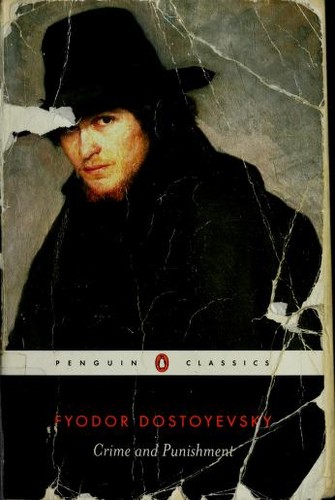
Talk to Crime and Punishment like its author wrote you back.
Get the ideas that fit your life — not generic summaries.
- Chat with the book
- Audiobook-style main ideas
- Adapts to your life and goals
- Helps you take action
Crime and Punishment, in detail
Raskolnikov is a former student living in desperate poverty in St. Petersburg. He has an idea: that extraordinary individuals are above the ordinary moral law that governs lesser people. He tests that idea by killing a pawnbroker — a woman he has rationalized as a louse, a parasite on society. The murder takes seconds. The psychological aftermath takes the entire rest of the novel.
Crime and Punishment is less a whodunit than an inside view of a man who cannot bear the weight of what he has done, told from inside his feverish, contradictory consciousness. Dostoevsky is not primarily interested in whether Raskolnikov will be caught — he is interested in whether the extraordinary-man theory can survive contact with the fact of actual guilt. The novel systematically destroys that theory not through argument but through Raskolnikov's own inability to feel nothing.
The supporting cast is as richly drawn as any in Dostoevsky: Sonya, the devout young woman forced into prostitution to support her family, who becomes Raskolnikov's confessor and moral counterweight; Porfiry Petrovich, the investigator whose socratic interrogations are some of the most psychologically acute scenes in the book; Svidrigailov, a genuinely corrupt figure who mirrors Raskolnikov's ideas without his idealism and is somehow more frightening for it. Dostoevsky believed ideas had consequences in bodies and relationships, and this novel is the demonstration.
The prose is urgent, compressed, sometimes frantic — very different from Tolstoy's expansive clarity. The St. Petersburg setting functions almost as a character: squalid, stifling, full of drunks and students and desperate women. Readers who love the psychological intensity will finish the novel in long compulsive sessions. Readers who need narrative economy may find the length and the intensity exhausting. It is one of the most studied novels in the Western curriculum for good reason, but it is also genuinely gripping in the way thrillers aspire to be.
The big ideas
- 1.
Dostoevsky's argument is that ideas have moral consequences, and that Raskolnikov's 'extraordinary man' theory collapses the moment it meets the reality of a human corpse.
- 2.
Guilt does not require detection. Raskolnikov's psychological disintegration begins before anyone suspects him, driven entirely by his own conscience.
- 3.
Sonya represents Dostoevsky's counter-ideal: not ideological, not intellectual, but capable of authentic compassion rooted in faith rather than theory.
