Science fiction · Book club
Cryptonomicon book club questions
Here are 12 book club questions for Cryptonomicon by Neal Stephenson, ordered to open easily and end somewhere worth arguing about. Copy them, print them, or bring them up one at a time.
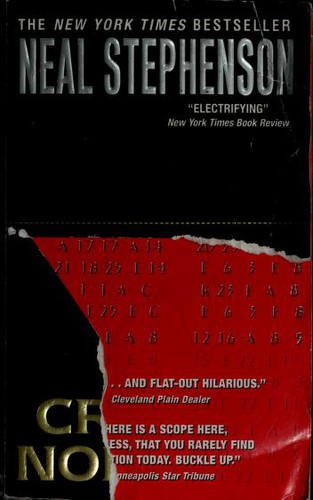
Cryptonomicon weaves together two storylines separated by half a century: World War II codebreakers and intelligence operatives running secret missions across the Pacific, and their grandchildren in the 1990s building a data haven in a fictional Southeast Asian country.
Neal Stephenson · 1999 · 61h 30m
Full summary and key takeaways →The 12 questions
- 1.
Stephenson clearly admires his hacker and codebreaker characters. Does the novel ever challenge their worldview, or does it endorse it without friction?
- 2.
The 1990s characters are building a 'data haven' for financial privacy. Who benefits from that vision, and does the novel ask that question honestly?
- 3.
Lawrence Waterhouse is presented as a pure logician barely connected to human reality. Is that framing romantic, or does the novel complicate it?
- 4.
The WWII sections and the 1990s sections have very different tones. Which strand did you find more compelling, and why?
- 5.
Cryptonomicon is technically accurate about cryptography. Does that accuracy serve the fiction, or does it interrupt it?
- 6.
The novel's women are largely peripheral. Does that feel like a deliberate reflection of the male-dominated worlds being depicted, or is it a blind spot?
- 7.
Bobby Shaftoe is the counterpart to Waterhouse — all body, all instinct, all action. What does the novel say by putting these two archetypes in the same story?
- 8.
The buried gold is a MacGuffin that connects the two time periods. What does Nazi-looted gold mean as the engine of 1990s tech capitalism?
- 9.
Stephenson's digressions — Avi's monologue about the Holocaust, the cereal essay — are either the best or worst parts of the book depending on who you ask. What did you think?
- 10.
The novel was published in 1999. How has the world it anticipated — cryptocurrency, surveillance capitalism, data havens — actually arrived, and how did Stephenson get it wrong?
- 11.
Does Cryptonomicon have a moral center, or is it a technically sophisticated thriller that ultimately celebrates smart men doing smart things?
- 12.
Compare this to The Code Book, which covers similar history nonfictionally. What does fiction let Stephenson do that nonfiction couldn't?
How to run the discussion
- Pick six to eight, not all of them. An hour of real discussion covers fewer questions than anyone expects, and racing the list is what makes a book club feel like homework.
- Open with what people noticed, not what they concluded. Asking for a verdict first hardens opinions before anyone has heard each other.
- Let the disagreement run. The questions below that split a room are the ones worth the time; the ones everyone answers the same way can be skipped.
- Ask the quiet person a specific question. A direct, narrow question is far easier to answer than an open invitation to contribute.
Themes worth steering toward
If the conversation stalls, these are the threads that usually restart it.
Common questions
What are good book club questions for Cryptonomicon?
Here are 12 book club questions for Cryptonomicon by Neal Stephenson, ordered to open easily and end somewhere worth arguing about. The strongest openers ask what each reader noticed rather than what they concluded, and the discussion usually turns on cryptography and secrecy, war and its aftermath, technology and capitalism.
How long should a book club discussion of Cryptonomicon last?
Most groups run 60 to 90 minutes of actual discussion. That is roughly six to eight questions, not all of them, so pick the ones that suit your group rather than working down the list in order.
What are the main themes in Cryptonomicon?
Cryptography and secrecy, War and its aftermath, Technology and capitalism, Honor and legacy, Information as power. Those are the threads most likely to divide a room, which makes them the useful places to steer a discussion that has gone quiet.
Picking the next one? See books like Cryptonomicon or questions for other book club picks.
