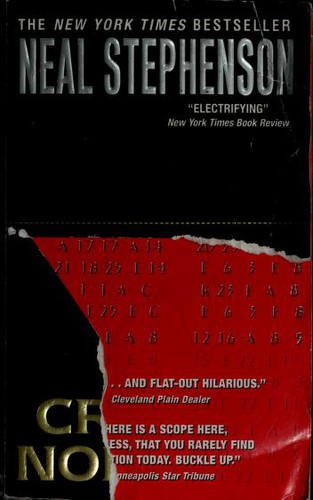
Cryptonomicon by Neal Stephenson is a 1999 science fiction book about cryptography and secrecy, war and its aftermath, technology and capitalism. Information is power in its most abstract form, and the history of cryptography is the history of who gets to keep secrets from whom.
Summary
Cryptonomicon weaves together two storylines separated by half a century: World War II codebreakers and intelligence operatives running secret missions across the Pacific, and their grandchildren in the 1990s building a data haven in a fictional Southeast Asian country. The novel's engine is cryptography — actual, technically rigorous cryptography — woven into a thriller plot involving buried Nazi gold, corporate espionage, and the founding mythology of the internet. At 900-plus pages, it is a very long book that takes a very long time to do anything.
The book is really about the continuity between wartime secrecy and the information economy. The WWII generation created the infrastructure of secrets — the codes, the intelligence hierarchies, the strategic silence — and the 1990s generation inherits that infrastructure and tries to route it through fiber optic cable and offshore banking. Stephenson is interested in what it means to build systems for privacy in a world that wants surveillance, and whether "cypherpunk" libertarianism is a form of idealism or just rich men's self-interest dressed in principle.
What makes Cryptonomicon distinctive is its commitment to technical accuracy at the expense of pacing. Stephenson will spend twenty pages on a cryptographic algorithm, thirty pages on eating breakfast cereal, and then suddenly deliver a harrowing combat scene with novelistic precision. The tonal range is enormous and the voice — sardonic, digressive, genuinely brilliant — has no real equivalent in fiction. The result polarizes readers: some find the digressions the best part; others find them maddening.
This is a book for people who loved Neal Stephenson's Snow Crash and want more, for programmers and cryptographers who want their obsessions taken seriously by literature, and for readers who regard "too long" as a feature rather than a complaint. If you want a tightly paced thriller, this is the wrong book. If you want a 900-page meditation on the relationship between information, power, and freedom — told partly through WWII adventure and partly through dot-com satire — there is nothing else quite like it.
Talk to Cryptonomicon like its author wrote you back.
Get the ideas that fit your life — not generic summaries.
- Chat with the book
- Audiobook-style main ideas
- Adapts to your life and goals
- Helps you take action
Key takeaways
- 1.
Information is power in its most abstract form, and the history of cryptography is the history of who gets to keep secrets from whom.
- 2.
The WWII generation's wartime innovations — in code, logistics, deception — laid the exact infrastructure that the internet generation inherited and monetized.
- 3.
Privacy is not a personal preference; it is a structural condition that has to be built deliberately into systems, or it will be removed deliberately by states.
- 4.
Stephenson treats technical digression as a form of respect: if you explain how something actually works, you are treating the reader as an adult.
- 5.
The novel is ambivalent about its cypherpunk heroes — their libertarian idealism is real, but so is their blind spot about whose freedom their systems actually protect.
- 6.
Legacy, inheritance, and the weight of what parents and grandparents did defines the younger generation's options before they understand what is happening to them.
- 7.
Competence — genuine, specific, hard-won expertise — is the closest thing to a moral value in Stephenson's world.
- 8.
War creates secrets that outlast the wars; the gold buried in wartime keeps reshaping the peace for generations afterward.
Discussion questions
Use these on your own, with a book club, or as chat starters in Superbook. Book club version, ready to copy or print →
- 1.
Stephenson clearly admires his hacker and codebreaker characters. Does the novel ever challenge their worldview, or does it endorse it without friction?
- 2.
The 1990s characters are building a 'data haven' for financial privacy. Who benefits from that vision, and does the novel ask that question honestly?
- 3.
Lawrence Waterhouse is presented as a pure logician barely connected to human reality. Is that framing romantic, or does the novel complicate it?
- 4.
The WWII sections and the 1990s sections have very different tones. Which strand did you find more compelling, and why?
- 5.
Cryptonomicon is technically accurate about cryptography. Does that accuracy serve the fiction, or does it interrupt it?
- 6.
The novel's women are largely peripheral. Does that feel like a deliberate reflection of the male-dominated worlds being depicted, or is it a blind spot?
- 7.
Bobby Shaftoe is the counterpart to Waterhouse — all body, all instinct, all action. What does the novel say by putting these two archetypes in the same story?
- 8.
The buried gold is a MacGuffin that connects the two time periods. What does Nazi-looted gold mean as the engine of 1990s tech capitalism?
- 9.
Stephenson's digressions — Avi's monologue about the Holocaust, the cereal essay — are either the best or worst parts of the book depending on who you ask. What did you think?
- 10.
The novel was published in 1999. How has the world it anticipated — cryptocurrency, surveillance capitalism, data havens — actually arrived, and how did Stephenson get it wrong?
- 11.
Does Cryptonomicon have a moral center, or is it a technically sophisticated thriller that ultimately celebrates smart men doing smart things?
- 12.
Compare this to The Code Book, which covers similar history nonfictionally. What does fiction let Stephenson do that nonfiction couldn't?
Themes
Frequently asked questions
-
Is Cryptonomicon worth the length?
For the right reader, absolutely. If you enjoy technical depth, narrative digression, and a novel willing to explain cryptographic algorithms mid-plot, the length is a feature. If you want momentum and economy, it will test your patience severely. Most readers either love it or abandon it around page 300.
-
Do you need to understand cryptography to enjoy Cryptonomicon?
No prior knowledge is required, but interest helps enormously. Stephenson explains the relevant concepts, sometimes at considerable length. Readers who already find encryption interesting will get more out of those sections; readers who don't will find them the book's biggest obstacle.
-
What is Cryptonomicon about, in one sentence?
A WWII codebreaker and his 1990s hacker grandson are both, in different ways, fighting to determine who controls secret information — and the connections between their fights turn out to be literal, not just metaphorical.
-
How does Cryptonomicon compare to Snow Crash?
Snow Crash is tighter, funnier, and much shorter. Cryptonomicon is more ambitious, more technically serious, and more interested in history. Fans of Snow Crash should expect a slower burn with bigger rewards; readers who couldn't finish Snow Crash will not find Cryptonomicon easier.
-
Who shouldn't read Cryptonomicon?
Readers who want narrative efficiency, strong female characters, or a payoff proportional to investment. The book rewards patience and technical interest, but it doesn't pretend to be something it isn't — and it isn't a lean thriller.
Similar books
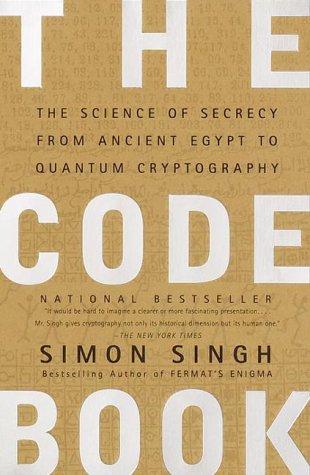
The Code Book: The Science of Secrecy from Ancient Egypt to Quantum Cryptography
Simon Singh
Hackers: Heroes of the Computer Revolution
Steven Levy
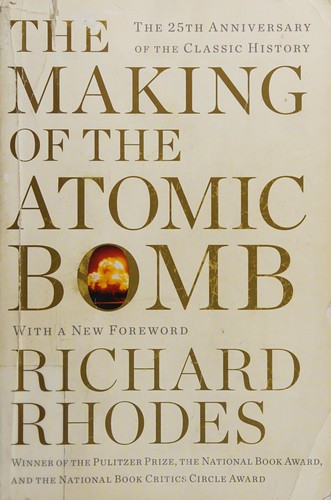
The Making of the Atomic Bomb
Richard Rhodes
1984
George Orwell
