Literary fiction · Book club
Cutting for Stone book club questions
Here are 12 book club questions for Cutting for Stone by Abraham Verghese, ordered to open easily and end somewhere worth arguing about. Copy them, print them, or bring them up one at a time.
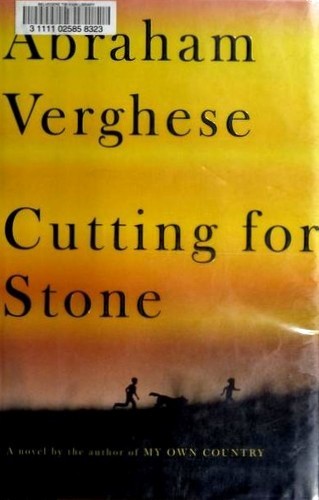
Cutting for Stone is Abraham Verghese's debut novel, a multigenerational saga set largely in Addis Ababa from the 1950s through the 1990s.
Abraham Verghese · 2009 · 14h 0m
Full summary and key takeaways →The 12 questions
- 1.
Marion describes Missing hospital as a world complete in itself — is that idealization of an institution something you've encountered in your own life, and does the novel interrogate it honestly?
- 2.
Shiva and Marion are raised by the same people in the same place and become radically different. What does Verghese seem to think accounts for that divergence?
- 3.
The novel uses medicine as a lens for ethics throughout. Where do the moral frameworks of surgery — precision, cause and effect, repair — break down when applied to human relationships?
- 4.
Marion's biological father Thomas Stone is a figure of absence and then of complexity. Did you find his arc satisfying, or does the novel give him more grace than he earned?
- 5.
Ethiopia in the novel is a real, specific country with actual history — the Derg, the revolution, famine. How does Verghese balance the political with the personal without turning history into backdrop?
- 6.
Betrayal is the engine of the back half of the novel. Do you think the book resolves it too neatly, or is the resolution proportional to what it cost?
- 7.
The title comes from a quote attributed to Ambroise Paré: 'I dressed the wound, God healed it.' How does that aphorism function through the novel's various meanings of 'cutting'?
- 8.
Genet — the woman both brothers love — is presented largely through the brothers' eyes. Is she a fully realized character, or does she function primarily as a catalyst for male conflict?
- 9.
The novel is narrated from the end, by Marion who knows how everything turns out. How does that retrospective narration shape what we trust and what we question?
- 10.
Cutting for Stone is often compared to One Hundred Years of Solitude and to Dickens. Which comparison feels more accurate to you, and why?
- 11.
What does the novel suggest about what it means to be a good doctor — and are those qualities also what make someone a good person?
- 12.
The book ends on forgiveness. Did you find that ending earned by what came before, or was it a concession to the reader's desire for resolution?
How to run the discussion
- Pick six to eight, not all of them. An hour of real discussion covers fewer questions than anyone expects, and racing the list is what makes a book club feel like homework.
- Open with what people noticed, not what they concluded. Asking for a verdict first hardens opinions before anyone has heard each other.
- Let the disagreement run. The questions below that split a room are the ones worth the time; the ones everyone answers the same way can be skipped.
- Ask the quiet person a specific question. A direct, narrow question is far easier to answer than an open invitation to contribute.
Themes worth steering toward
If the conversation stalls, these are the threads that usually restart it.
Common questions
What are good book club questions for Cutting for Stone?
Here are 12 book club questions for Cutting for Stone by Abraham Verghese, ordered to open easily and end somewhere worth arguing about. The strongest openers ask what each reader noticed rather than what they concluded, and the discussion usually turns on identity and origin, medicine and healing, father and son.
How long should a book club discussion of Cutting for Stone last?
Most groups run 60 to 90 minutes of actual discussion. That is roughly six to eight questions, not all of them, so pick the ones that suit your group rather than working down the list in order.
What are the main themes in Cutting for Stone?
Identity and origin, Medicine and healing, Father and son, Ethiopia and exile, Betrayal and forgiveness. Those are the threads most likely to divide a room, which makes them the useful places to steer a discussion that has gone quiet.
Picking the next one? See books like Cutting for Stone or questions for other book club picks.
