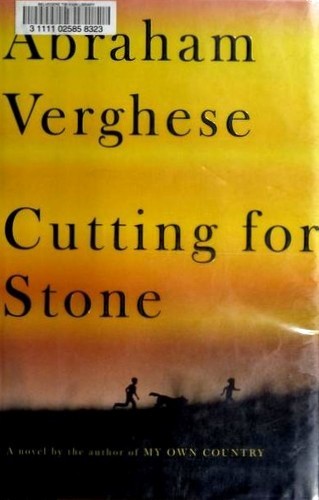
Talk to Cutting for Stone like its author wrote you back.
Get the ideas that fit your life — not generic summaries.
- Chat with the book
- Audiobook-style main ideas
- Adapts to your life and goals
- Helps you take action
What it argues
Cutting for Stone is Abraham Verghese's debut novel, a multigenerational saga set largely in Addis Ababa from the 1950s through the 1990s. Marion Stone narrates the story of his own origins: born to a British surgeon and an Ethiopian nun who dies in childbirth, he and his twin brother Shiva are raised by two Indian doctors at a mission hospital called Missing — a place whose name Verghese uses throughout as both fact and metaphor. The novel covers Marion's medical education, his exile to New York, and the catastrophic falling-out with his twin that drives the plot's back half.
The book is centrally interested in what it means to be formed by a place you didn't choose and to carry that formation into every subsequent life you inhabit. Ethiopia — its landscape, its civil wars, its medical poverty, its specific human texture — is rendered with the specificity of someone who knows it deeply, which Verghese does. The surgery scenes are genuinely instructive; Verghese is a practicing physician and the medical world he depicts is not borrowed but inhabited. The twin relationship gives the novel its moral core: the question of whether betrayal between those closest to you can be absorbed or whether it just changes what you are from then on.
What it gets right
- 1.
The novel treats medicine not as a profession but as a vocation — a calling that shapes its practitioners' entire moral vocabulary, not just their working hours.
- 2.
Twinship is used throughout as a literalization of how we carry other people inside us, and how that can become a liability as well as a gift.
- 3.
Ethiopia is depicted with unusual specificity for Western literary fiction — its actual political history, geography, and culture rather than a vague 'African' backdrop.
What it covers
Who wrote it
Abraham Verghese is an Ethiopian-born American physician and author. He is a professor at Stanford University Medical School and a widely read essayist on medicine and the patient-physician relationship. His memoir My Own Country and The Tennis Partner established his literary reputation before Cutting for Stone became an international bestseller. His non-fiction engages with how the physical examination and close attention to patients have been displaced by diagnostic technology. Cutting for Stone is his only novel to date.
