Science fiction · Book club
Dark Matter book club questions
Here are 12 book club questions for Dark Matter by Blake Crouch, ordered to open easily and end somewhere worth arguing about. Copy them, print them, or bring them up one at a time.
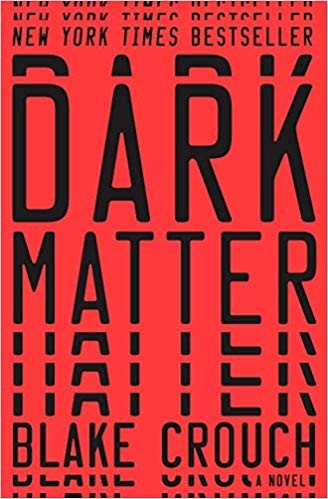
Jason Dessen is a physics professor in Chicago, content with his career, his marriage to Daniela, and his teenage son.
Blake Crouch · 2016 · 6h 20m
Full summary and key takeaways →The 12 questions
- 1.
Jason's contentment with his life is established early as something he has to defend to himself and others. Is the novel endorsing contentment, or just presenting it as a defensible choice?
- 2.
The multiverse means that a version of Jason made different choices and became someone successful in the ways Jason's version isn't. Which version, if any, do you think is living better?
- 3.
The mechanism for navigating between realities depends on the observer's mental clarity and emotional focus. What does that suggest about the relationship between consciousness and physical reality?
- 4.
By the end of the novel there are many versions of Jason converging on the same goal. That scenario is played as horror. Is the horror about identity, scarcity, or something else?
- 5.
Daniela has to make a choice near the end about which Jason is 'hers.' How does the novel set up that choice, and does her decision feel earned?
- 6.
The antagonist is technically Jason — another version of him who made different choices. Does knowing that change how you read the antagonist's motivations?
- 7.
Crouch simplifies the quantum mechanics significantly — the device works in ways that real many-worlds physics doesn't support. Does the scientific hand-waving bother you, or does it not matter for the story he's telling?
- 8.
The novel suggests that the path not taken is haunting specifically because you can imagine it. Would the novel work as well without the multiverse premise — could the same themes be explored through, say, a straight thriller?
- 9.
Dark Matter is consciously a thriller first. Does treating the multiverse concept as a genre device rather than a philosophical inquiry waste the premise, or is that the right call?
- 10.
Jason's son Charlie is present in the story but not fully developed as a character. Does his relative thinness as a character undercut the emotional stakes of what Jason is fighting for?
- 11.
The ending gestures toward hope and a kind of resolution. Does that feel like the right ending for what the book has been doing, or does it let the reader off the hook too easily?
- 12.
If you had access to the box and could observe a version of your own life where you made different choices, would you want to? What does your answer say about your relationship to regret?
How to run the discussion
- Pick six to eight, not all of them. An hour of real discussion covers fewer questions than anyone expects, and racing the list is what makes a book club feel like homework.
- Open with what people noticed, not what they concluded. Asking for a verdict first hardens opinions before anyone has heard each other.
- Let the disagreement run. The questions below that split a room are the ones worth the time; the ones everyone answers the same way can be skipped.
- Ask the quiet person a specific question. A direct, narrow question is far easier to answer than an open invitation to contribute.
Themes worth steering toward
If the conversation stalls, these are the threads that usually restart it.
Common questions
What are good book club questions for Dark Matter?
Here are 12 book club questions for Dark Matter by Blake Crouch, ordered to open easily and end somewhere worth arguing about. The strongest openers ask what each reader noticed rather than what they concluded, and the discussion usually turns on identity and selfhood, alternate lives, quantum reality.
How long should a book club discussion of Dark Matter last?
Most groups run 60 to 90 minutes of actual discussion. That is roughly six to eight questions, not all of them, so pick the ones that suit your group rather than working down the list in order.
What are the main themes in Dark Matter?
Identity and selfhood, Alternate lives, Quantum reality, Choice and regret, Love and loyalty. Those are the threads most likely to divide a room, which makes them the useful places to steer a discussion that has gone quiet.
Picking the next one? See books like Dark Matter or questions for other book club picks.
