Literary fiction · Book club
Dead Souls book club questions
Here are 11 book club questions for Dead Souls by Nikolai Gogol, ordered to open easily and end somewhere worth arguing about. Copy them, print them, or bring them up one at a time.
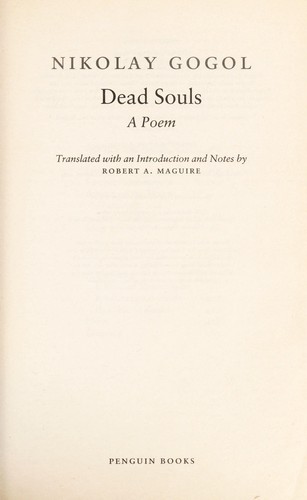
Pavel Ivanovich Chichikov arrives in a provincial Russian town with a plan of remarkable ingenuity: he will travel from estate to estate buying up "dead souls" — serfs who have died since the last census but still appear on the tax rolls, and whose owners are still liable for taxes on them.
Nikolai Gogol · 1842 · 8h 15m
Full summary and key takeaways →The 11 questions
- 1.
Chichikov is a con man, but Gogol gives him more narrative sympathy than most of his victims. Does the novel want you to like him, and if so, why?
- 2.
Each landowner Chichikov visits is a different variety of mediocrity and corruption. Which one did you find most recognizable — and does the recognition make you laugh or cringe?
- 3.
Gogol described Dead Souls as a 'poem' not a novel. What do you think he meant, and does the text support that claim?
- 4.
The famous troika passage — 'Whither art thou soaring away to, then, Russia?' — is a sudden shift from comedy to elegy. Does it land, or does it feel like Gogol changing registers without warning?
- 5.
Gogol burned the second part of Dead Souls before he died. If the completed novel is Hell, what would Purgatory have looked like? What kind of Russia would have to exist for Gogol to write it?
- 6.
The scheme Chichikov runs — buying dead serfs — is only possible because of serfdom itself. Does the novel make the political point explicitly, or is it left as background radiation?
- 7.
Plyushkin is introduced last and is the novel's most extreme character. Why does Gogol save him for last? What is the structural function of his hoarding?
- 8.
Nozdryov, the compulsive liar and braggart, nearly exposes Chichikov several times but is so unreliable that no one believes him. What is Gogol saying about truth-telling in this society?
- 9.
The townspeople's collective hysteria once rumors start about Chichikov — they can't agree on who he is or what he wants — reads almost like a crowd psychology experiment. What is Gogol satirizing there?
- 10.
Dead Souls is in the satirical-novel tradition that runs through Don Quixote and Candide to modern comic novels. How does it compare to other satirical fiction you've read?
- 11.
Gogol wrote this novel while living abroad, looking at Russia from the outside. Does that exile perspective show in the text? What does distance do to satire?
How to run the discussion
- Pick six to eight, not all of them. An hour of real discussion covers fewer questions than anyone expects, and racing the list is what makes a book club feel like homework.
- Open with what people noticed, not what they concluded. Asking for a verdict first hardens opinions before anyone has heard each other.
- Let the disagreement run. The questions below that split a room are the ones worth the time; the ones everyone answers the same way can be skipped.
- Ask the quiet person a specific question. A direct, narrow question is far easier to answer than an open invitation to contribute.
Themes worth steering toward
If the conversation stalls, these are the threads that usually restart it.
Common questions
What are good book club questions for Dead Souls?
Here are 11 book club questions for Dead Souls by Nikolai Gogol, ordered to open easily and end somewhere worth arguing about. The strongest openers ask what each reader noticed rather than what they concluded, and the discussion usually turns on corruption and provincial russia, identity and self-deception, satire of bureaucracy.
How long should a book club discussion of Dead Souls last?
Most groups run 60 to 90 minutes of actual discussion. That is roughly six to eight questions, not all of them, so pick the ones that suit your group rather than working down the list in order.
What are the main themes in Dead Souls?
Corruption and provincial Russia, Identity and self-deception, Satire of bureaucracy, What Russia is and might become. Those are the threads most likely to divide a room, which makes them the useful places to steer a discussion that has gone quiet.
Picking the next one? See books like Dead Souls or questions for other book club picks.
