History · Book club
Delirious New York book club questions
Here are 11 book club questions for Delirious New York by Rem Koolhaas, ordered to open easily and end somewhere worth arguing about. Copy them, print them, or bring them up one at a time.
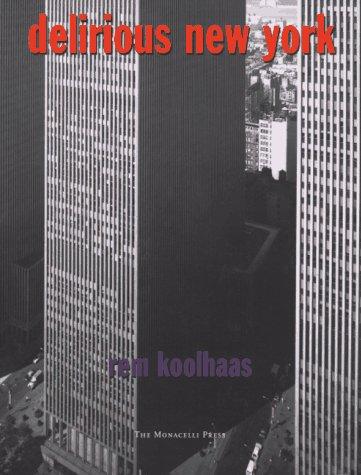
Rem Koolhaas published Delirious New York in 1978 with the subtitle "a retroactive manifesto for Manhattan," and that framing is essential to understanding what the book is and isn't.
Rem Koolhaas · 1978 · 6h 0m
Full summary and key takeaways →The 11 questions
- 1.
Koolhaas calls this a 'retroactive manifesto.' What does it mean for an argument to be retroactive rather than prospective, and does it change how you evaluate its claims?
- 2.
The book argues that Manhattan's density and congestion are generative rather than problems. Does that argument hold equally well for contemporary cities, or does it depend on conditions specific to early twentieth-century New York?
- 3.
Koolhaas treats programmatic mixing — stacking unrelated uses in the same building — as architecturally interesting. What contemporary buildings or places have you experienced that work this way?
- 4.
The book mixes scholarship, criticism, and fiction. Does that combination make the argument more or less convincing to you?
- 5.
He argues that modernism's push for clarity, separation, and rationality actually impoverished urban experience. Do you agree? Can you think of cities or neighborhoods that demonstrate either side of this argument?
- 6.
The 1811 Commissioners' Plan gets a lot of credit for enabling Manhattan's development. What do contemporary city planning decisions look like from the vantage point of a hundred years later?
- 7.
Koolhaas is clearly making an argument for his own architectural practice, not just describing history. Does knowing that change how you read his analysis of specific buildings?
- 8.
The Downtown Athletic Club reading is one of the book's most cited passages. What makes it persuasive, and where does the argument strain?
- 9.
Delirious New York helped make density intellectually respectable in architectural circles. What were the downstream effects of that, in cities you know?
- 10.
What is missing from Koolhaas's account of Manhattan? What experiences or populations does his frame leave out?
- 11.
The book was written in 1978. Which of its arguments have aged well, and which have aged less well in light of how New York and other cities have developed since?
How to run the discussion
- Pick six to eight, not all of them. An hour of real discussion covers fewer questions than anyone expects, and racing the list is what makes a book club feel like homework.
- Open with what people noticed, not what they concluded. Asking for a verdict first hardens opinions before anyone has heard each other.
- Let the disagreement run. The questions below that split a room are the ones worth the time; the ones everyone answers the same way can be skipped.
- Ask the quiet person a specific question. A direct, narrow question is far easier to answer than an open invitation to contribute.
Themes worth steering toward
If the conversation stalls, these are the threads that usually restart it.
Common questions
What are good book club questions for Delirious New York?
Here are 11 book club questions for Delirious New York by Rem Koolhaas, ordered to open easily and end somewhere worth arguing about. The strongest openers ask what each reader noticed rather than what they concluded, and the discussion usually turns on urbanism, architecture, metropolitan culture.
How long should a book club discussion of Delirious New York last?
Most groups run 60 to 90 minutes of actual discussion. That is roughly six to eight questions, not all of them, so pick the ones that suit your group rather than working down the list in order.
What are the main themes in Delirious New York?
Urbanism, Architecture, Metropolitan culture, Density, Modernity. Those are the threads most likely to divide a room, which makes them the useful places to steer a discussion that has gone quiet.
Picking the next one? See books like Delirious New York or questions for other book club picks.
