Discipline Equals Freedom by Jocko Willink is a 2017 self-help book about discipline, habits, mental toughness. Discipline equals freedom: the disciplined person has more options, more psychological freedom, and more control over their life than the undisciplined person, not less.
Summary
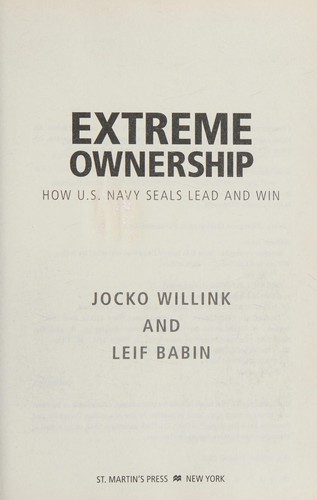
Discipline Equals Freedom is Jocko Willink's compressed manifesto on the relationship between self-discipline and freedom — his central argument being that the two are not opposites but the same thing. Willink is a former Navy SEAL commander whose leadership philosophy became widely known through Extreme Ownership; this book is his more personal account of the daily practices that sustain his approach.
The book is organized in two parts: philosophy and tactics. The philosophy section is built from short, declarative entries — many only a paragraph or two — that function more as mantras than arguments. Willink's voice is blunt, demanding, and deliberately repetitive. He does not explain or justify at length; he states. The format is polarizing: readers looking for nuanced discussion will find it frustrating; readers who want a direct prompt to act will find it effective.
The central philosophical proposition is this: most people treat freedom as something that comes before discipline — you do what you want, and then you impose discipline on the parts you care about. Willink argues the opposite: discipline is what creates freedom. The disciplined person wakes up when they choose, trains the way they want to, does the work they care about, and has the psychological freedom that comes from not being controlled by impulse, distraction, or discomfort.
The tactics section covers Willink's morning routine (waking at four-thirty AM, physical training before the day begins), diet (intermittent fasting, no sugar, simple food), workout programming, and the management of excuses and procrastination. The book is short by design — Willink doesn't believe in padding — and is best used as a repeated reference rather than read once and set aside.
Talk to Discipline Equals Freedom like its author wrote you back.
Get the ideas that fit your life — not generic summaries.
- Chat with the book
- Audiobook-style main ideas
- Adapts to your life and goals
- Helps you take action
Key takeaways
- 1.
Discipline equals freedom: the disciplined person has more options, more psychological freedom, and more control over their life than the undisciplined person, not less.
- 2.
Wake up early. The morning is the time you control before the world's demands begin. Willink wakes at four-thirty; the specific time matters less than the habit of taking the first hours.
- 3.
The alarm clock is a test. How you respond to it is a reflection of how you respond to everything that requires uncomfortable action. Passing the test is the beginning of the day's discipline.
- 4.
Excuses are the enemy. Every excuse you accept is a negotiation with your future self in which your future self loses. No excuse is real; they are all choices.
- 5.
Physical training is not optional. It is the foundation of mental toughness, psychological stability, and sustained work capacity. If you can't build discipline in the gym, you won't build it in the office.
- 6.
Diet is discipline made visible. Every eating decision is an exercise in self-control or its absence. Simplicity and consistency beat optimization.
- 7.
Don't count on motivation. Motivation is unreliable and comes and goes. Discipline is what you act on when motivation is absent, which is most of the time.
- 8.
Default aggressive: when you don't know what to do, do something. Inaction is a choice; aggressive, forward movement breaks paralysis.
Discussion questions
Use these on your own, with a book club, or as chat starters in Superbook. Book club version, ready to copy or print →
- 1.
Willink's central paradox is that discipline creates freedom rather than constraining it. Do you find that argument convincing in your own experience?
- 2.
He says motivation is unreliable and discipline is what actually moves things. Think of the last time you did something difficult without feeling motivated. What made that possible?
- 3.
The book is relentlessly direct and non-explanatory. Does that tone work for you? What kind of challenge or provocation is most useful for changing your behavior?
- 4.
Willink wakes at four-thirty AM. What is your equivalent — the earliest daily commitment that signals to you that you are taking your own life seriously?
- 5.
He treats the alarm as a daily test of self-discipline. What small daily test are you consistently failing that, if you passed it, would compound into something larger?
- 6.
The excuse chapter is essentially a list of all the reasons people give themselves for not doing difficult things. Which of those excuses do you most reliably invoke?
- 7.
Physical training as the foundation of mental toughness: do you believe this premise based on your own experience? What has regular physical training done to your mental state?
- 8.
Willink's writing is militaristic and masculine in its tone. Does that affect the book's usefulness for people who don't identify with that register? What is lost and what is preserved?
- 9.
He says 'default aggressive' when you don't know what to do. Where in your life are you currently in paralysis when forward movement — even imperfect — would be better?
- 10.
Discipline Equals Freedom is deliberately short. Is the format appropriate for the content, or does it sacrifice important nuance for the sake of punch?
- 11.
What one habit — physical, mental, or professional — if you built it with Willink's level of discipline, would most change your life in six months?
Themes
Frequently asked questions
-
Is Discipline Equals Freedom worth reading?
For its target audience — people who want direct, demanding accountability without explanation or nuance — yes. For readers who want research-backed frameworks or psychological depth, less so. The book functions best as a motivational prompt that you return to regularly rather than a book you study.
-
How long does it take to read Discipline Equals Freedom?
About two to three hours. The entries are short and the design is spacious. Some readers finish it in one sitting.
-
What is the main idea of Discipline Equals Freedom?
Discipline and freedom are not opposites — discipline is what creates freedom. The disciplined person controls their time, actions, and impulses, which gives them more options and more genuine autonomy than the undisciplined person.
-
Who should read Discipline Equals Freedom?
People who respond to direct, demanding language and want a kick-in-the-pants approach rather than a nuanced framework. Also useful for people who already have goals and habits but need a regular reminder of why they matter. Not for people who find the military command tone off-putting.
-
How does Discipline Equals Freedom compare to Can't Hurt Me by David Goggins?
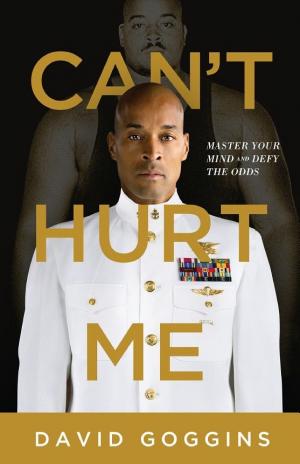
Both are about mental toughness and discipline through physical challenge. Goggins' book is autobiographical and more emotionally raw. Willink's is more prescriptive and tactical. Goggins writes from survival and trauma; Willink writes from leadership and mission. Both are challenging; Goggins is more extreme.