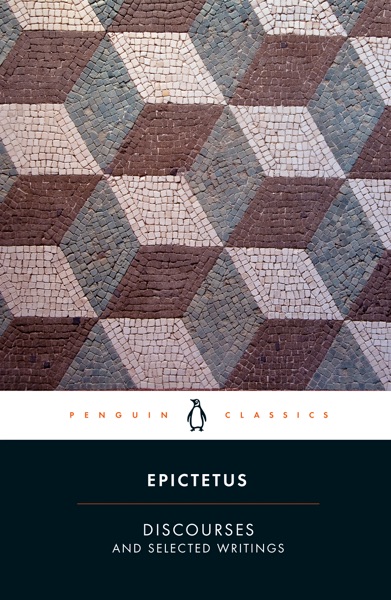
Discourses and Selected Writings by Epictetus is a 2008 philosophy book about stoic philosophy, freedom and control, character and virtue. The dichotomy of control is the foundation of Epictetus's philosophy: only your judgments, desires, aversions, and impulses are truly up to you. Everything else — your body, reputation, property, others' behavior — is not, and trying to control it produces suffering.
Summary
The Discourses are lecture transcripts recorded by Arrian, a student of Epictetus, sometime around 108 CE. Epictetus himself wrote nothing — he was a former slave who became one of the most influential philosophers of the Roman world, and what survives are Arrian's notes from his classes in Nicopolis, Greece. The Selected Writings in most modern editions include also the Enchiridion (or Handbook), a short distillation that has circulated separately since antiquity. Together they represent the most complete surviving record of Epictetus's philosophy.
The governing distinction in Epictetus is what he calls the "dichotomy of control" — the division of all things into those that are "up to us" (our judgments, desires, aversions, impulses — the operations of our own will) and those that are "not up to us" (everything outside our will: the body, reputation, property, other people's behavior, external events). This distinction is not original to Epictetus — it runs through earlier Stoicism — but he pursues it with more rigor and pedagogical insistence than any surviving Stoic text. The aim of Stoic practice, in his account, is to progressively confine your desires and aversions to things within your control, and to become indifferent to things outside it.
The voice in the Discourses is unlike most philosophical texts. Epictetus lectures, challenges, mocks, and cajoles. He imagines interlocutors making excuses and dismantles them. He returns to the same themes across different lectures, approaching the dichotomy of control from different angles and with different examples drawn from everyday Roman life — illness, social status, death of family members, dealing with the powerful, handling insults. The repetition is deliberate: philosophy for Epictetus is not a set of doctrines to be understood intellectually but a practice to be internalized and applied.
The relevance of Epictetus to contemporary life is sometimes overstated by those who want Stoicism to be a productivity framework. His philosophy is genuinely demanding: it requires not just rational analysis but a profound restructuring of what you care about. The goal is not equanimity in difficult circumstances while still wanting the same things. The goal is to stop wanting the things you cannot control — and that is a harder and more radical project than most modern readers initially suppose.
Talk to Discourses and Selected Writings like its author wrote you back.
Get the ideas that fit your life — not generic summaries.
- Chat with the book
- Audiobook-style main ideas
- Adapts to your life and goals
- Helps you take action
Key takeaways
- 1.
The dichotomy of control is the foundation of Epictetus's philosophy: only your judgments, desires, aversions, and impulses are truly up to you. Everything else — your body, reputation, property, others' behavior — is not, and trying to control it produces suffering.
- 2.
Freedom, in Epictetus's account, is not the ability to get what you want but the liberation from wanting things that are not in your power. The slave who wants nothing outside his control is freer than the emperor who wants the world's obedience.
- 3.
Suffering comes not from events themselves but from the judgments we make about events. It is not death that harms us, but our belief that death is bad.
- 4.
Philosophy is practice, not doctrine. Reading Stoic texts without changing your behavior is not philosophy — it is showing off. The point is to act differently.
- 5.
Role obligations matter: Epictetus insists that you fulfill the roles you occupy (son, citizen, student, friend) with full commitment, while remaining internally indifferent to the outcomes of that performance.
- 6.
Desire and aversion should be calibrated to reality: desire only what is genuinely possible for you to have; avert only what is genuinely yours to avoid. Mismatch between desire and reality is the mechanism of unhappiness.
- 7.
The Enchiridion's opening sentence is the compressed version: 'Some things are in our control and others not.' Everything follows from engaging seriously with this claim.
- 8.
Progress in philosophy is measured not by how many arguments you can make but by how rarely you blame others, how rarely you praise yourself, and how often you act in accordance with nature.
Discussion questions
Use these on your own, with a book club, or as chat starters in Superbook. Book club version, ready to copy or print →
- 1.
Epictetus was a former slave who argued that a slave can be freer than an emperor. Is this claim a genuine philosophical insight about the nature of freedom, or is it a coping mechanism that serves power by discouraging resistance?
- 2.
The dichotomy of control is at the heart of all Stoic practice. Apply it to a difficulty in your own life right now: what is genuinely up to you, and what isn't?
- 3.
Epictetus says suffering comes from our judgments, not from events. Does this seem true to you — and where do you find the argument's limits?
- 4.
Philosophy, for Epictetus, is only real if it changes your behavior. By that measure, how philosophical is your actual daily life?
- 5.
The Discourses are lecture transcripts, not polished treatises — they repeat, digress, and challenge. Does this form help or hinder your engagement with the ideas?
- 6.
Epictetus asks his students to stop caring about reputation, property, and physical health. Is this a realistic aspiration, or does it describe something that can only be approached, never achieved?
- 7.
He argues you should fully commit to your social roles while remaining internally indifferent to the outcomes. What does this look like in practice — and is it different from just doing your job well?
- 8.
The Stoics were accused in antiquity of being emotionally cold. Does reading Epictetus give you that impression, or does his philosophy allow for a richer emotional life than it's usually credited with?
- 9.
How does Epictetus's Stoicism compare to more familiar varieties of resilience advice — whether from psychology, religion, or contemporary self-help? What does Stoicism offer that those don't?
- 10.
Epictetus says you should meet any difficulty by asking: is this up to me, or not? Try applying this to a current problem. What changes — and what doesn't?
- 11.
The Enchiridion is a short distillation for daily use. Many people read it repeatedly rather than once. Is there something about philosophical wisdom that requires repeated reading rather than a single encounter?
- 12.
Epictetus argues that all people, including the powerful, are enslaved to their desires and fears, while the person who controls their own will is free. How do you read this claim in a contemporary context of structural inequality?
Themes
Frequently asked questions
-
What is the Enchiridion, and how does it relate to the Discourses?
The Enchiridion (or Handbook) is a short distillation of Epictetus's philosophy compiled by Arrian from the Discourses. It runs about 20 pages and contains the core doctrines in concentrated form. The Discourses are the full transcripts — longer, more varied, more argumentative. Many readers encounter the Enchiridion first and then turn to the Discourses for depth and context.
-
How hard is Epictetus to read?
The Robert Dobbin translation in the Penguin Classics edition is very readable — the lecture format means the prose is conversational and direct, not the dense argumentation of a formal philosophical treatise. The ideas require reflection but the text itself is accessible. Most people find it easier than Plato and far easier than Aristotle.
-
Is Stoicism the same as suppressing your emotions?
No, though it's a common misreading. Epictetus argues that destructive emotions like anger, envy, and excessive grief arise from false judgments about what matters. Correcting those judgments doesn't suppress emotion but changes what you feel. Stoics acknowledged that grief, love, and joy are appropriate responses — the goal is to free them from attachment to outcomes you can't control.
-
Why is Epictetus relevant now?
The dichotomy of control addresses a persistent problem in human psychology that hasn't changed: we suffer from wanting things we can't have and fearing things we can't avoid. The framework also anticipates cognitive behavioral therapy in its insistence that beliefs — not events — cause emotions, which is part of why Stoicism has been absorbed into modern psychological practice.
-
Which translation should I read?
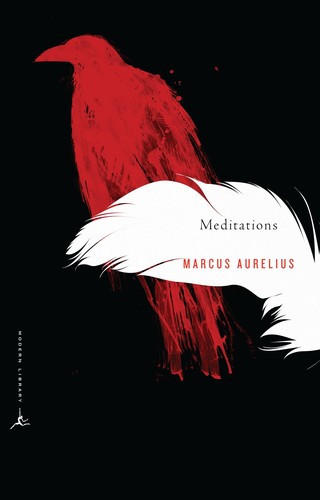
The Robert Dobbin translation (Penguin Classics, 2008) is generally considered the most readable modern translation of the full Discourses. The Gregory Hays translation of Marcus Aurelius's Meditations is the recommended companion for readers who want to see Epictetus's influence in practice.