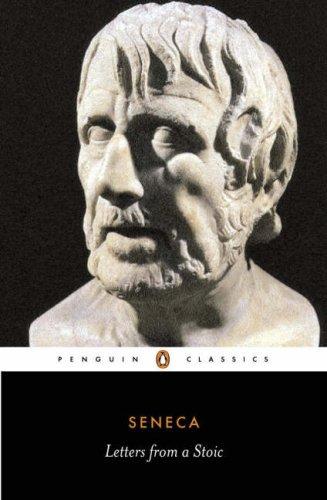
Letters from a Stoic by Seneca is a 1969 philosophy book about stoicism, death and mortality, friendship. Most people waste their lives not through idleness but through misdirected busyness — pursuing wealth, status, and distraction instead of attending to how they actually want to live.
Summary
Letters from a Stoic collects a selection of 124 letters that Seneca wrote to his friend Lucilius in the final years of his life, around 65 AD. They are not a systematic philosophy text. They read more like dispatches from a man thinking out loud about how to live and die well, written by someone who knew he was close to the end. Seneca was at the time one of the most powerful men in Rome, former tutor and advisor to Nero, and already under suspicion that would soon lead to his forced suicide. The letters carry that weight without advertising it.
The core of Seneca's argument is about time. He insists, letter after letter, that most people waste their lives not through laziness but through distraction — busyness that never adds up to anything, chasing wealth or status or popularity instead of attending to the self. "Dum differtur vita transcurrit" — while we delay, life passes. He is not telling Lucilius to retreat from the world entirely, but to be deliberate about where attention goes. Philosophy, for Seneca, is not an academic exercise but a daily practice of examining what you actually value.
A recurring theme is death — how to think about it honestly rather than flinch from it. Seneca does not counsel detachment or resignation. He argues that confronting mortality directly is what makes life urgent and specific. The letters on friendship are equally striking: real friendship requires trusting someone completely, which requires becoming the kind of person worthy of that trust. This connects to his larger point that virtue is not a private achievement but something tested and expressed in relation to other people.
The Penguin Classics edition translated by Robin Campbell draws from the full 124-letter collection and remains the most readable English version. Seneca's Latin is compressed and epigrammatic — some sentences stay with readers for years. The tone is warmer and more self-critical than Marcus Aurelius, whose Meditations cover related ground with more severity. Seneca freely admits his own failures to live up to his principles, which makes the letters feel like honest counsel rather than moral instruction from a distance.
Talk to Letters from a Stoic like its author wrote you back.
Get the ideas that fit your life — not generic summaries.
- Chat with the book
- Audiobook-style main ideas
- Adapts to your life and goals
- Helps you take action
Key takeaways
- 1.
Most people waste their lives not through idleness but through misdirected busyness — pursuing wealth, status, and distraction instead of attending to how they actually want to live.
- 2.
Time is the one resource that cannot be recovered. Seneca insists on guarding it jealously and spending it on things that matter, not on what merely seems urgent.
- 3.
Philosophy is not an academic discipline but a daily practice of self-examination. The point is not to know Stoic doctrine but to use it.
- 4.
Confronting death directly — thinking about it often, not flinching from it — is what makes life feel specific and valuable rather than vague and deferred.
- 5.
Real friendship requires complete trust, and complete trust requires becoming the kind of person who deserves it. The standards you hold yourself to and the people you spend time with are inseparable.
- 6.
Virtue is its own reward. Seneca argues that external goods — wealth, health, reputation — are neither good nor bad in themselves, only the use you make of them.
- 7.
Progress in Stoic practice is not measured by feeling calm. It is measured by whether you act rightly under pressure, whether your responses match your stated values.
- 8.
Seneca is honest about not living up to his own standards. The letters are self-critical as often as they are prescriptive, which is part of what makes them credible.
Discussion questions
Use these on your own, with a book club, or as chat starters in Superbook. Book club version, ready to copy or print →
- 1.
Seneca says most people are busy but not actually living. Where in your own life are you busy in ways that don't add up to anything?
- 2.
He argues that you should guard your time the way you would guard money, or more fiercely. What would it look like to take that seriously in a typical week?
- 3.
Seneca wrote these letters late in life, under threat of death. Does knowing that change how you read the advice? Should it?
- 4.
He recommends thinking about death daily — not to be morbid but to make the present feel real. Is that practice appealing or repellent to you, and why?
- 5.
The letters suggest that the company you keep shapes who you become. Who in your life raises the bar for how you want to act, and who lowers it?
- 6.
Seneca distinguishes between things in your control and things outside it. What are you currently spending energy on that, on reflection, is outside your control?
- 7.
He argues virtue is its own reward and that external goods like wealth are indifferent. Is that a genuinely useful frame, or does it collapse under real pressure?
- 8.
Seneca admits throughout the letters that he does not always live by what he preaches. Does that admission make the advice more or less useful to you?
- 9.
The letters cover friendship in detail. What does Seneca's standard for true friendship demand that most modern friendships don't deliver?
- 10.
He is skeptical of crowds, public opinion, and popularity. Where in your own life do you act differently because you're aware of being watched or judged?
- 11.
Many of the letters are about slowing down and attending to the present moment. What gets in the way of that for you specifically?
- 12.
Seneca was one of the wealthiest men in Rome while writing about the dangers of wealth. Does that contradiction undermine his argument, or complicate it usefully?
Themes
Frequently asked questions
-
What is Letters from a Stoic about?
It is a collection of 124 letters Seneca wrote to his friend Lucilius in the last years of his life. The letters cover how to live well, how to think about death, how to use time, what friendship requires, and what virtue means in practice. They are less a systematic philosophy than honest thinking-out-loud from someone with few years left.
-
Is Letters from a Stoic worth reading?
Yes, especially if you're drawn to philosophy that applies to actual life rather than to academic argument. Seneca is more personal and self-critical than most ancient philosophers. Some letters are weaker than others, but the best ones — on time, friendship, and death — are among the most direct pieces of practical philosophy ever written.
-
How long does it take to read Letters from a Stoic?
Around six hours for the Robin Campbell Penguin Classics selection of 124 letters. The letters are short and self-contained, so the book works well read in small pieces. Many readers keep it near a desk and return to single letters rather than reading it straight through.
-
How does Letters from a Stoic compare to Meditations by Marcus Aurelius?
Both are Stoic, but the tone is different. Marcus Aurelius is severe and inward, writing for himself. Seneca is writing to a friend, so the letters are warmer, more self-critical, and more conversational. Seneca is also more willing to acknowledge failure to live up to his own standards.
-
Who should read Letters from a Stoic?
Anyone wrestling with how to spend their time, what to prioritize, or how to think about mortality. It rewards readers who want a philosophy with real demands, not just comfort. It is not a quick productivity book — Seneca's prescriptions require sitting with them, not just checking them off.