Science fiction · Book club
Do Androids Dream of Electric Sheep? book club questions
Here are 12 book club questions for Do Androids Dream of Electric Sheep? by Philip K. Dick, ordered to open easily and end somewhere worth arguing about. Copy them, print them, or bring them up one at a time.
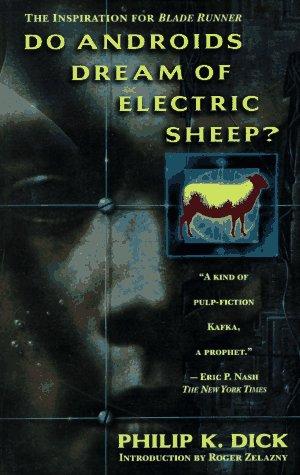
Rick Deckard is a bounty hunter in a post-nuclear-war San Francisco, tasked with "retiring" — killing — six escaped androids who have fled a Martian colony to Earth.
Philip K. Dick · 1968 · 4h 0m
Full summary and key takeaways →The 12 questions
- 1.
The Voigt-Kampff test measures empathic response. Can empathy actually be tested? What would a real test look like?
- 2.
Rachael is an android who believes she is human. When she finds out the truth, it changes her behavior. What does her reaction suggest about the relationship between identity and belief?
- 3.
Deckard retires androids for a living, and the novel makes him uncomfortable with that. Is the discomfort earned, or does Dick let him off too easy?
- 4.
Mercerism turns out to be, possibly, a fabricated religion. Does the possibility of its falsity change what it provides to the people who practice it?
- 5.
The real animals in the novel are status objects. Is Dick commenting on something specific about 1968, or does that observation feel as true now?
- 6.
The androids want to live. Does wanting to live make something deserving of life? The novel doesn't fully answer this — do you?
- 7.
Blade Runner is visually stunning and emotionally coherent in ways the novel isn't. Does knowing the film change your reading of the book? Which version of the story is more interesting to you?
- 8.
Dick's prose is functional rather than literary. Does that flat affect suit the story, or does it distance you from the characters?
- 9.
J.R. Isidore — a human with cognitive impairment who cares for the androids and real animals with genuine empathy — is arguably the moral center of the novel. Do you read him that way?
- 10.
The novel ends in a way that suggests Deckard's understanding of his world is not stable. Is that ambiguity earned or frustrating?
- 11.
Philip K. Dick was writing during the Vietnam War, and questions about who deserves to die and who is actually human were politically charged. Does that context change how you read the bounty hunting premise?
- 12.
Compared to The Fifth Season or Kindred — other SF works that use the genre to examine what it means to be treated as less than human — where does Dick's novel land? What does it do better or worse?
How to run the discussion
- Pick six to eight, not all of them. An hour of real discussion covers fewer questions than anyone expects, and racing the list is what makes a book club feel like homework.
- Open with what people noticed, not what they concluded. Asking for a verdict first hardens opinions before anyone has heard each other.
- Let the disagreement run. The questions below that split a room are the ones worth the time; the ones everyone answers the same way can be skipped.
- Ask the quiet person a specific question. A direct, narrow question is far easier to answer than an open invitation to contribute.
Themes worth steering toward
If the conversation stalls, these are the threads that usually restart it.
Common questions
What are good book club questions for Do Androids Dream of Electric Sheep??
Here are 12 book club questions for Do Androids Dream of Electric Sheep? by Philip K. Dick, ordered to open easily and end somewhere worth arguing about. The strongest openers ask what each reader noticed rather than what they concluded, and the discussion usually turns on empathy and its limits, what makes us human, consumerism and authenticity.
How long should a book club discussion of Do Androids Dream of Electric Sheep? last?
Most groups run 60 to 90 minutes of actual discussion. That is roughly six to eight questions, not all of them, so pick the ones that suit your group rather than working down the list in order.
What are the main themes in Do Androids Dream of Electric Sheep??
Empathy and its limits, What makes us human, Consumerism and authenticity, Reality and simulation, Loneliness and connection. Those are the threads most likely to divide a room, which makes them the useful places to steer a discussion that has gone quiet.
Picking the next one? See books like Do Androids Dream of Electric Sheep? or questions for other book club picks.
