Psychology · Book club
Dollars and Sense book club questions
Here are 12 book club questions for Dollars and Sense by Dan Ariely, ordered to open easily and end somewhere worth arguing about. Copy them, print them, or bring them up one at a time.
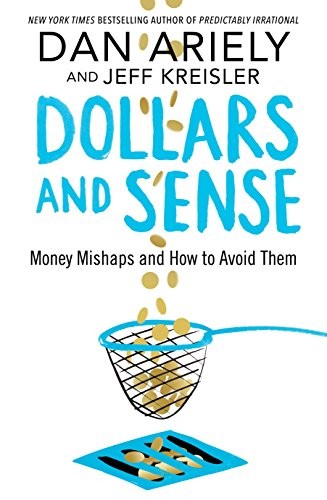
Dollars and Sense is Dan Ariely and Jeff Kreisler's examination of why people consistently make bad financial decisions even when they have the information and intention to do otherwise.
Dan Ariely · 2017 · 4h 20m
Full summary and key takeaways →The 12 questions
- 1.
Ariely argues that we evaluate prices relative to nearby anchors rather than in absolute terms. Can you identify a recent purchase where anchoring influenced what you were willing to pay?
- 2.
Think about your credit cards and automatic subscriptions. How many are you certain you want to keep? When did you last audit them all in one sitting?
- 3.
The pain-of-paying research suggests that cash creates more restraint than cards. Would you spend differently if you paid cash for one spending category for a month? Which category would you choose?
- 4.
Mental accounting means we treat money differently based on its source. Do you treat a work bonus, a tax refund, and a regular paycheck identically in practice?
- 5.
The book covers opportunity cost — the thing you can't buy because you bought this instead. For your three largest monthly expenses, can you articulate the specific opportunity cost?
- 6.
Ariely documents how retailers use anchoring to make prices seem reasonable. What's the most sophisticated pricing manipulation you've noticed in your own spending environment?
- 7.
Loss aversion distorts investment behavior. Think about a time you held a declining investment longer than you should have, or avoided a reasonable risk — which bias was driving that?
- 8.
Subscription services are designed to be low-salience. What would it take to genuinely feel the cost of each one every month instead of just letting them run?
- 9.
Pre-commitment devices work by deciding before emotions engage. What financial pre-commitments do you currently have? Are there decisions you should pre-commit to that you haven't?
- 10.
Ariely's research suggests expertise doesn't eliminate bias. Do you think you're less susceptible to financial irrationality than the average person? What's your evidence?
- 11.
The book argues that convenience in financial systems is often designed to lower your guard. Which financial products in your life are suspiciously convenient?
- 12.
How do you make decisions about charitable giving? Which of the biases in this book do you think most influences whether and how much you give?
How to run the discussion
- Pick six to eight, not all of them. An hour of real discussion covers fewer questions than anyone expects, and racing the list is what makes a book club feel like homework.
- Open with what people noticed, not what they concluded. Asking for a verdict first hardens opinions before anyone has heard each other.
- Let the disagreement run. The questions below that split a room are the ones worth the time; the ones everyone answers the same way can be skipped.
- Ask the quiet person a specific question. A direct, narrow question is far easier to answer than an open invitation to contribute.
Themes worth steering toward
If the conversation stalls, these are the threads that usually restart it.
Common questions
What are good book club questions for Dollars and Sense?
Here are 12 book club questions for Dollars and Sense by Dan Ariely, ordered to open easily and end somewhere worth arguing about. The strongest openers ask what each reader noticed rather than what they concluded, and the discussion usually turns on behavioral economics, spending psychology, decision-making.
How long should a book club discussion of Dollars and Sense last?
Most groups run 60 to 90 minutes of actual discussion. That is roughly six to eight questions, not all of them, so pick the ones that suit your group rather than working down the list in order.
What are the main themes in Dollars and Sense?
Behavioral economics, Spending psychology, Decision-making, Personal finance, Irrational behavior. Those are the threads most likely to divide a room, which makes them the useful places to steer a discussion that has gone quiet.
Picking the next one? See books like Dollars and Sense or questions for other book club picks.
