Talk to Dollars and Sense like its author wrote you back.
Get the ideas that fit your life — not generic summaries.
- Chat with the book
- Audiobook-style main ideas
- Adapts to your life and goals
- Helps you take action
What it argues
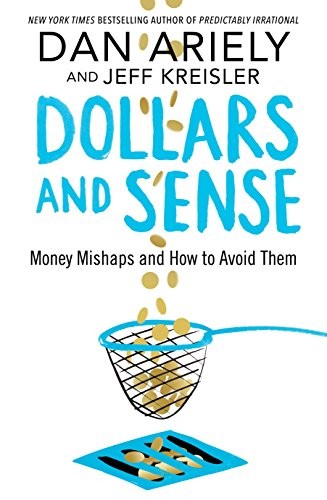
Dollars and Sense is Dan Ariely and Jeff Kreisler's examination of why people consistently make bad financial decisions even when they have the information and intention to do otherwise. Ariely, a behavioral economist and the author of Predictably Irrational, applies his research on human irrationality specifically to money: how spending decisions are made, how they go wrong, and what it would take to make them better.
The book's central argument is that humans are wired to evaluate money badly. We make financial decisions based on context, comparison, and emotion rather than absolute value. The same hundred dollars feels different depending on how we got it, what we're comparing it to, and how payment is structured. Ariely and Kreisler document the mechanisms through which retailers, banks, and financial services exploit these irrationalities — from anchoring to pain-of-paying elimination to the way "free" scrambles rational analysis.
What it gets right
- 1.
We evaluate money relatively, not absolutely. Whether a price seems fair depends entirely on what we compare it to, which makes us highly manipulable by anchoring and framing.
- 2.
The pain of paying is a real psychological phenomenon that regulates spending. Cash maximizes this pain; credit cards, tap payments, and subscriptions minimize it — often by design.
- 3.
Mental accounting — treating money differently based on its source or intended purpose — leads to predictable errors. A tax refund feels like found money and gets spent freely even though it is simply deferred income.
What it covers
Who wrote it
Dan Ariely is a professor of psychology and behavioral economics at Duke University and one of the most widely read popularizers of behavioral economics research. He is the author of Predictably Irrational, The Upside of Irrationality, and The Honest Truth About Dishonesty, among others. Ariely founded the Center for Advanced Hindsight at Duke and the startup Shapa. Much of his research focuses on decision-making under uncertainty, with applications to health, finance, and workplace behavior. He lives and works in the Research Triangle area of North Carolina.
