Don't Breathe a Word by Jennifer McMahon is a 2011 thriller book about childhood secrets, memory and truth, folklore and reality. The fairy mythology Lisa constructs is a survival mechanism — a way of framing powerlessness as a secret, chosen identity rather than victimhood.
Summary
On a hot June night in Vermont, twelve-year-old Lisa vanishes into the woods behind her family's house. She had told her younger brother Sam she was going to meet the king of the fairies. Fifteen years later, Sam and his girlfriend Phoebe begin receiving strange messages that suggest Lisa may still be alive — and that someone, or something, has been watching them all along.
McMahon braids two timelines — the summer of Lisa's disappearance and the present — to build a mystery that sits at the edge of magical realism and psychological horror. The central question isn't just what happened to Lisa but whether the fairy world she believed in was real, metaphor, or the invention of a deeply troubled mind. The novel is genuinely interested in the way children construct belief systems to survive difficult circumstances, and in how those systems can calcify into something dangerous.
The book's strongest quality is atmosphere. McMahon writes Vermont woods the way good horror writers write houses: as entities with moods and intentions. The pacing borrows from both the literary thriller and the gothic novel, with flashbacks that slowly reveal the extent of the family's dysfunction — an abusive father, a mother who checked out, siblings left to parent each other. The fairy mythology isn't window dressing; it's the mechanism through which McMahon examines how trauma gets encoded into story and passed down.
Readers who like their thrillers with clean mechanics and reliable narrators may find this frustrating — the novel's ambiguity is intentional but not always earned. Those who appreciate psychological complexity and are willing to sit with an ending that refuses tidy resolution will find it rewarding. It reads in the same neighborhood as Gillian Flynn's early work: domestic, dark, and interested in how women and girls are failed by the people who should protect them.
Talk to Don't Breathe a Word like its author wrote you back.
Get the ideas that fit your life — not generic summaries.
- Chat with the book
- Audiobook-style main ideas
- Adapts to your life and goals
- Helps you take action
Key takeaways
- 1.
The fairy mythology Lisa constructs is a survival mechanism — a way of framing powerlessness as a secret, chosen identity rather than victimhood.
- 2.
Memory is shown to be unreliable not just incidentally but structurally. The dual timeline makes readers complicit in misreading the past.
- 3.
The novel argues that secrets shared between siblings become their own kind of covenant, with costs that persist long after the original event.
- 4.
McMahon uses Vermont's landscape the way Gothic writers use architecture: the woods aren't backdrop but a force with its own logic.
- 5.
The question of whether the supernatural is real remains genuinely open — the novel doesn't resolve it, and that ambiguity is part of its argument about belief.
- 6.
Childhood abuse that goes unaddressed doesn't disappear; it goes underground and resurfaces in the behavior of the next generation.
- 7.
The book is partly about how girls are taught to disappear — literally and figuratively — when the world around them is unsafe.
- 8.
Narrative control — who gets to tell the story and who gets to believe it — is as central to the plot as the mystery itself.
Discussion questions
Use these on your own, with a book club, or as chat starters in Superbook. Book club version, ready to copy or print →
- 1.
Lisa's fairy mythology could be read as delusion, as a coping mechanism, or as something stranger. Which reading did the novel push you toward, and did it stay consistent?
- 2.
Sam spends fifteen years carrying guilt about Lisa's disappearance. Is that guilt proportionate to what he actually did or didn't do as a child?
- 3.
The dual timeline withholds information strategically. Did you find the reveals satisfying, or did the structure feel manipulative by the end?
- 4.
McMahon keeps the supernatural genuinely ambiguous. How does that ambiguity change the way you read the family's history?
- 5.
Phoebe is an outsider to Sam's family history who gets drawn into its orbit. Did her perspective clarify things or muddy them?
- 6.
The parents in this novel fail their children catastrophically. Is the novel interested in explaining that failure, or just documenting it?
- 7.
How does the Vermont setting — specifically the woods — function in the novel? Would the story work the same way in an urban setting?
- 8.
The ending refuses to answer every question. Was that a strength or a frustration, and what do you think McMahon was going for?
- 9.
Lisa tells Sam not to breathe a word about the fairies. How does the keeping of that secret shape both their lives over the following fifteen years?
- 10.
Compared to other domestic thrillers you've read — Gone Girl, The Silent Patient — where does this one land in terms of psychological credibility?
- 11.
The novel is interested in how we encode trauma into mythology. Do you see that pattern operating in your own family stories or cultural narratives?
- 12.
What did you make of the final revelation about who the 'fairy king' actually was? Did it reframe earlier events for you, or did it feel tacked on?
Themes
Frequently asked questions
-
Is Don't Breathe a Word a horror novel or a thriller?
It's both, tilted toward psychological thriller. There are horror elements — the fairy mythology, the woods — but the engine is the mystery of what happened to Lisa. Think of it as a thriller with a gothic sensibility rather than outright supernatural horror.
-
Does the novel explain what actually happened to Lisa?
Yes, but not until near the end, and the explanation is more disturbing than any supernatural reading would have been. The novel earns its ambiguity because the mundane horror turns out to be worse than the fairy-tale version.
-
Is Don't Breathe a Word worth reading if you've read a lot of thrillers?
If you're looking for mechanical plotting and reliable twists, probably not. If you're willing to trade some of that for atmosphere, psychological texture, and genuine literary ambiguity, yes. McMahon is a better writer than the genre usually requires.
-
Who shouldn't read this book?
Readers who need clean resolutions, those sensitive to child abuse depicted on the page, and anyone who finds dual-timeline narration frustrating when it's used to withhold rather than clarify. The ending is deliberately unsatisfying in parts.
-
Is there a film adaptation?
No feature film as of 2026. McMahon's work has been optioned multiple times but her novels haven't made it to screen in a widely released form.
Similar books
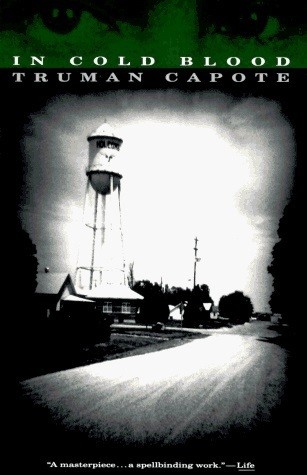
In Cold Blood
Truman Capote
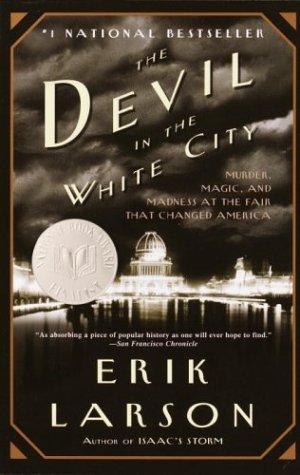
The Devil in the White City
Erik Larson
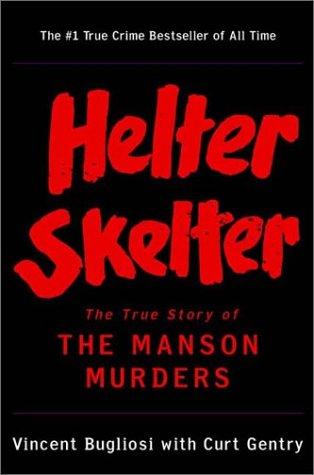
Helter Skelter: The True Story of the Manson Murders
Vincent Bugliosi and Curt Gentry
The Turn of the Screw
Henry James
