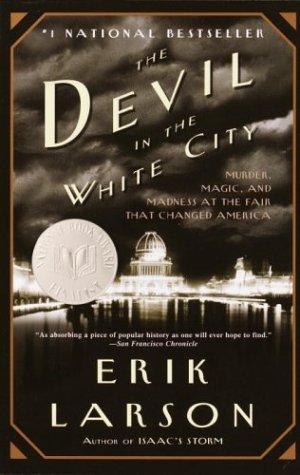
The Devil in the White City by Erik Larson is a 2003 history book about architecture, murder, american ambition. The 1893 World's Columbian Exposition was built in under two years on a swamp by an army of architects, laborers, and bureaucrats — a feat that required solving genuinely novel logistical problems at industrial scale.
Summary
The Devil in the White City tells two stories that unfolded simultaneously in Chicago in 1893. The first follows Daniel Burnham, the architect and impresario who led the effort to build the World's Columbian Exposition on the marshy South Side lakefront in under two years. The second follows H. H. Holmes, a charming doctor and serial killer who built a hotel near the fairgrounds and used the crowds the fair attracted to lure victims. Larson weaves the two threads together without fictionalizing either, relying entirely on letters, diaries, newspapers, and trial records.
The construction of the fair is the more surprising story for many readers. Burnham and his chief designer Frederick Law Olmsted started almost from nothing — soft ground, impossible deadlines, brutal winters, and a workforce prone to strikes and smallpox. The result was the White City, a temporary campus of neoclassical buildings painted brilliant white and lit by electricity at night, drawing 27 million visitors in six months. The fair introduced Americans to the Ferris wheel, the dishwasher, Cracker Jack, and a vision of what planned urban space could look like. It also gave the city a new identity and directly shaped the ambition that would define American architecture and urban planning for decades.
Holmes is a different kind of case study. His hotel — nicknamed the Castle by locals — was purpose-built with hidden rooms, gas lines that could be directed into sealed chambers, and a basement equipped for the disposal of bodies. He was charming, well-dressed, and fluent in the language of Victorian respectability. His crimes went undetected partly because the city was too busy and too chaotic to notice missing people, and partly because the idea that someone could be systematically murdering strangers for no clear motive was not yet a category that law enforcement had available to it. Larson is careful not to sensationalize. The horror accumulates through documented detail rather than gore.
The book works because the two stories illuminate each other. Burnham's world is about making things visible, creating spectacle, transforming a raw American city into something that could stand beside Paris or London. Holmes's world is about concealment — a perfect inversion. Both men were, in Larson's reading, products of the same Gilded Age hunger: the belief that with enough ambition and nerve, a man could build anything he wanted and no one would stop him. The contrast makes each story more interesting than it would be alone, and the pacing keeps the alternating chapters from feeling like a detour.
Talk to The Devil in the White City like its author wrote you back.
Get the ideas that fit your life — not generic summaries.
- Chat with the book
- Audiobook-style main ideas
- Adapts to your life and goals
- Helps you take action
Key takeaways
- 1.
The 1893 World's Columbian Exposition was built in under two years on a swamp by an army of architects, laborers, and bureaucrats — a feat that required solving genuinely novel logistical problems at industrial scale.
- 2.
Daniel Burnham's achievement at the fair reshaped American architecture and urban planning. The 'City Beautiful' movement it inspired influenced the layout of Washington DC, San Francisco, and dozens of other cities.
- 3.
H. H. Holmes was among the first documented American serial killers. His method depended on social invisibility — he exploited the anonymity and optimism of a city in the grip of an event too large to oversee.
- 4.
The fair introduced the Ferris wheel, built by George Washington Gale Ferris Jr. as a direct answer to the Eiffel Tower. At 250 feet tall it was a genuine engineering gamble.
- 5.
27 million people visited the fair in six months — roughly a third of the U.S. population at the time. Its cultural impact on American self-image was immediate and lasting.
- 6.
Larson works entirely from primary sources: letters, diaries, court records, and newspaper accounts. The narrative reads like a novel, but nothing is invented.
- 7.
The Gilded Age context is essential to both stories. Larson shows how the same culture of boundless ambition and thin institutional oversight enabled both civic greatness and private atrocity.
- 8.
The fair's temporary White City — dismantled and largely burned within a few years — haunted the architects and planners who built it. The gap between what could be imagined and what could be made permanent is one of the book's recurring themes.
Discussion questions
Use these on your own, with a book club, or as chat starters in Superbook. Book club version, ready to copy or print →
- 1.
Larson interweaves two very different stories. Did you find the architecture chapters as gripping as the Holmes chapters, or did one thread pull harder for you?
- 2.
Burnham faced constant setbacks — deaths among his team, labor unrest, impossible weather. What kept him moving, and do his methods resemble anyone you've worked with?
- 3.
Holmes was convincing to nearly everyone who knew him. What allowed him to operate in plain sight? What structures or assumptions made detection unlikely?
- 4.
The fair was built to prove that America could rival European capitals. What does that ambition look like from the distance of 130 years — admirable, desperate, both?
- 5.
Larson uses only documented sources but shapes them into narrative. Where does history end and storytelling begin, and does the blending bother you?
- 6.
The White City was temporary from the start. Does the knowledge that it burned change how you read the chapters about its construction?
- 7.
Holmes preyed largely on young women who had come to Chicago alone for the fair — women seeking independence and opportunity. What does that say about the risks attached to that kind of freedom in the 1890s?
- 8.
The Ferris wheel was built as a deliberate answer to the Eiffel Tower. What would be the contemporary equivalent of that kind of national show of engineering ambition?
- 9.
Burnham said, 'Make no little plans; they have no magic to stir men's blood.' Does that philosophy look different when set alongside Holmes's plans for the Castle?
- 10.
How did reading about Holmes change the way you thought about the fair, or vice versa? Did one reframe the other?
- 11.
Larson's Holmes is terrifying partly because he's recognizable — a high-functioning, socially fluent manipulator. What modern parallels came to mind while reading?
- 12.
The fair left no permanent buildings. Do you think its influence would have been greater or smaller if it had?
Themes
Frequently asked questions
-
What is The Devil in the White City about?
It tells two parallel true stories set in Chicago in 1893: architect Daniel Burnham's race to build the World's Columbian Exposition, and the murders committed by H. H. Holmes, a serial killer who preyed on visitors to the fair. Larson alternates between the two threads without fictionalizing either.
-
Is The Devil in the White City worth reading?
Yes, particularly if you're interested in American history, true crime, or narrative nonfiction. The construction story is as gripping as the Holmes thread, and the two illuminate each other in ways neither would alone. Readers who expect equal amounts of each storyline sometimes find the architecture chapters slow, but they carry most of the book's historical weight.
-
How long does it take to read The Devil in the White City?
Roughly six to seven hours at average reading pace for the 447-page book. The alternating structure — short chapters switching between Burnham and Holmes — makes it easy to read in stretches and difficult to put down once both threads are moving.
-
Is The Devil in the White City fiction or nonfiction?
Nonfiction. Larson worked entirely from primary sources and invented nothing. The narrative pacing and novelistic voice sometimes cause readers to assume otherwise, but every scene is documented. He includes an extensive note on his sources.
-
Who should read this book?
Anyone interested in the Gilded Age, American cities, the origins of modern serial killer investigation, or how large public spectacles actually get built. It rewards readers who like narrative nonfiction that takes historical research seriously. Readers looking primarily for crime thriller pacing may be surprised by how much of the book is about architecture and logistics.
Similar books
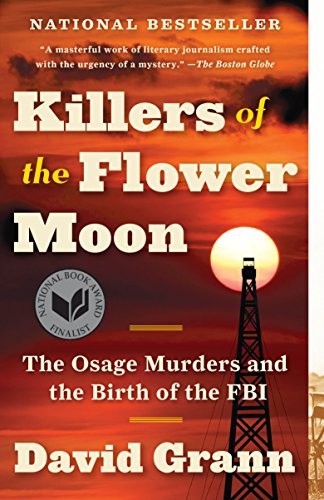
Killers of the Flower Moon
David Grann
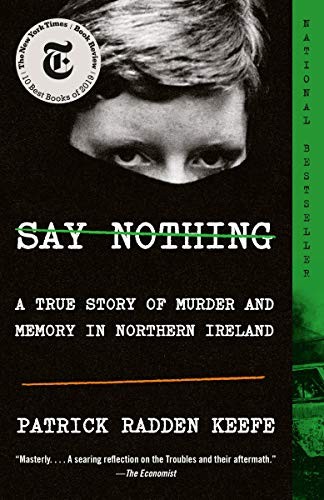
Say Nothing: A True Story of Murder and Memory in Northern Ireland
Patrick Radden Keefe
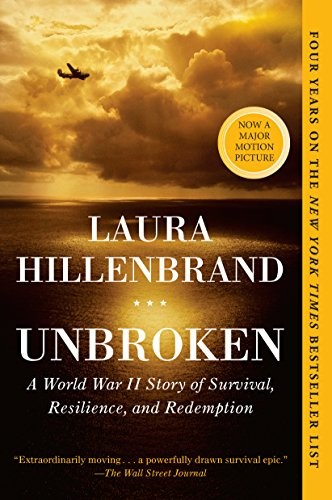
Unbroken: A World War II Story of Survival, Resilience, and Redemption
Laura Hillenbrand
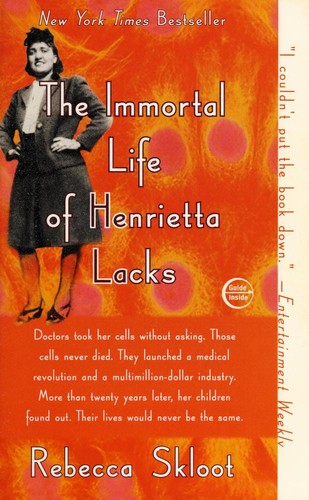
The Immortal Life of Henrietta Lacks
Rebecca Skloot
