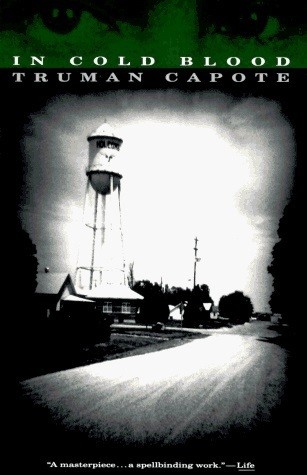
In Cold Blood by Truman Capote is a 1966 memoir book about violence, true crime, justice. The 'nonfiction novel' form: Capote argued that journalism could use novelistic techniques — scene-building, psychological depth, dramatic structure — without sacrificing factual accuracy. In Cold Blood is the argument in practice.
Summary
Truman Capote's account of the 1959 murders of the Clutter family in Holcomb, Kansas — and of the investigation, capture, trial, and execution of the killers Perry Smith and Richard Hickock — is the founding document of the true crime genre and one of the most admired works of American nonfiction of the twentieth century. Capote reported it over six years, conducting hundreds of interviews, and published it first in The New Yorker in 1965 before it appeared in book form. He called it a "nonfiction novel" — a claim that generated controversy about the form's truth obligations that continues today.
The book opens with Holcomb itself — the flat Kansas landscape, the Clutter farm, the orderly prosperous life the family had built — before moving to the planning of the robbery that became a mass murder. Perry Smith and Dick Hickock had been tipped off by a former Clutter employee that the farmer kept a safe full of cash; the safe did not exist. Hickock wanted money and was prepared for violence; Smith was more ambivalent, though it was Smith who killed all four members of the family. Capote renders both men in full, giving particular attention to Smith, whose background of poverty, abuse, and frustrated artistic ambition he clearly found compelling.
The investigation and trial sections document the Kansas Bureau of Investigation's methodical work, the community's fear, and the eventual arrest of Smith and Hickock in Las Vegas. The legal proceedings, and the long years on death row that followed, are where Capote's relationship with the killers — especially Smith — becomes most fraught. He visited them repeatedly and by his own account formed a genuine attachment to Smith. Whether this attachment compromised his account is a question he could not fully answer, and the book does not pretend to resolve it.
The execution scenes are rendered with meticulous precision. Capote was present at the hanging and recorded the final minutes with the same documentary care he applied to everything else. The book ends with a conversation at the Clutter grave — a meeting between the detective Al Dewey and the murdered daughter's friend, now a grown woman — that provides a kind of elegiac closure the event itself denied. Whether that closure is earned or sentimental is the reader's to decide.
Talk to In Cold Blood like its author wrote you back.
Get the ideas that fit your life — not generic summaries.
- Chat with the book
- Audiobook-style main ideas
- Adapts to your life and goals
- Helps you take action
Key takeaways
- 1.
The 'nonfiction novel' form: Capote argued that journalism could use novelistic techniques — scene-building, psychological depth, dramatic structure — without sacrificing factual accuracy. In Cold Blood is the argument in practice.
- 2.
Empathy does not preclude justice. Capote renders Smith with enough depth that the reader understands him without being asked to excuse the murders.
- 3.
The Clutter family represents a specific American ideal — rural prosperity, religious faith, civic virtue — and the murders are partly an attack on that ideal. The book mourns both the people and what they stood for.
- 4.
Capital punishment as a recurring preoccupation: the execution chapters do not argue against the death penalty explicitly but present it with a gravity that functions as implicit critique.
- 5.
The reporter's presence transforms the story. Capote's relationship with Smith makes the book's psychological depth possible and its objectivity impossible. The two facts are inseparable.
- 6.
Crime is explained by biography without being excused by it. Capote traces Smith's damaged childhood in detail, and the detail makes the violence comprehensible without making it forgivable.
- 7.
The book demonstrates that journalism can achieve formal perfection. Its structure — four sections, a near-classical arc — is invisible but essential to why it works.
- 8.
Truth in nonfiction is not simple. Capote changed dialogue and compressed events; former collaborators disputed his accounts; his attachments shaped what he saw. The book remains the standard for the form despite — or because of — these complications.
Discussion questions
Use these on your own, with a book club, or as chat starters in Superbook. Book club version, ready to copy or print →
- 1.
Capote calls the book a 'nonfiction novel.' What does that label claim, and what does it obscure? Is it an honest description?
- 2.
He clearly sympathized with Perry Smith. Does that sympathy make the book better or less trustworthy as journalism?
- 3.
The Clutter family is rendered as virtuous and admirable. Does this idealization affect how you read the murders?
- 4.
The book implicitly critiques capital punishment but does not argue against it directly. Is that restraint admirable or evasive?
- 5.
Dick Hickock is given less psychological depth than Perry Smith. Is this a flaw in the book, or does the disparity tell you something true about Capote's interests?
- 6.
Capote spent six years on the book and maintained relationships with both killers during that period. What are the ethical obligations of a journalist to their subjects?
- 7.
The final scene at the Clutter grave is deliberately elegiac. Does it feel earned, or does it impose a resolution that the events do not justify?
- 8.
The book has been accused of inventing dialogue and distorting events for dramatic effect. If this is true, does it matter?
- 9.
What does the book say about rural America in the late 1950s? Is that portrait sympathetic, critical, or simply observational?
- 10.
In Cold Blood created the true crime genre. What aspects of the book do you see in contemporary true crime podcasts, documentaries, or books? What has been lost?
- 11.
How does Capote's prose style — his sentence rhythms, his descriptions of landscape, his handling of time — contribute to the book's power?
Themes
Frequently asked questions
-
Is In Cold Blood journalism or literature?
Both, by Capote's own definition. He reported it with journalistic rigor — six years of interviews, court records, FBI files — and structured and wrote it with novelistic technique. The question of which category matters less than recognizing that it was the first major work to argue that the two were compatible.
-
How accurate is In Cold Blood?
Disputed. Former collaborators and some family members of the victims have challenged specific facts, dialogue, and characterizations. Capote was known to composite and compress. The essential facts — the murders, the investigation, the executions — are accurate. The psychological portraits, especially of Smith, are Capote's interpretations.
-
Did Capote have a romantic relationship with Perry Smith?
This has been the subject of extensive speculation and two major films (Capote and Infamous). Capote himself denied a sexual relationship but acknowledged deep emotional attachment. The attachment clearly shaped the book.
-
Why didn't Capote publish another major work after In Cold Blood?
He attempted a novel called Answered Prayers, publishing excerpts that alienated his socialite friends and subjects. He was also increasingly debilitated by alcohol and drug dependency. He died in 1984 without completing the novel.
-
Is In Cold Blood still the best true crime book ever written?
Many readers and critics still consider it so, though the competition has grown since 1966. Its formal elegance, its psychological depth, and its moral seriousness set a standard that most true crime — which tends toward entertainment over inquiry — does not attempt to meet.