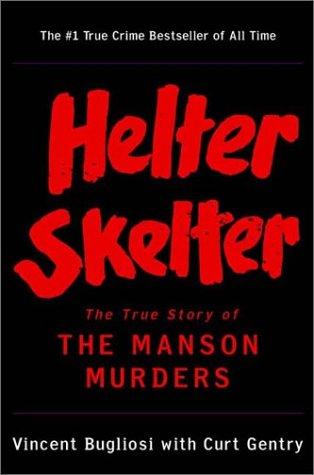
Helter Skelter: The True Story of the Manson Murders by Vincent Bugliosi and Curt Gentry is a 1974 memoir book about cult psychology, violence, criminal justice. Charles Manson did not personally commit the murders but was convicted of first-degree murder on a conspiracy theory — directing others to kill. The legal argument was Bugliosi's central challenge and his major achievement.
Summary
Helter Skelter is the account of the Tate-LaBianca murders of August 1969 written by Vincent Bugliosi, the Los Angeles deputy district attorney who prosecuted Charles Manson, with journalist Curt Gentry. First published in 1974, it remains the most detailed and widely read examination of the Manson case. Bugliosi's perspective is prosecutorial throughout — he is not a neutral narrator — but that vantage point is also the book's strength. He was inside the investigation, the grand jury proceedings, and the trial itself, and no subsequent account has matched the documentary depth of what he assembled.
The murders themselves are reconstructed in granular detail. On the nights of August 8 and 9, Manson's followers killed seven people in two separate houses in the Los Angeles hills. Sharon Tate, eight months pregnant, was among the victims. The killers left messages in blood on the walls. Los Angeles was terrified for months. The investigation stalled, nearly collapsed, and eventually succeeded only because of a series of accidents: a jailhouse informant, a tip about a knife, a coincidence involving a parking ticket. Bugliosi is honest about how close the case came to never being solved.
The more lasting part of the book concerns how Manson controlled his followers. He is depicted as a man of limited education and genuine charisma who used sexual manipulation, drug conditioning, sleep deprivation, and relentless psychological pressure to erase his followers' individual judgment. The Family's members were mostly young, mostly white, mostly from functional middle-class backgrounds. Manson's ability to reach them is treated not as freakish but as a disturbing demonstration of how ordinary susceptibility can be systematically exploited.
The trial was among the strangest in American history. Manson carved a swastika into his forehead. His female followers shaved their heads and camped on the sidewalk outside the courthouse. The defendants laughed during testimony about the murders. Bugliosi won anyway. The book works as both a true crime narrative and a case study in what happens when a justice system encounters defendants who have abandoned the shared premise that they should care about their own survival.
Talk to Helter Skelter: The True Story of the Manson Murders like its author wrote you back.
Get the ideas that fit your life — not generic summaries.
- Chat with the book
- Audiobook-style main ideas
- Adapts to your life and goals
- Helps you take action
Key takeaways
- 1.
Charles Manson did not personally commit the murders but was convicted of first-degree murder on a conspiracy theory — directing others to kill. The legal argument was Bugliosi's central challenge and his major achievement.
- 2.
The investigation nearly failed. Critical evidence was overlooked, the original detectives pursued wrong leads, and the case broke primarily through luck and an informant rather than systematic police work.
- 3.
Manson's control over his followers relied on techniques recognizable from cult psychology: isolation, sleep deprivation, sexual manipulation, drug use, and the systematic dissolution of individual identity.
- 4.
The Manson Family members were not social outcasts at the start. Many came from ordinary middle-class backgrounds, which Bugliosi uses to argue that the susceptibility he exploited is not rare.
- 5.
The 'Helter Skelter' motive — Manson's belief that the murders would trigger a race war — was Bugliosi's prosecution theory, not established fact. Some researchers have disputed it since.
- 6.
The trial was a spectacle that Manson tried to turn into a platform. His ability to dominate media coverage even while incarcerated revealed how poorly standard courtroom procedure handles defendants who reject its legitimacy.
- 7.
The Tate murders were initially connected to the LaBianca murders only slowly. The LAPD missed the connection for weeks despite the similar methods and messages.
- 8.
The Family members who became witnesses against Manson received immunity deals. Bugliosi's use of accomplice testimony raised legal and ethical questions that reverberate through the case's legacy.
Discussion questions
Use these on your own, with a book club, or as chat starters in Superbook. Book club version, ready to copy or print →
- 1.
Bugliosi is both author and prosecutor. How does his role inside the investigation shape what details he includes and what he glosses over?
- 2.
The Helter Skelter race war motive was Bugliosi's trial argument, not something Manson himself consistently confirmed. Should a prosecution theory be the lens through which a historical event is understood?
- 3.
The Manson Family members came largely from middle-class backgrounds. What does that suggest about the specific conditions — social, psychological, historical — that made them vulnerable to Manson's influence?
- 4.
Manson had a documented history of petty crime and institutionalization. At what point, if any, should the system have intervened differently?
- 5.
The murders occurred in the specific context of 1969 Los Angeles — the end of the Summer of Love, the disintegration of the counterculture. How much does that context explain, and how much are you rationalizing retrospectively?
- 6.
Bugliosi secured convictions with heavy reliance on accomplice testimony from Family members who received immunity. How do you weigh the justice of that outcome against the means?
- 7.
The female defendants' behavior during trial — the shaved heads, the singing, the laughter — was designed to demonstrate loyalty to Manson. What does it say about institutional power that it ultimately failed to destabilize the trial?
- 8.
Susan Atkins, Patricia Krenwinkel, and Leslie Van Houten spent decades in prison. At what point, if ever, does rehabilitation change the calculus of continued incarceration?
- 9.
How much of the Manson case's enduring cultural hold is about fear of random violence, fear of cults, fear of the sixties, or something else entirely?
- 10.
The book was written by the prosecutor who won the case. Is there a version of this story that would look significantly different if told from another vantage point?
- 11.
Manson became a cultural symbol that outlasted the legal case. What does our continued fascination say about us?
- 12.
If the murders had happened in 2024 instead of 1969, what would be different about how the investigation was conducted, how the trial unfolded, and how the story was told?
Themes
Frequently asked questions
-
Is Helter Skelter worth reading fifty years later?
Yes, particularly for readers interested in cult psychology, the sixties, or the mechanics of high-stakes prosecutions. The narrative is dense but absorbing, and no subsequent account has matched its documentary depth.
-
How long does it take to read Helter Skelter?
Around fourteen to sixteen hours at average pace for the roughly 680-page book. The investigative sections are dense with detail; the trial chapters move faster.
-
What is the Helter Skelter motive?
Bugliosi argued that Manson ordered the murders to trigger a race war he believed was prophesied by the Beatles' White Album. Manson would then emerge from hiding to rule afterward. The theory convinced the jury but has been questioned by researchers who believe simpler motives were at work.
-
Did Manson actually commit any of the murders?
No. Manson was not present at either crime scene. Bugliosi convicted him of first-degree murder on a conspiracy theory — that directing others to kill made him equally culpable. The conviction was upheld on appeal and stood until Manson's death in prison in 2017.
-
Who should read Helter Skelter?
True crime readers, students of American cultural history, and anyone interested in the psychology of cults and group violence. Those who have only seen documentaries will find the book significantly more detailed and legally precise.
Similar books
In Cold Blood
Truman Capote
The Devil in the White City
Erik Larson
The Executioner's Song
Norman Mailer
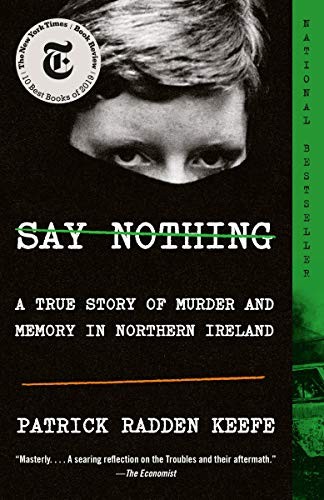
Say Nothing: A True Story of Murder and Memory in Northern Ireland
Patrick Radden Keefe
