Science fiction · Book club
Dune book club questions
Here are 13 book club questions for Dune by Frank Herbert, ordered to open easily and end somewhere worth arguing about. Copy them, print them, or bring them up one at a time.
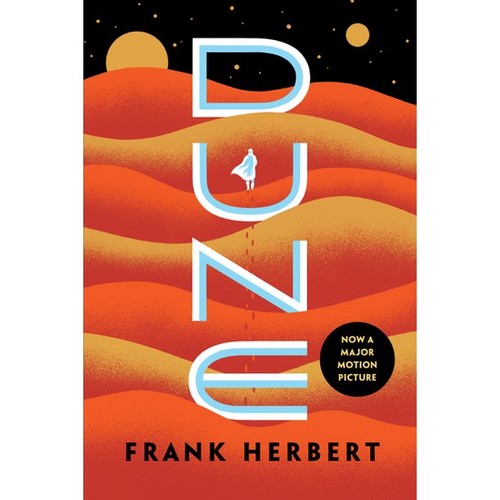
Dune is set in a feudal interstellar civilization thousands of years in the future, on the desert planet Arrakis — the only source of the spice melange, which enables space travel and extends life.
Frank Herbert · 1965 · 12h 30m
Full summary and key takeaways →The 13 questions
- 1.
Herbert said he wanted to write a 'hero with a thousand faces' myth and then show the thousand ways that myth is dangerous. Does the novel succeed in holding both the myth and the critique simultaneously?
- 2.
Paul at the end of the novel has everything he wanted and knows it is a catastrophe. Is that a tragic ending, an ironic one, or a warning? How does your reading of the tone change the novel's moral?
- 3.
The Fremen's culture is entirely adapted to Arrakis's ecology. If the terraforming plan succeeds, it destroys the culture. Is that a cost the novel acknowledges clearly enough?
- 4.
The spice melange is obviously oil. Herbert was explicit about this. Does the allegory feel too schematic, or does the science fiction frame give it enough room to breathe?
- 5.
The Bene Gesserit have been manipulating humanity's genetic future for millennia. Are they villains, pragmatists, or something more ambiguous?
- 6.
Lady Jessica's decision to raise Paul as a Reverend Mother rather than the daughter the Bene Gesserit intended sets everything in motion. Is she heroic, irresponsible, or following her own version of prophecy?
- 7.
The novel is famous for its density. Did the glossary and appendices feel like world-building excess, or did they do something the main narrative couldn't?
- 8.
Stilgar and the Fremen are the novel's most vivid human characters. Does Paul's role as messiah reduce them from protagonists to supporting cast in their own revolution?
- 9.
Dune Messiah (the sequel) punishes Paul for everything he achieved in Dune. Does knowing that change how you read this novel's ending?
- 10.
The Denis Villeneuve films (2021, 2024) are close and careful adaptations. Does the film version add to or subtract from your reading of the novel?
- 11.
Herbert was writing in 1965, during the height of Cold War geopolitics and the early environmental movement. Which of those contexts feels most alive in the novel today?
- 12.
Is there a hero you can identify with in Dune, or does Herbert deliberately keep you at a distance from all the major players?
- 13.
The novel's treatment of prescience suggests that knowing the future is not the same as being able to change it. What does Herbert believe about free will and determinism?
How to run the discussion
- Pick six to eight, not all of them. An hour of real discussion covers fewer questions than anyone expects, and racing the list is what makes a book club feel like homework.
- Open with what people noticed, not what they concluded. Asking for a verdict first hardens opinions before anyone has heard each other.
- Let the disagreement run. The questions below that split a room are the ones worth the time; the ones everyone answers the same way can be skipped.
- Ask the quiet person a specific question. A direct, narrow question is far easier to answer than an open invitation to contribute.
Themes worth steering toward
If the conversation stalls, these are the threads that usually restart it.
Common questions
What are good book club questions for Dune?
Here are 13 book club questions for Dune by Frank Herbert, ordered to open easily and end somewhere worth arguing about. The strongest openers ask what each reader noticed rather than what they concluded, and the discussion usually turns on ecology and environment, religion and messianic prophecy, power and political control.
How long should a book club discussion of Dune last?
Most groups run 60 to 90 minutes of actual discussion. That is roughly six to eight questions, not all of them, so pick the ones that suit your group rather than working down the list in order.
What are the main themes in Dune?
Ecology and environment, Religion and messianic prophecy, Power and political control, The hero's double-edged burden, Colonialism and resource extraction. Those are the threads most likely to divide a room, which makes them the useful places to steer a discussion that has gone quiet.
Picking the next one? See books like Dune or questions for other book club picks.
