Talk to Dune like its author wrote you back.
Get the ideas that fit your life — not generic summaries.
- Chat with the book
- Audiobook-style main ideas
- Adapts to your life and goals
- Helps you take action
Dune, in detail
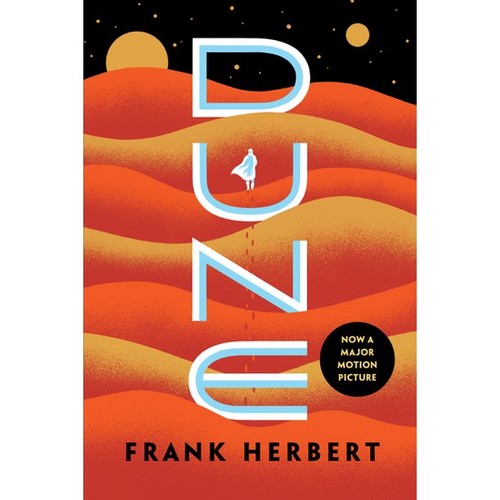
Dune is set in a feudal interstellar civilization thousands of years in the future, on the desert planet Arrakis — the only source of the spice melange, which enables space travel and extends life. The story follows Paul Atreides, heir to a noble house that takes control of Arrakis, only to be betrayed and driven into the desert where he must survive among the Fremen, the planet's indigenous people. Paul's story is a destined-hero narrative that Herbert constructs with full self-awareness of the dangers of destined-hero narratives.
The central ambivalence of the novel is not hidden: Herbert wrote Dune as a critique of charismatic leadership and messianic thinking. Paul becomes the Fremen's prophesied messiah, and by the end of the novel has mobilized a religious jihad that will, the appendices tell us, kill sixty billion people across the galaxy. The book presents this as catastrophic. Paul achieves his victory and knows it is a disaster. Herbert's ecological worldview — he was influenced by systems theory and the work on dune stabilization in Oregon that directly inspired the planet — runs through the whole novel: change one variable and the consequences cascade unpredictably.
What makes Dune endure is the density of its world. Herbert invented a complete ecology, a history spanning thousands of years, a political philosophy, multiple religions, a language, a pharmacology, a feudal economics. The appendices and glossary are not decorative — they model the idea that civilization is deeper than any single narrative can surface. The novel reads on multiple levels simultaneously: adventure story, political meditation, ecological parable, Jungian myth critique.
Dune is demanding in ways that genre science fiction typically is not. The dense world-building requires patience in the first hundred pages; the political machinations require tracking; the religious material requires engagement rather than dismissal. Readers who bounce off it usually do so early. Those who don't are almost uniformly devoted for life. The sequels, beginning with Dune Messiah (1969), push the critique of Paul's messianism further and are worth reading, though they are less accessible.
The big ideas
- 1.
Herbert wrote Dune as a critique of the hero-messiah archetype it appears to celebrate — Paul's victory is simultaneously a civilizational catastrophe, and Herbert was clear about this in interviews.
- 2.
The ecology of Arrakis is the novel's most original contribution. Fremen culture is shaped entirely by water scarcity, and their terraforming project drives the plot of multiple sequels.
- 3.
The spice melange as the indispensable resource of civilization maps explicitly onto oil — Herbert was drawing on 1960s resource politics, and the novel reads differently after every major oil crisis.
