Dynasty: The Rise and Fall of the House of Caesar by Tom Holland is a 2015 history book about imperial power, political succession, roman empire. Augustus preserved republican forms while gutting republican substance: the Senate met, magistracies were filled, laws were passed — but real power was concentrated in one family and exercised through informal relationships rather than formal institutions.
Summary
Dynasty picks up where Rubicon ended. Tom Holland's account of the Julio-Claudian emperors — Augustus, Tiberius, Caligula, Claudius, and Nero — covers the period from the foundation of the Principate to 68 CE, when Nero's death ended the dynasty and nearly ended the empire itself. The central question is how Rome, a society that had defined itself through republican institutions and the rule of law, adapted to being governed by a single family — and what that family's accumulation of power did to both rulers and ruled.
Holland is at his most interesting on Augustus. The first emperor was a genius of ambiguity: he preserved the forms of republican government while draining them of content, allowed the Senate to function while ensuring it could not check him, and cultivated an image of reluctant servant rather than king. The genius was that it worked: Romans who could not stomach a monarchy could tell themselves they still lived in a republic. This founding hypocrisy shaped everything that followed, because each subsequent emperor inherited both the power and the pretense.
The later Julio-Claudians progressively abandoned the pretense. Tiberius retreated to Capri and allowed his minister Sejanus to run a reign of terror in Rome. Caligula's brief, catastrophic reign demonstrated that the concentration of power in one person had no built-in mechanism for removing the person. Claudius, dismissed as a fool, proved a capable administrator — Holland gives him more credit than the traditional sources do — but was unable to control the court politics that surrounded him. Nero ended the dynasty in spectacular collapse: execution of his mother, murder of his wife, burning of Rome (probably not his doing), and a paranoid persecution of Christians that gave the episode its lasting religious resonance.
Holland writes with his characteristic blend of accessibility and depth. He is honest about the limits of ancient sources, which were mostly written by hostile senatorial aristocrats or much later compilers, and he distinguishes between what is known, what is probable, and what is salacious rumor. The result is a portrait of how power operates when it accumulates without accountability — a study that requires no translation to feel contemporary.
Talk to Dynasty: The Rise and Fall of the House of Caesar like its author wrote you back.
Get the ideas that fit your life — not generic summaries.
- Chat with the book
- Audiobook-style main ideas
- Adapts to your life and goals
- Helps you take action
Key takeaways
- 1.
Augustus preserved republican forms while gutting republican substance: the Senate met, magistracies were filled, laws were passed — but real power was concentrated in one family and exercised through informal relationships rather than formal institutions.
- 2.
The founding hypocrisy of the Principate — pretending to be a republic while functioning as a monarchy — made the system politically stable but psychologically corrosive. Every emperor had to play a role that was transparently false.
- 3.
The concentration of supreme power in one person created a structural vulnerability: there was no mechanism for removing an unfit ruler except assassination, coup, or civil war. Caligula demonstrated the problem; Nero confirmed it.
- 4.
Court politics under the Julio-Claudians was dominated by women and freedmen who wielded enormous informal power. Livia, Agrippina the Younger, and various imperial secretaries shaped policy in ways the formal constitutional record obscures.
- 5.
Holland gives Claudius more credit than Tacitus and Suetonius do: he was an effective administrator and jurist whose physical disabilities and scholarly personality led contemporaries to underestimate him.
- 6.
The ancient sources for this period — primarily Tacitus, Suetonius, and Cassius Dio — were written by senatorial aristocrats hostile to imperial rule, or compiled much later. Holland is careful about what this source bias means for what we can know.
- 7.
Nero's persecution of Christians after the fire of 64 CE gave the dynasty a lasting religious significance out of proportion to its political importance. The martyrdom tradition that began here shaped how Christianity thought about political power for centuries.
- 8.
The dynasty ended not because Rome became ungovernable but because Nero had no heir and had alienated every constituency that might have defended him. The Year of the Four Emperors that followed showed the system's fragility without a clear succession mechanism.
Discussion questions
Use these on your own, with a book club, or as chat starters in Superbook. Book club version, ready to copy or print →
- 1.
Augustus preserved the forms of the Republic while destroying its substance. Is that kind of institutional camouflage stable long-term, or does it always produce the problems that emerged under his successors?
- 2.
Holland argues the ancient sources are heavily biased against the emperors they describe. How much can we trust historical accounts written by people whose class interests were opposed to the rulers they judged?
- 3.
Caligula is traditionally presented as a monster. Holland is more cautious. Does it matter, historically, whether the horror stories are true if the structural problem — concentrated power with no removal mechanism — is real regardless?
- 4.
Claudius was underestimated by contemporaries and has been underestimated by historians. What does that pattern suggest about how we evaluate historical figures whose style doesn't fit the expected mode of power?
- 5.
Women like Livia and Agrippina the Younger wielded enormous informal power in a system that formally excluded them. What does that suggest about the relationship between formal and informal power in any political system?
- 6.
The Principate required emperors to pretend they were something they weren't. What does that performance demand do to people who exercise it over decades?
- 7.
Nero's persecution of Christians was opportunistic rather than systematic, but it created a martyrdom tradition that shaped Western religion for two millennia. How do you think about consequences that vastly exceed the intentions behind them?
- 8.
The dynasty ended because Nero had no heir and had alienated his support base. What would a more institutionalized succession process have looked like, and would it have changed anything?
- 9.
Holland writes popular history. Dynasty uses many of the same narrative techniques as a historical novel. Does that genre proximity help or undermine its credibility as serious history?
- 10.
What parallels, if any, do you see between the dynamics of Julio-Claudian court politics and contemporary institutions where power is concentrated in small groups of people?
- 11.
Tacitus presents the Principate as a moral catastrophe for Rome. Holland is more ambivalent. Which reading do you find more convincing?
- 12.
How does the story of the Julio-Claudians change if you focus on people at the bottom of the social order — slaves, soldiers, provincial subjects — rather than the dynastic family itself?
Themes
Frequently asked questions
-
Do I need to read Rubicon before Dynasty?
No, though it helps. Dynasty provides enough context about Julius Caesar and the Republic's fall to follow the story from Augustus onward. Readers who know the period will get more from the continuity, but Dynasty stands alone.
-
How reliable are the ancient sources Holland draws on?
Moderately. Tacitus and Suetonius are the main sources, and both were senatorial aristocrats writing under later emperors with their own axes to grind. Holland is explicit about source bias and distinguishes what is documented from what is probable from what is salacious rumor. The uncertainty is built into the narrative.
-
Is Dynasty mostly about Caligula and Nero?
No. About a third of the book covers Augustus, and there are substantial sections on Tiberius and Claudius. Caligula and Nero get their share of coverage, but Holland resists letting the notorious emperors dominate at the expense of the less dramatic ones who actually shaped the system.
-
What is the main takeaway from Dynasty?
That the Principate was built on a structural contradiction — imperial power dressed in republican clothing — and that this contradiction eventually became untenable. Each emperor either maintained the fiction at great personal cost or abandoned it at great political cost. The dynasty ended when the last emperor failed at both.
-
Who should read Dynasty?
Readers interested in Roman history, the dynamics of dynastic politics, or how institutions can be hollowed out while their forms survive. It pairs well with Rubicon for the full arc from Republic to Empire, and with Suetonius's Lives of the Twelve Caesars for readers who want to compare Holland's interpretations with the primary source.
Similar books
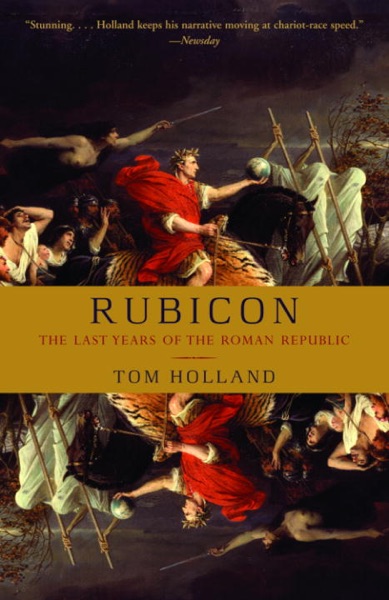
Rubicon: The Last Years of the Roman Republic
Tom Holland
The Decline and Fall of the Roman Empire
Edward Gibbon
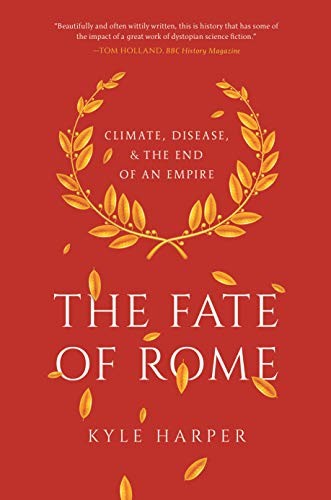
The Fate of Rome: Climate, Disease, and the End of an Empire
Kyle Harper
The Path to Power
Robert A. Caro
