Health · Book club
Eating Animals book club questions
Here are 12 book club questions for Eating Animals by Jonathan Safran Foer, ordered to open easily and end somewhere worth arguing about. Copy them, print them, or bring them up one at a time.
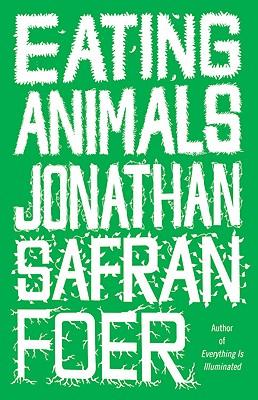
Eating Animals began as a project to understand what food Foer would feed his newborn son.
Jonathan Safran Foer · 2009 · 6h 20m
Full summary and key takeaways →The 12 questions
- 1.
Foer frames the book around what he will feed his child. How does responsibility to the next generation change how you think about your own food choices?
- 2.
He argues that the industrial food system depends on concealment. If you were forced to watch how your food was produced, what would you change about what you eat?
- 3.
The book acknowledges that food is culture and memory. Is there an animal food that is so connected to family or heritage for you that you couldn't imagine giving it up? What does that tell you about the limits of ethical reasoning?
- 4.
Foer ends up not eating animals, but he doesn't tell readers they must do the same. Do you find that restraint admirable or a failure of conviction?
- 5.
He is honest that small, humane farms can't replace factory farms at current consumption levels. Does the impossibility of a systemic alternative change how much individual choices matter?
- 6.
The book covers the environmental case against factory farming alongside the animal welfare case. Which argument do you find more compelling, and why?
- 7.
Ag-gag laws make it illegal to photograph or record conditions inside many factory farms. Does that fact alone change how you think about what goes on inside them?
- 8.
If you eat factory-farmed meat, what would it take for you to stop? If you already don't, what led you to that decision?
- 9.
Foer interviews both industrial farmers and small sustainable farmers. How did your sympathy shift as you read between these perspectives?
- 10.
The book argues that fish are underrepresented in food ethics conversations, partly because their suffering is less legible to humans. Does that ring true to you?
- 11.
He notes that most people who claim to love animals eat them anyway. How do you reconcile that contradiction in your own life?
- 12.
If factory farming were abolished tomorrow and replaced with nothing, what would have to change about how Americans eat? Is that a plausible future?
How to run the discussion
- Pick six to eight, not all of them. An hour of real discussion covers fewer questions than anyone expects, and racing the list is what makes a book club feel like homework.
- Open with what people noticed, not what they concluded. Asking for a verdict first hardens opinions before anyone has heard each other.
- Let the disagreement run. The questions below that split a room are the ones worth the time; the ones everyone answers the same way can be skipped.
- Ask the quiet person a specific question. A direct, narrow question is far easier to answer than an open invitation to contribute.
Themes worth steering toward
If the conversation stalls, these are the threads that usually restart it.
Common questions
What are good book club questions for Eating Animals?
Here are 12 book club questions for Eating Animals by Jonathan Safran Foer, ordered to open easily and end somewhere worth arguing about. The strongest openers ask what each reader noticed rather than what they concluded, and the discussion usually turns on factory farming, animal welfare, food ethics.
How long should a book club discussion of Eating Animals last?
Most groups run 60 to 90 minutes of actual discussion. That is roughly six to eight questions, not all of them, so pick the ones that suit your group rather than working down the list in order.
What are the main themes in Eating Animals?
Factory farming, Animal welfare, Food ethics, Environmental impact, Eating culture. Those are the threads most likely to divide a room, which makes them the useful places to steer a discussion that has gone quiet.
Picking the next one? See books like Eating Animals or questions for other book club picks.
