Biography · Book club
Einstein: His Life and Universe book club questions
Here are 12 book club questions for Einstein: His Life and Universe by Walter Isaacson, ordered to open easily and end somewhere worth arguing about. Copy them, print them, or bring them up one at a time.
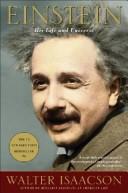
Walter Isaacson's Einstein biography is the most widely read account of the physicist's life in English, written after Isaacson was granted access to forty thousand previously sealed documents in the Hebrew University Einstein Archives.
Walter Isaacson · 2007 · 11h 45m
Full summary and key takeaways →The 12 questions
- 1.
Isaacson argues that Einstein's scientific originality and his political nonconformity came from the same source. Do you find that argument convincing? Can you think of counterexamples?
- 2.
The thought experiment — imagining riding alongside a beam of light — is Einstein's signature tool. What are the thought experiments that structure how you reason about your own field?
- 3.
Einstein couldn't get an academic job in his twenties, which forced him to think outside academic orthodoxy. How much does institutional position shape what questions people allow themselves to ask?
- 4.
His 1905 miracle year happened while he was working full-time as a patent clerk. What does that suggest about the relationship between creative work and the constraints of regular employment?
- 5.
Einstein's rejection of quantum mechanics in his later career is one of the most discussed failures in the history of science. How do you distinguish between principled resistance to a flawed consensus and a failure to update your views?
- 6.
Isaacson gives significant space to Einstein's personal failings — his abandonment of his first family, his treatment of Mileva. Does knowing that change how you think about his scientific legacy?
- 7.
Einstein was under FBI surveillance for twenty years. What does the fear of a physicist tell you about the political climate of mid-century America?
- 8.
He became the most famous person in the world after the 1919 eclipse confirmed general relativity. How did fame change the science he produced and the political positions he took?
- 9.
Einstein corresponded extensively with philosophers and refused to accept that quantum mechanics was complete. Was he right that there had to be hidden variables, or was he just wrong? What does the history of physics say?
- 10.
Isaacson makes Einstein's curiosity sound learnable. Is that convincing, or does the sheer scale of Einstein's originality suggest something beyond curiosity?
- 11.
The atomic bomb used physics Einstein had helped develop. His relationship to that — writing to FDR to warn of German bomb development, then opposing nuclear weapons — is complicated. How do you think about scientists' moral responsibility for the applications of their work?
- 12.
Einstein said the most beautiful experience we can have is the mysterious. Looking at your own work, where have you last had that experience?
How to run the discussion
- Pick six to eight, not all of them. An hour of real discussion covers fewer questions than anyone expects, and racing the list is what makes a book club feel like homework.
- Open with what people noticed, not what they concluded. Asking for a verdict first hardens opinions before anyone has heard each other.
- Let the disagreement run. The questions below that split a room are the ones worth the time; the ones everyone answers the same way can be skipped.
- Ask the quiet person a specific question. A direct, narrow question is far easier to answer than an open invitation to contribute.
Themes worth steering toward
If the conversation stalls, these are the threads that usually restart it.
Common questions
What are good book club questions for Einstein: His Life and Universe?
Here are 12 book club questions for Einstein: His Life and Universe by Walter Isaacson, ordered to open easily and end somewhere worth arguing about. The strongest openers ask what each reader noticed rather than what they concluded, and the discussion usually turns on creativity, science, nonconformity.
How long should a book club discussion of Einstein: His Life and Universe last?
Most groups run 60 to 90 minutes of actual discussion. That is roughly six to eight questions, not all of them, so pick the ones that suit your group rather than working down the list in order.
What are the main themes in Einstein: His Life and Universe?
Creativity, Science, Nonconformity, Thought experiments, Political courage. Those are the threads most likely to divide a room, which makes them the useful places to steer a discussion that has gone quiet.
Picking the next one? See books like Einstein: His Life and Universe or questions for other book club picks.
