Contemporary fiction · Book club
Eleanor Oliphant Is Completely Fine book club questions
Here are 11 book club questions for Eleanor Oliphant Is Completely Fine by Gail Honeyman, ordered to open easily and end somewhere worth arguing about. Copy them, print them, or bring them up one at a time.
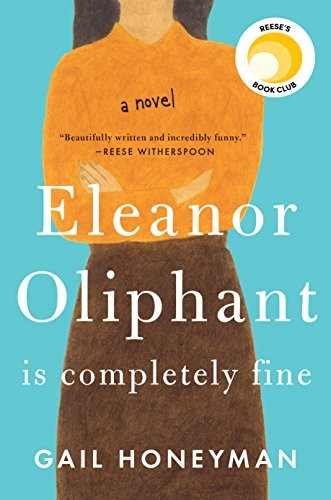
Eleanor Oliphant is twenty-nine years old, works in a Glasgow office doing data entry, and has not had a proper conversation with anyone outside of work in years.
Gail Honeyman · 2017 · 6h 15m
Full summary and key takeaways →The 11 questions
- 1.
Eleanor misreads almost every social situation she encounters. Is this played primarily for comedy, for pathos, or both — and does the balance shift as the novel progresses?
- 2.
The phone calls with 'Mummy' are increasingly sinister. At what point did you understand what they meant, and did the novel signal it clearly enough?
- 3.
Eleanor's therapist is a supporting character rather than a narrative device. How does the novel treat therapy — as cure, as process, as something else?
- 4.
Eleanor forms an intense, delusional attachment to a musician early in the novel. How does Honeyman use that subplot to introduce the reader to Eleanor's psychology?
- 5.
Raymond, the coworker who befriends Eleanor, is a very ordinary, well-meaning man. What is the novel saying about the role of ordinary people in recovery?
- 6.
The novel's ending is healing and relatively clean. Did you find that satisfying or did it feel too neat given the severity of Eleanor's history?
- 7.
Eleanor is often funny about the social conventions she doesn't understand or refuses to perform. Does the humor make the darker material more accessible or does it sometimes soften it too much?
- 8.
The novel belongs to a recognizable subgenre — the quirky, damaged female narrator who learns to connect. Does knowing that framing affect how you read it?
- 9.
Eleanor's physical scars are present throughout and she never explains them until late in the novel. How did you read those references as you went?
- 10.
What does the novel believe about the causes of adult dysfunction — is it primarily about individual trauma, or does it also implicate social structures?
- 11.
If Eleanor's story were told by an external narrator rather than in first person, what would be lost? What might be gained?
How to run the discussion
- Pick six to eight, not all of them. An hour of real discussion covers fewer questions than anyone expects, and racing the list is what makes a book club feel like homework.
- Open with what people noticed, not what they concluded. Asking for a verdict first hardens opinions before anyone has heard each other.
- Let the disagreement run. The questions below that split a room are the ones worth the time; the ones everyone answers the same way can be skipped.
- Ask the quiet person a specific question. A direct, narrow question is far easier to answer than an open invitation to contribute.
Themes worth steering toward
If the conversation stalls, these are the threads that usually restart it.
Common questions
What are good book club questions for Eleanor Oliphant Is Completely Fine?
Here are 11 book club questions for Eleanor Oliphant Is Completely Fine by Gail Honeyman, ordered to open easily and end somewhere worth arguing about. The strongest openers ask what each reader noticed rather than what they concluded, and the discussion usually turns on trauma and recovery, loneliness and connection, childhood abuse and its aftermath.
How long should a book club discussion of Eleanor Oliphant Is Completely Fine last?
Most groups run 60 to 90 minutes of actual discussion. That is roughly six to eight questions, not all of them, so pick the ones that suit your group rather than working down the list in order.
What are the main themes in Eleanor Oliphant Is Completely Fine?
Trauma and recovery, Loneliness and connection, Childhood abuse and its aftermath, Self-deception and insight, Kindness as transformation. Those are the threads most likely to divide a room, which makes them the useful places to steer a discussion that has gone quiet.
Picking the next one? See books like Eleanor Oliphant Is Completely Fine or questions for other book club picks.
