Biography · Book club
Elon Musk: Tesla, SpaceX, and the Quest for a Fantastic Future book club questions
Here are 12 book club questions for Elon Musk: Tesla, SpaceX, and the Quest for a Fantastic Future by Ashlee Vance, ordered to open easily and end somewhere worth arguing about. Copy them, print them, or bring them up one at a time.
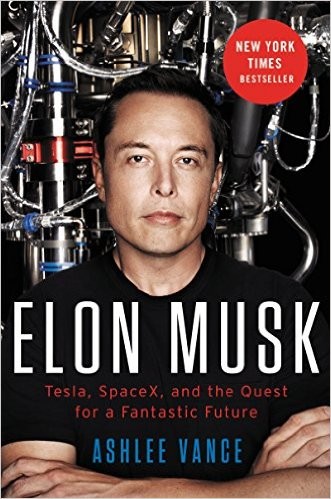
Ashlee Vance's biography of Elon Musk is the most comprehensive account of Musk's life and companies up to 2015, written with Musk's cooperation after an initial refusal and a long negotiation.
Ashlee Vance · 2015 · 6h 45m
Full summary and key takeaways →The 12 questions
- 1.
Vance depicts Musk as someone who absorbs risk differently from most people. Is that a learned trait, a temperamental one, or some combination you can actually point to in the book?
- 2.
SpaceX succeeded partly because Musk was willing to fund it personally to the point of potential ruin. What does that suggest about how to evaluate which big risks are worth taking?
- 3.
The former employees Vance interviews describe both the best and the hardest working experiences of their careers. How do you weigh those two things against each other?
- 4.
Musk's childhood in South Africa was marked by social isolation and paternal cruelty. Vance suggests this shaped his indifference to others' distress. Does that explanation satisfy you?
- 5.
Tesla disrupted automotive manufacturing by going direct to consumer and ignoring dealer networks. What other industries have incumbent distribution relationships that similarly protect incumbents from challengers?
- 6.
Vance notes that Musk's physics-first approach to cost reduction — starting from the theoretical minimum — led to breakthroughs in rocket manufacturing. What equivalent questions would that approach surface in your field?
- 7.
By 2015 Musk had begun SolarCity and was running three companies simultaneously. Is that a strength, a risk, or evidence of something else?
- 8.
The book describes Musk treating 'it can't be done' as a failure of imagination rather than a fact. Where is that attitude genuinely useful, and where does it become a liability?
- 9.
How much of SpaceX's success was Musk's vision, and how much was assembling exactly the right people — Tom Mueller, Gwynne Shotwell — at the right moments?
- 10.
Vance describes Musk as genuinely believing in the multiplanetary mission. Does it matter whether that belief is sincere when evaluating him as a leader or a businessperson?
- 11.
The book was published in 2015. Which of Vance's predictions or assessments have aged well, and which look different now?
- 12.
Reading this, what's the single most transferable idea from Musk's approach to building companies that someone with far more modest resources and risk tolerance could actually apply?
How to run the discussion
- Pick six to eight, not all of them. An hour of real discussion covers fewer questions than anyone expects, and racing the list is what makes a book club feel like homework.
- Open with what people noticed, not what they concluded. Asking for a verdict first hardens opinions before anyone has heard each other.
- Let the disagreement run. The questions below that split a room are the ones worth the time; the ones everyone answers the same way can be skipped.
- Ask the quiet person a specific question. A direct, narrow question is far easier to answer than an open invitation to contribute.
Themes worth steering toward
If the conversation stalls, these are the threads that usually restart it.
Common questions
What are good book club questions for Elon Musk: Tesla, SpaceX, and the Quest for a Fantastic Future?
Here are 12 book club questions for Elon Musk: Tesla, SpaceX, and the Quest for a Fantastic Future by Ashlee Vance, ordered to open easily and end somewhere worth arguing about. The strongest openers ask what each reader noticed rather than what they concluded, and the discussion usually turns on entrepreneurship, innovation, risk-taking.
How long should a book club discussion of Elon Musk: Tesla, SpaceX, and the Quest for a Fantastic Future last?
Most groups run 60 to 90 minutes of actual discussion. That is roughly six to eight questions, not all of them, so pick the ones that suit your group rather than working down the list in order.
What are the main themes in Elon Musk: Tesla, SpaceX, and the Quest for a Fantastic Future?
Entrepreneurship, Innovation, Risk-taking, Technology, Ambition. Those are the threads most likely to divide a room, which makes them the useful places to steer a discussion that has gone quiet.
Picking the next one? See books like Elon Musk: Tesla, SpaceX, and the Quest for a Fantastic Future or questions for other book club picks.
