Psychology · Book club
Emotional Intelligence book club questions
Here are 12 book club questions for Emotional Intelligence by Daniel Goleman, ordered to open easily and end somewhere worth arguing about. Copy them, print them, or bring them up one at a time.
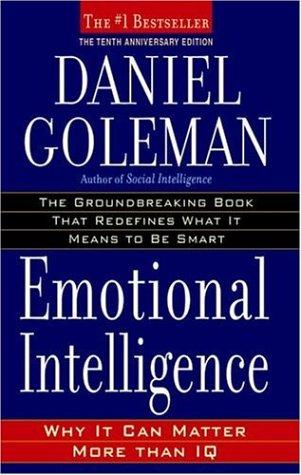
Daniel Goleman's Emotional Intelligence, published in 1995, made a widely influential argument: that the cluster of abilities involved in managing emotions — self-awareness, self-regulation, empathy, and social skill — predicts life outcomes at least as well as IQ, and possibly better in many domains.
Daniel Goleman · 1995 · 5h 20m
Full summary and key takeaways →The 12 questions
- 1.
Goleman argues that EQ predicts success better than IQ in many domains. Does that match your observation of people you know — are the most successful people in your experience the most emotionally intelligent?
- 2.
The amygdala hijack describes a moment when emotion overrides reason. Can you identify a pattern in your own experience of when that happens and what triggers it?
- 3.
Self-awareness is described as the foundation of emotional intelligence. What practices in your life — if any — actually build it, rather than just feeling like they do?
- 4.
Empathy is presented as a trainable skill, not a personality trait. Do you believe your capacity for empathy has changed over your lifetime? What caused those changes?
- 5.
The marshmallow test correlates impulse control at age four with life outcomes at twenty. What do you make of that finding? Does it feel like a fact about the world or a story that proves too much?
- 6.
Goleman criticizes schools for prioritizing cognitive skills while ignoring emotional development. What would it look like for emotional literacy to be genuinely taught in education?
- 7.
The book was written in 1995. How has the concept of emotional intelligence aged? What parts feel more established and what parts feel overstated?
- 8.
He argues that emotional intelligence can be developed throughout life. Is there an emotional competency you have worked on as an adult? What made that development possible?
- 9.
Goleman distinguishes between cognitive empathy — understanding another's mental state — and emotional empathy — feeling what they feel. Which do you find easier? Which do you think matters more?
- 10.
What is the relationship between emotional intelligence and manipulation? Is it possible to be high in EQ and use those skills to exploit rather than connect?
- 11.
Which of the five components Goleman identifies — self-awareness, self-regulation, motivation, empathy, social skill — do you most want to develop?
- 12.
The book's ideas have shaped workplace culture significantly. How do you see emotional intelligence valued or devalued in the organizations you know?
How to run the discussion
- Pick six to eight, not all of them. An hour of real discussion covers fewer questions than anyone expects, and racing the list is what makes a book club feel like homework.
- Open with what people noticed, not what they concluded. Asking for a verdict first hardens opinions before anyone has heard each other.
- Let the disagreement run. The questions below that split a room are the ones worth the time; the ones everyone answers the same way can be skipped.
- Ask the quiet person a specific question. A direct, narrow question is far easier to answer than an open invitation to contribute.
Themes worth steering toward
If the conversation stalls, these are the threads that usually restart it.
Common questions
What are good book club questions for Emotional Intelligence?
Here are 12 book club questions for Emotional Intelligence by Daniel Goleman, ordered to open easily and end somewhere worth arguing about. The strongest openers ask what each reader noticed rather than what they concluded, and the discussion usually turns on emotional intelligence, self-awareness, empathy.
How long should a book club discussion of Emotional Intelligence last?
Most groups run 60 to 90 minutes of actual discussion. That is roughly six to eight questions, not all of them, so pick the ones that suit your group rather than working down the list in order.
What are the main themes in Emotional Intelligence?
Emotional intelligence, Self-awareness, Empathy, Social skills, Brain science. Those are the threads most likely to divide a room, which makes them the useful places to steer a discussion that has gone quiet.
Picking the next one? See books like Emotional Intelligence or questions for other book club picks.
