History · Book club
Empire of Pain: The Secret History of the Sackler Dynasty book club questions
Here are 13 book club questions for Empire of Pain: The Secret History of the Sackler Dynasty by Patrick Radden Keefe, ordered to open easily and end somewhere worth arguing about. Copy them, print them, or bring them up one at a time.
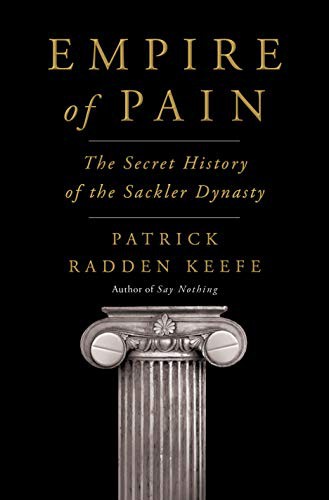
Empire of Pain is Patrick Radden Keefe's account of the Sackler family — the dynasty behind Purdue Pharma and the opioid crisis — told across three generations.
Patrick Radden Keefe · 2021 · 7h 45m
Full summary and key takeaways →The 13 questions
- 1.
Keefe traces Arthur Sackler's marketing innovations as the root of what came later. Is it fair to hold him responsible for a crisis that emerged decades after his death?
- 2.
The company repeatedly used legal settlements to avoid admitting wrongdoing. What does that pattern reveal about how civil liability functions for wealthy institutions?
- 3.
Several Purdue executives knew the addiction data was being misrepresented. What would it have taken, realistically, for one of them to act differently?
- 4.
The Sackler name is on museums, universities, and galleries worldwide. Do institutions that accepted this money have an obligation to rename those spaces? Where do you draw the line?
- 5.
Keefe is careful not to turn Arthur Sackler into a monster. Does that restraint make the book more or less persuasive?
- 6.
The opioid crisis killed hundreds of thousands of people. No Sackler family member has been convicted of a crime. What does that gap between harm and accountability tell us?
- 7.
Purdue's salespeople were often young and had no idea of the scale of what they were selling. How do you think about individual culpability for people at the bottom of the chain?
- 8.
The family cultivated a philanthropic identity that was central to their sense of themselves as good people. How does philanthropy change — or fail to change — the moral weight of harm done?
- 9.
Keefe documents the role of consulting firms, lawyers, and lobbyists in helping Purdue manage its reputation and legal exposure. What responsibility do professional enablers bear?
- 10.
The bankruptcy settlement allowed the Sacklers to pay a large sum while retaining most of their wealth. Is that an acceptable outcome, or does it signal a failure of the legal system?
- 11.
Empire of Pain has been compared to investigative works on tobacco and financial fraud. What makes pharmaceutical harm distinctive as a policy and moral problem?
- 12.
If you were designing a pharmaceutical regulatory system from scratch after reading this book, what single change would you make first?
- 13.
The Sackler family members interviewed by Keefe consistently deflected responsibility onto doctors, patients, and regulators. Is that deflection entirely dishonest, or does it point to something real about distributed culpability?
How to run the discussion
- Pick six to eight, not all of them. An hour of real discussion covers fewer questions than anyone expects, and racing the list is what makes a book club feel like homework.
- Open with what people noticed, not what they concluded. Asking for a verdict first hardens opinions before anyone has heard each other.
- Let the disagreement run. The questions below that split a room are the ones worth the time; the ones everyone answers the same way can be skipped.
- Ask the quiet person a specific question. A direct, narrow question is far easier to answer than an open invitation to contribute.
Themes worth steering toward
If the conversation stalls, these are the threads that usually restart it.
Common questions
What are good book club questions for Empire of Pain: The Secret History of the Sackler Dynasty?
Here are 13 book club questions for Empire of Pain: The Secret History of the Sackler Dynasty by Patrick Radden Keefe, ordered to open easily and end somewhere worth arguing about. The strongest openers ask what each reader noticed rather than what they concluded, and the discussion usually turns on corporate greed, opioid crisis, philanthropy.
How long should a book club discussion of Empire of Pain: The Secret History of the Sackler Dynasty last?
Most groups run 60 to 90 minutes of actual discussion. That is roughly six to eight questions, not all of them, so pick the ones that suit your group rather than working down the list in order.
What are the main themes in Empire of Pain: The Secret History of the Sackler Dynasty?
Corporate greed, Opioid crisis, Philanthropy, Wealth and power, Accountability. Those are the threads most likely to divide a room, which makes them the useful places to steer a discussion that has gone quiet.
Picking the next one? See books like Empire of Pain: The Secret History of the Sackler Dynasty or questions for other book club picks.
